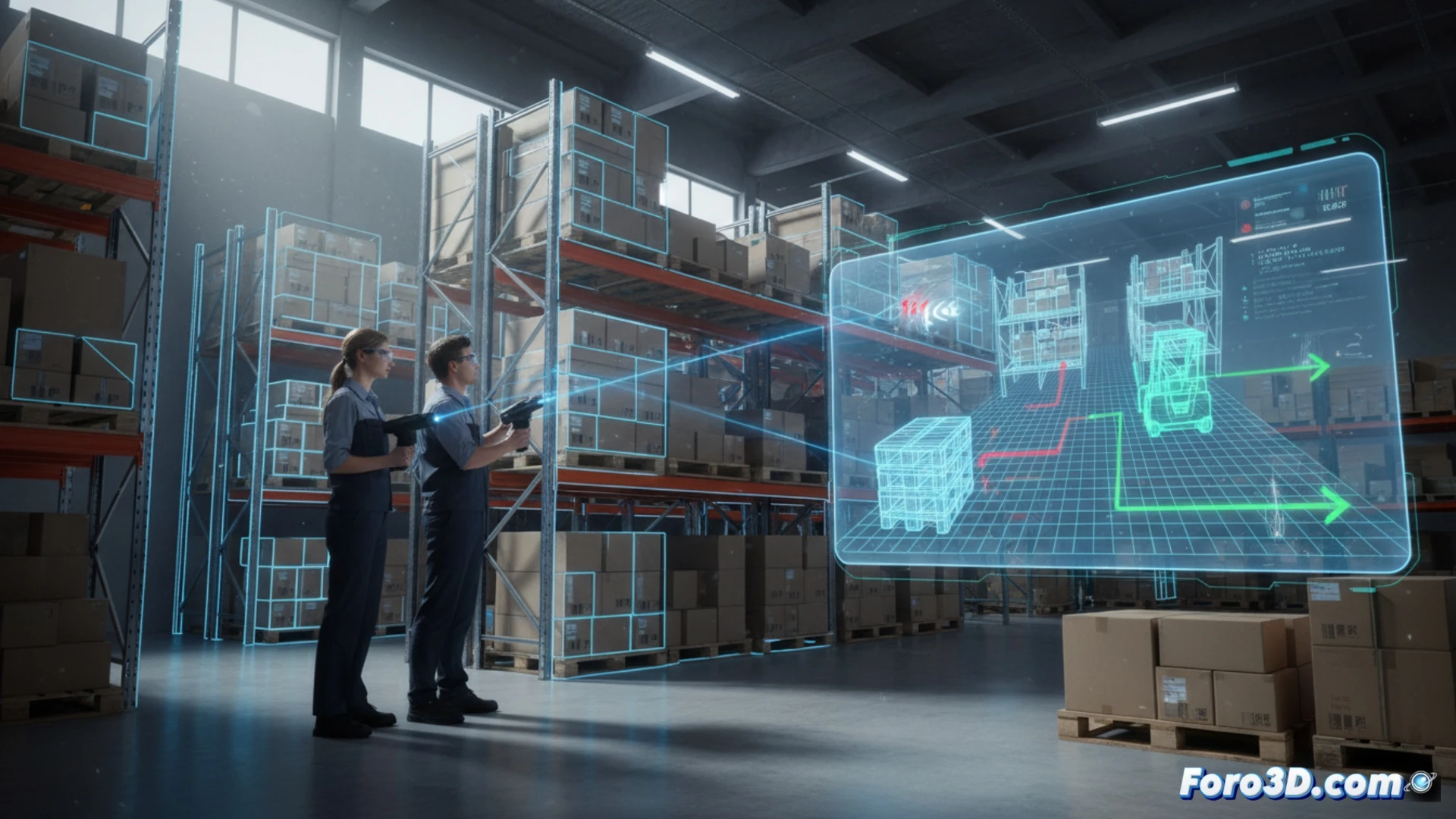
Logistics is no longer just about moving boxes. 3D technology allows operators to optimize warehouse spaces and plan picking routes with precision. A clear example: using a portable 3D scanner to digitize a warehouse, measure shelving, and simulate pallet placement before moving them. This reduces errors and saves time.
Key programs for the 3D logistics operator 🚀
To start, Autodesk Revit or SketchUp allow you to model the warehouse and test layouts. For quick scanning, programs like Artec Studio or RealityCapture convert photos into precise 3D models. Then, FlexSim or AnyLogic simulate workflows and detect bottlenecks. The team needs a basic 3D scanner (like an Einscan) and a laptop with a dedicated graphics card. You don't need to be an engineer, just have the patience to learn the menus.
The day the operator beat the chaos (and the boss) 😅
Of course, there's always someone who prefers the traditional method: look at the warehouse, frown, and say everything fits here. Then the operator arrives with their 3D scanner, models the space, and discovers the boss had left a gap the size of a car between two shelves. The scanner doesn't lie, but the boss does. In the end, the operator wins, the boss pretends they knew it all along, and everyone is happy. Except for the aisle, which remains a mystery.