The conservation of artistic heritage faces a new technological challenge. A recent restoration case has highlighted the risks of laser cleaning on historical sculptures. Thanks to 3D scanning and high-precision data analysis, the involuntary removal of the original patina has been documented. This finding demonstrates that tools such as atomic force microscopes (AFM) and geometric inspection software are essential for the forensic evaluation of damage to cultural assets.
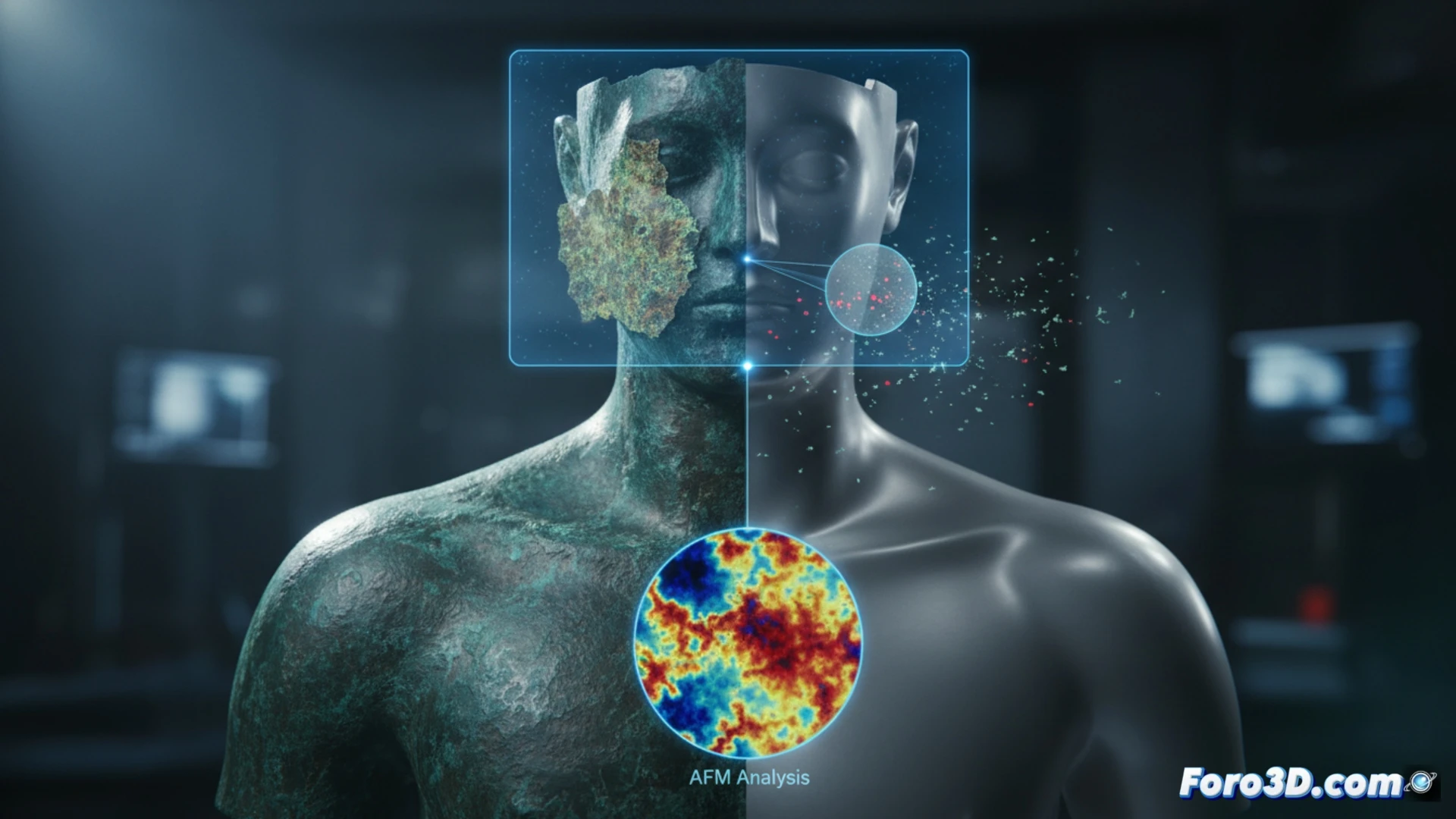
Forensic Workflow: From AFM to Blender 🔬
The micro-erosion detection process begins with data capture using AFM, which measures surface roughness at the nanometric scale. This data is processed to identify areas where the laser has removed layers of patina. Subsequently, GOM Inspect software allows overlaying the 3D meshes of the pre- and post-intervention states, calculating the exact volumetric differences. Finally, Blender is used to generate color thermal visualizations showing the affected areas, facilitating damage interpretation for restorers. This workflow turns microscopic damage into quantifiable and visible evidence.
Ethical Implications for Modern Restoration ⚖️
This case forces a reconsideration of the use of aggressive technologies on original pieces. The patina is not simply residue, but a historical layer that narrates the passage of time. The micro-erosion detected by 3D scanning demonstrates that even laser parameters considered safe can cause irreversible losses. For professionals, this means that prior digital documentation of any intervention should be mandatory, and that restoration must prioritize the preservation of authenticity over superficial aesthetic cleaning. 3D technology thus becomes the main ally for ethical decision-making.
Since 3D scanning can detect structural micro-damage caused by laser cleaning that is invisible to the naked eye, what restoration protocols should be implemented to ensure that this technique does not compromise the long-term integrity of the sculptures?
(PS: Restoring virtually is like being a surgeon, but without blood stains.)