The trade of an antique dealer involves significant physical and chemical risks: overexertion from moving heavy furniture, forced postures for hours, falls from ladders, and exposure to dust, mold, lead in paints, or mercury in antique mirrors. 3D technology offers a key preventive solution by digitizing pieces without direct contact, minimizing manual handling and the inhalation of toxins.
Photogrammetry and spectroscopy for safe diagnosis 🛡️
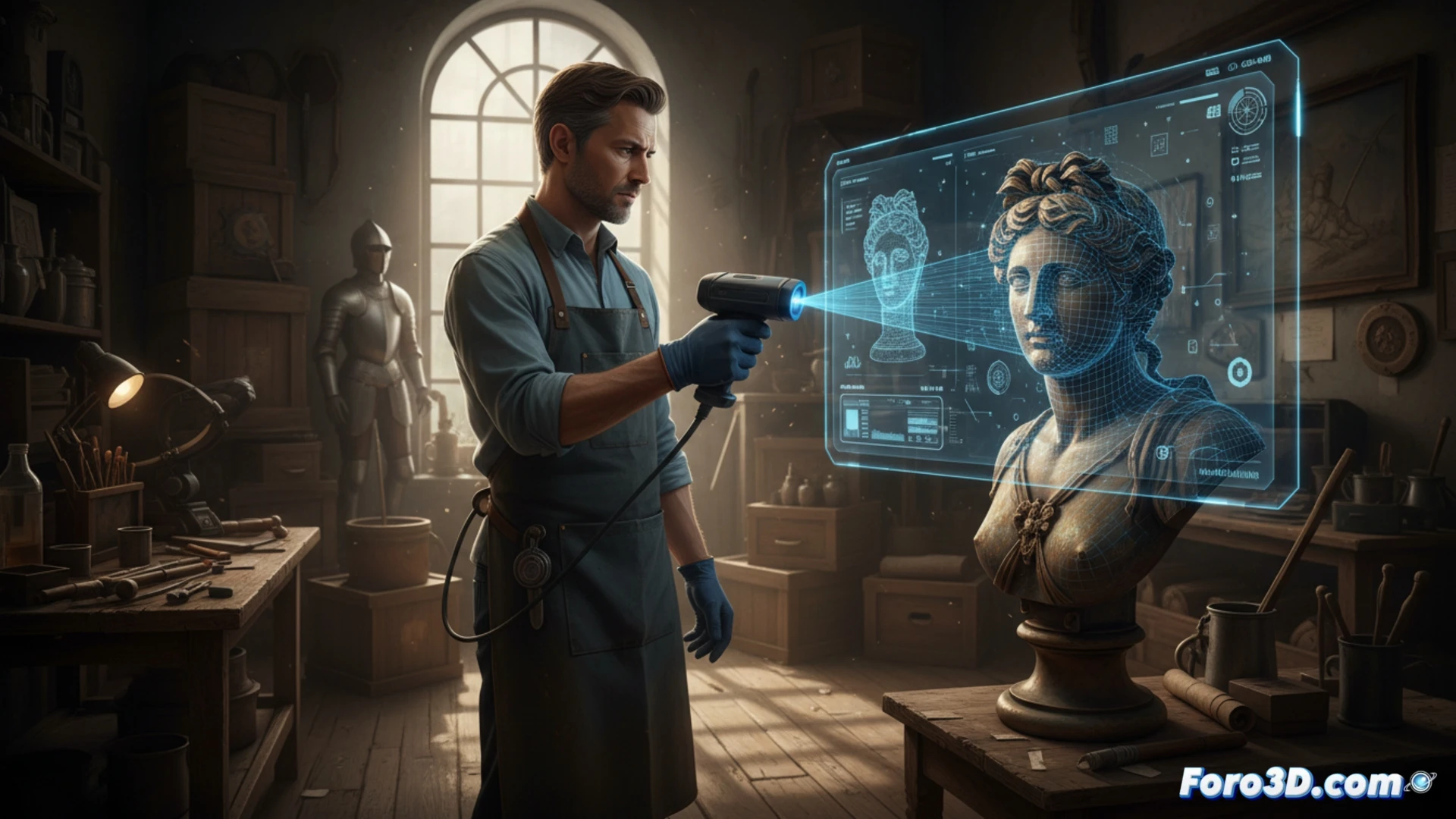
Photogrammetry and laser scanning allow for the creation of high-fidelity digital models of any object, from a bargueño to a Venetian mirror. This eliminates the need to move fragile or heavy pieces for appraisal or analysis. By integrating spectroscopic sensors into the scanning process, the presence of lead in pigments or mercury in backings can be detected without touching the surface. The restorer or antique dealer obtains a digital twin on which to plan interventions, measure volumes, and calculate weights, thus avoiding forced postures and the risk of cuts from deteriorated edges.
Towards conservation without direct exposure 🔍
3D digitization not only protects the professional but also preserves the integrity of the antique object. By reducing physical handling, mechanical stress on pieces already weakened by time is decreased. This approach transforms the antique dealer's relationship with their craft: the risk of poisoning and physical wear are mitigated, allowing for a safer and more sustainable dedication to the conservation of historical heritage.
In a trade where weight and fragility are constant enemies, how can 3D scanning transform the handling of historical pieces to eliminate overexertion and forced postures in the work of the antique dealer?
(PS: Restoring virtually is like being a surgeon, but without blood stains.)