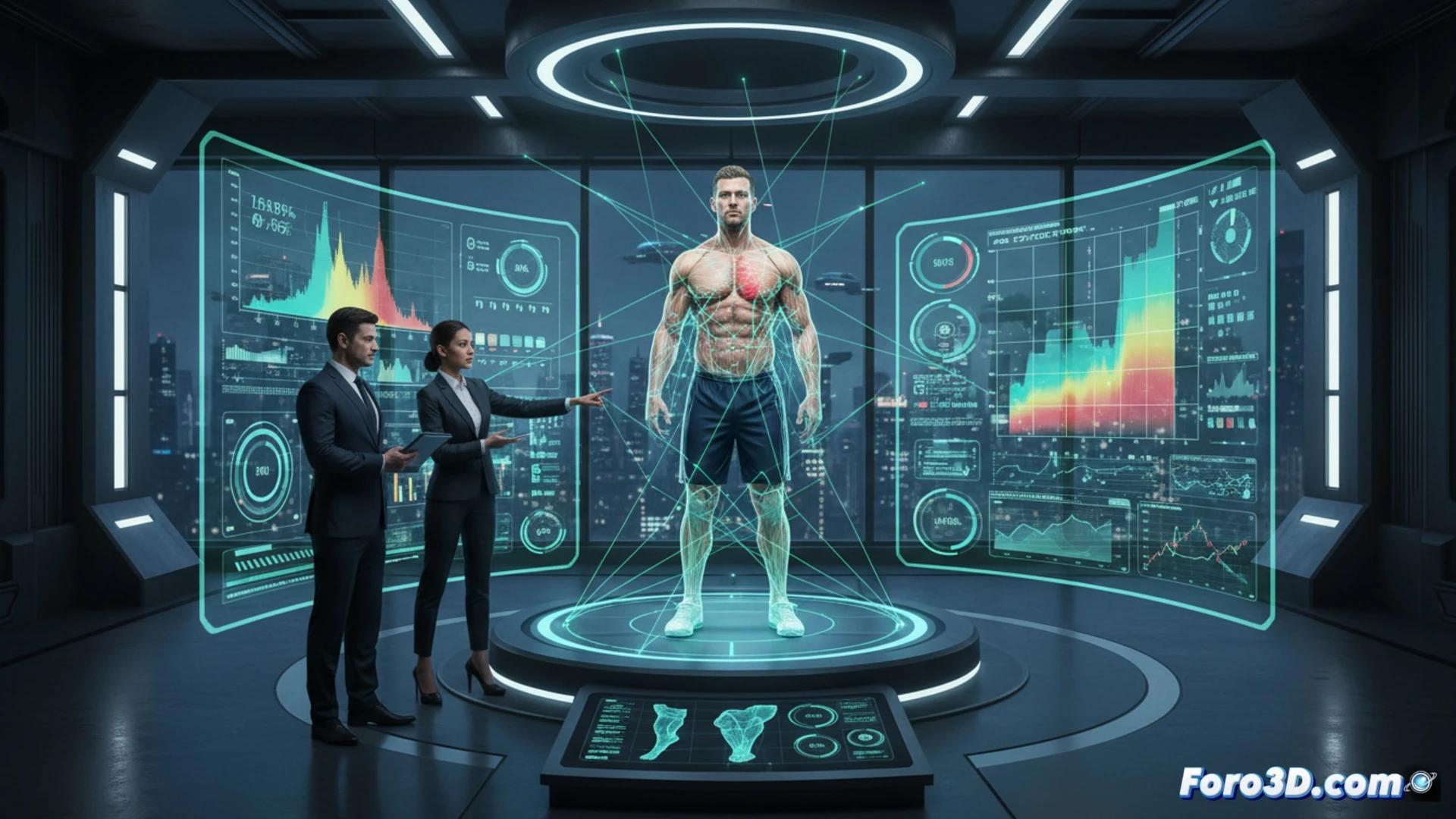
A sports agent can no longer rely solely on their intuition or a YouTube video. 3D technology makes it possible to analyze a player's biomechanics, anticipate injuries, and negotiate contracts with objective data. For example, scanning a footballer's body detects muscle asymmetries that predict tears, saving millions on failed signings.
Software and hardware for biomechanical analysis 🛠️
For this trade, a full-body 3D scanner like the Artec Eva or Peel 3D is needed, which captures the athlete's morphology in minutes. Then, software like Blender or MeshLab allows measuring volumes and joint angles. With OpenSim, muscle load during a sprint is simulated. The agent cross-references this data with medical reports to justify a price reduction or a performance clause.
When the scanner reveals the star is a bluff 😅
The problem arises when the scanner reveals that the star striker has one leg shorter than the other or that their center of gravity is that of a drunk flamingo. The agent then has to explain to the club that the player is not a perfect cyborg, but a human with flaws. However, with the 3D data in hand, they can at least justify that the signing costs less than a boardroom dinner.