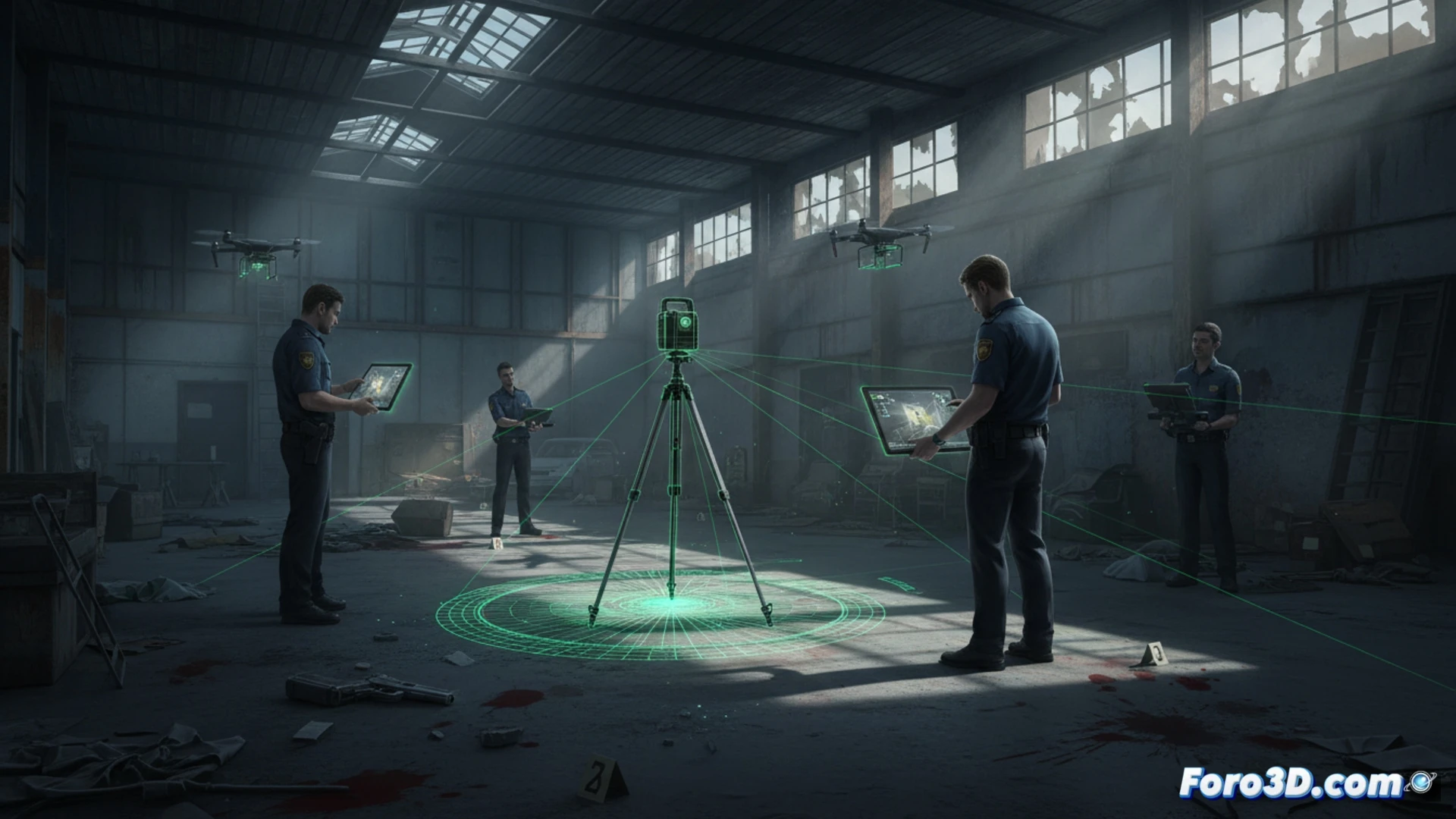
3D technology provides police with tools to document crime scenes without altering evidence. Using laser scanners or photogrammetry, every detail of a location is captured. The data generates digital models that allow analysis of bullet angles or vehicle trajectories without stepping foot on the actual scene. This reduces human error and speeds up judicial investigations.
Key software for forensic modeling 🛠️
To reconstruct a scene, programs like RealityCapture or Agisoft Metashape are used, which process photos into textured 3D models. Scanners like the Faro Focus generate point clouds that are edited in Leica Cyclone REGISTER. Then, software such as Blender or 3ds Max allows simulation of ballistics or traffic accidents. Everything is exported to standard formats to be presented as evidence in trials.
The day they scanned a donut's footprint 🍩
A rookie officer, excited about the new 3D scanner, decided to document a crime scene in such detail that it included the crumbs of a half-eaten donut. The judge requested an enlargement of the donut area to see if the defendant had left his DNA on the icing. In the end, the forensic expert had to explain that the model did not include flavorings. The defense requested a confrontation with the baker.