The paradox of the yoga instructor is evident: while guiding their students toward well-being, their own body accumulates silent wear and tear. The occupational risks of this profession range from repetitive strain tendinitis to back injuries when assisting with postures. Faced with this reality, digital anthropometry emerges as a technical tool that allows quantifying potential damage before it manifests, offering a three-dimensional map of the body in motion.
Preventive biomechanics through three-dimensional models 🧘
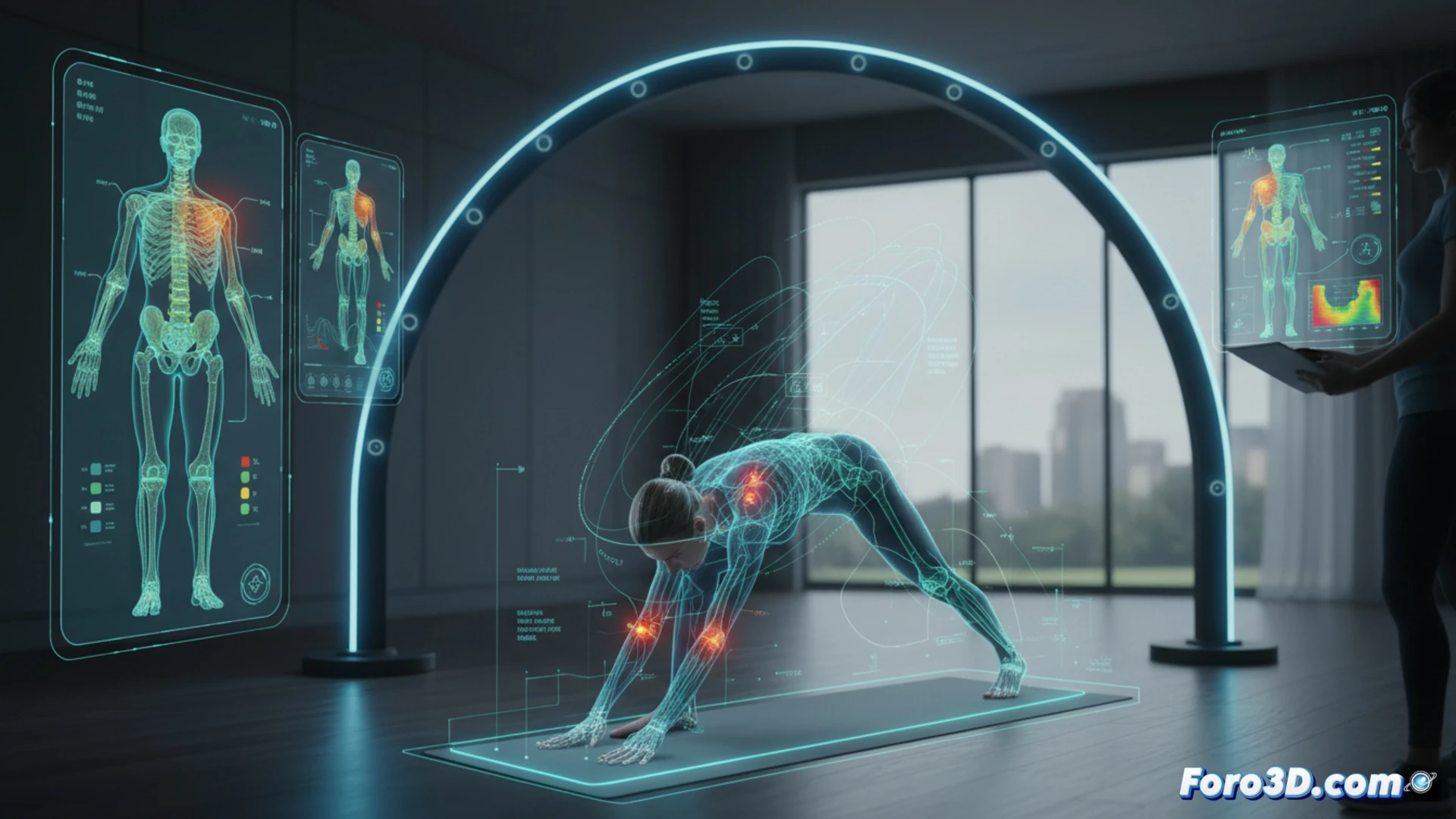
3D body scanning captures the exact morphology of the instructor, allowing analysis of joint angles and muscle loads during the demonstration of postures such as downward-facing dog or warrior. By overlaying a digital model of the instructor onto their virtual mat, ergonomics specialists can identify asymmetric muscle imbalances and points of tension in shoulders or wrists. This technology replaces subjective assessment with objective data, detecting, for example, if the instructor's hip deviates more than 5 degrees when adjusting a student's posture, a factor that multiplies the risk of lower back pain.
Towards training based on body data 📊
Integrating anthropometric scanning into instructor training courses could redefine occupational safety standards. Instead of learning by trial and error, the instructor visualizes in real time how their digital skeleton withstands the accumulated muscle fatigue after an hour of class. The technology does not replace the wisdom of yoga, but it does offer an objective mirror where every wrist flexion or lumbar extension is recorded, allowing habits to be corrected before they become chronic injuries.
How 3D body scanning can identify postural misalignment patterns that go unnoticed in yoga instructors and are the hidden cause of their chronic injuries.
(PS: Scanning your body for an avatar is like taking a 3D selfie, but without a selfie stick.)