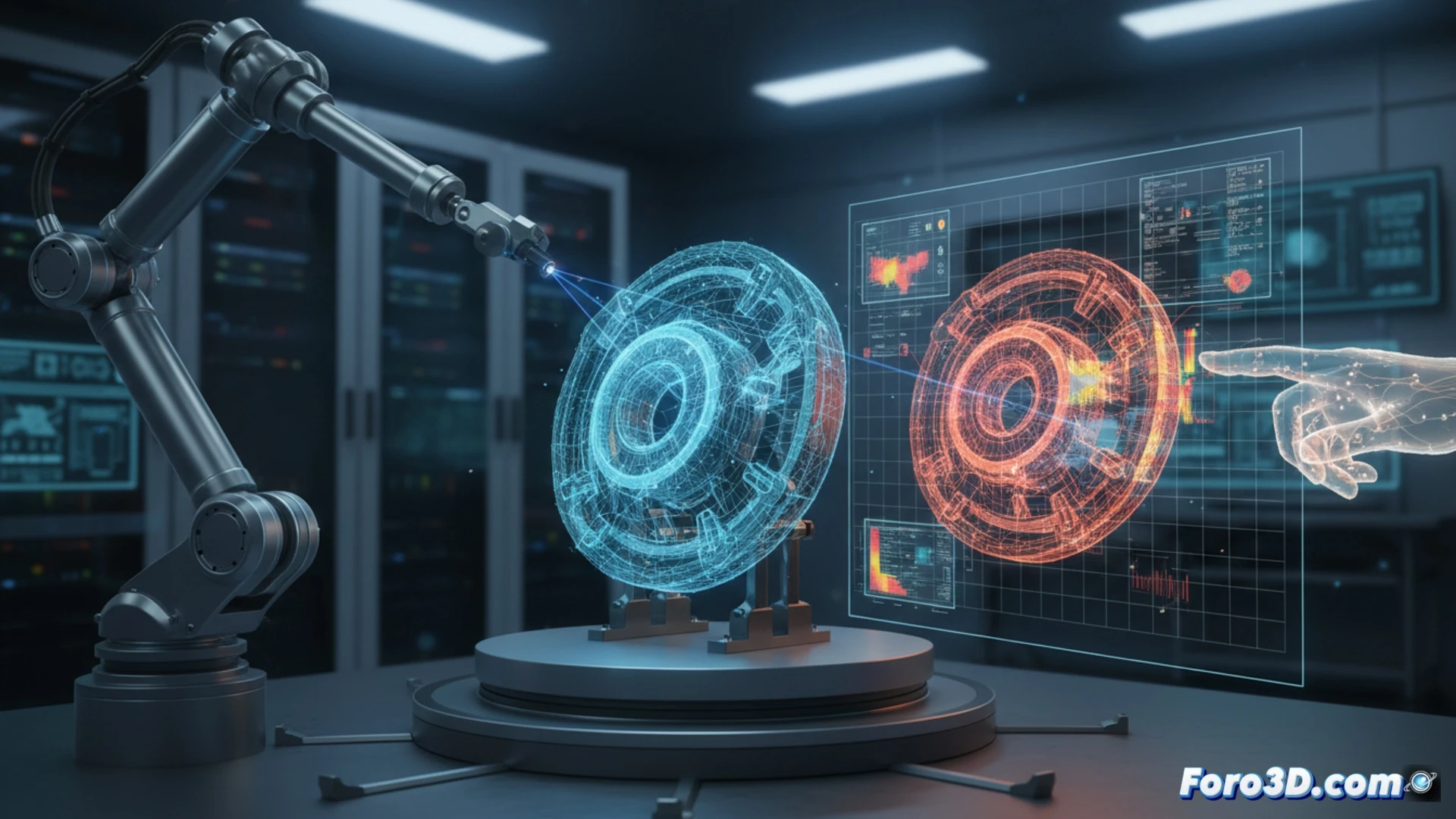
The proofreader's job requires detecting errors in texts, but also in physical objects. 3D technology allows scanning printed parts or prototypes to compare them with the original digital model. A visual proofreader can identify deformations, deviations, or scale errors that the human eye overlooks. For example, a designer delivers a crooked part; the 3D scanner captures it and the software contrasts it with the CAD file, marking each discrepancy in red.
Key software for volumetric correction 🛠️
For this task, programs like GOM Inspect or Geomagic Control X are needed, which analyze point clouds and generate color deviation maps. A scanner like the Einscan Pro 2X captures the geometry, and the software compares every millimeter with the original design. The proofreader doesn't read letters; they read dimensions and angles. Blender with its measurement system also works, but requires more manual work. The result is a visual report where each error appears as a blue or red spot.
When the proofreader corrects even the nuts 🔩
Imagine the classic proofreader, with their magnifying glass and red pen, faced with a crooked plastic part. Now they have to measure whether the hole for the screw is at 2.5 mm or 2.7 mm. With the 3D scanner, they discover that the error is not in the part, but in the screw they bought at the discount store. So they correct the catalog and, incidentally, the supplier's stock. Good thing technology doesn't fix cold coffee, because that would be a serious error.