Quartz skulls, attributed to Mesoamerican civilizations such as the Aztecs or Mayans, have been generating debate for decades. Their polished surface and the apparent absence of tool marks have fueled theories about lost technologies. However, digital archaeology now offers an objective method to solve the mystery: forensic analysis through high-resolution three-dimensional models.
Photogrammetry and detection of micro-carving marks 🔍
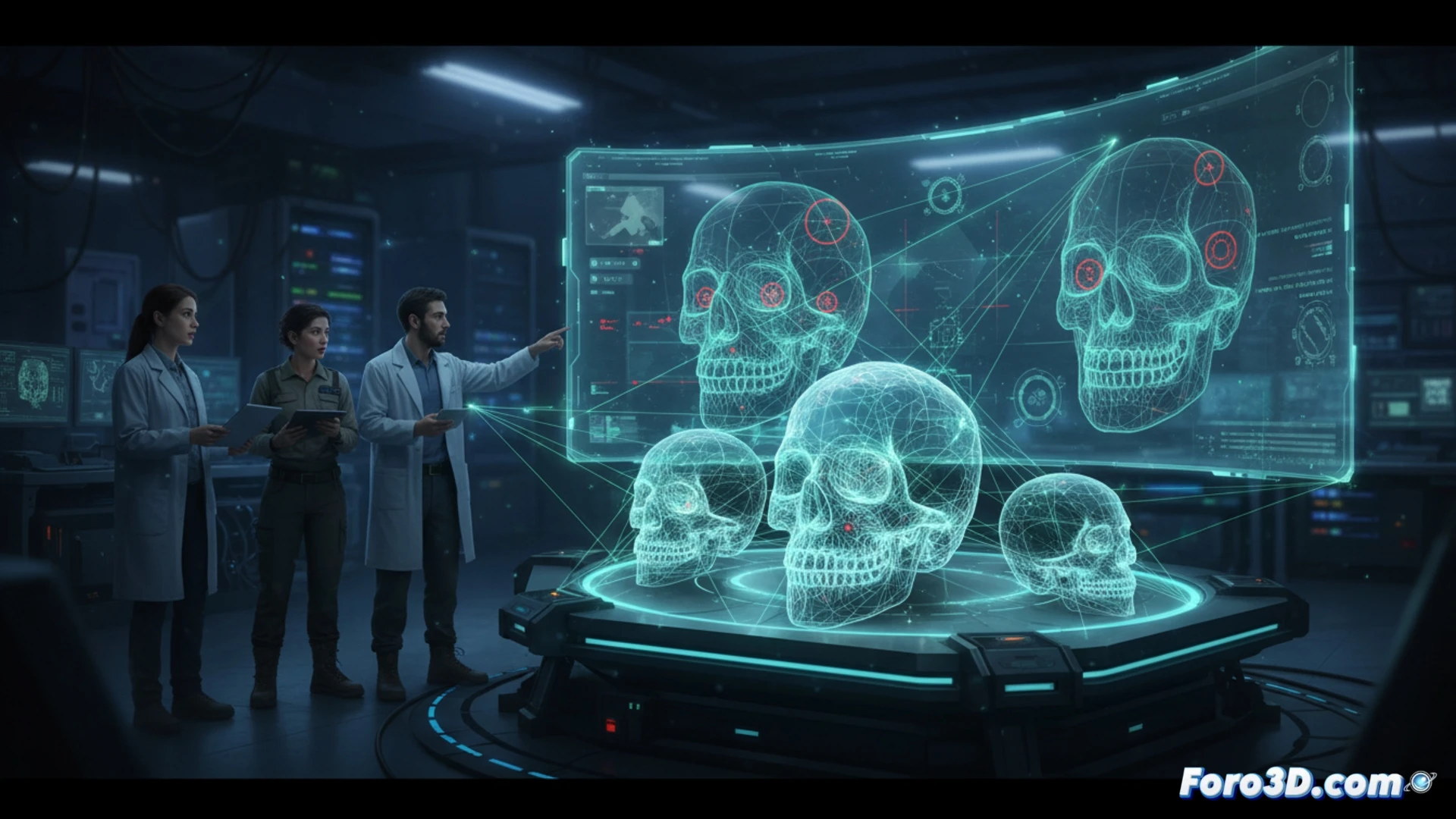
Close-range photogrammetry allows capturing the topography of these skulls with an accuracy of less than 10 micrometers. By generating a point cloud and a textured polygonal mesh, researchers can digitally inspect the piece under raking light. This technique reveals parallel striations and uniform wear patterns characteristic of modern rotary abrasives, such as diamond wheels. In contrast, authentic pre-Columbian artifacts exhibit irregular dimples and random polishing directions, typical of manual rubbing with sand and water. The digital model also allows measuring the skull's perfect symmetry, a degree of geometric precision impossible to achieve with the stone tools available in pre-Hispanic times.
Forensic outreach and virtual heritage 🏛️
The resulting 3D model serves not only for authentication but also for outreach. Museums and online platforms can share these files so that anyone can examine the piece using visual inspection tools. This digital transparency debunks myths by showing evidence of industrial carving, while preserving the physical object from constant handling. 3D technology thus becomes the most reliable eyewitness of the past, capable of distinguishing between ancestral craftsmanship and a 19th-century forgery.
How 3D scanning technology can debunk pseudoscientific myths about crystal skulls without losing archaeological rigor
(PS: and remember: if you can't find a bone, you can always model it yourself)