The craft of an art restorer hides a paradox: to save the artwork, the professional exposes their health to neurotoxic solvents, lead and cadmium dust, forced postures in front of the easel, and extreme eye strain. Added to this are falls from scaffolding and the inhalation of mold spores on ancient canvases. 3D technology emerges as a preventive shield that redefines occupational safety in conservation. 🛡️
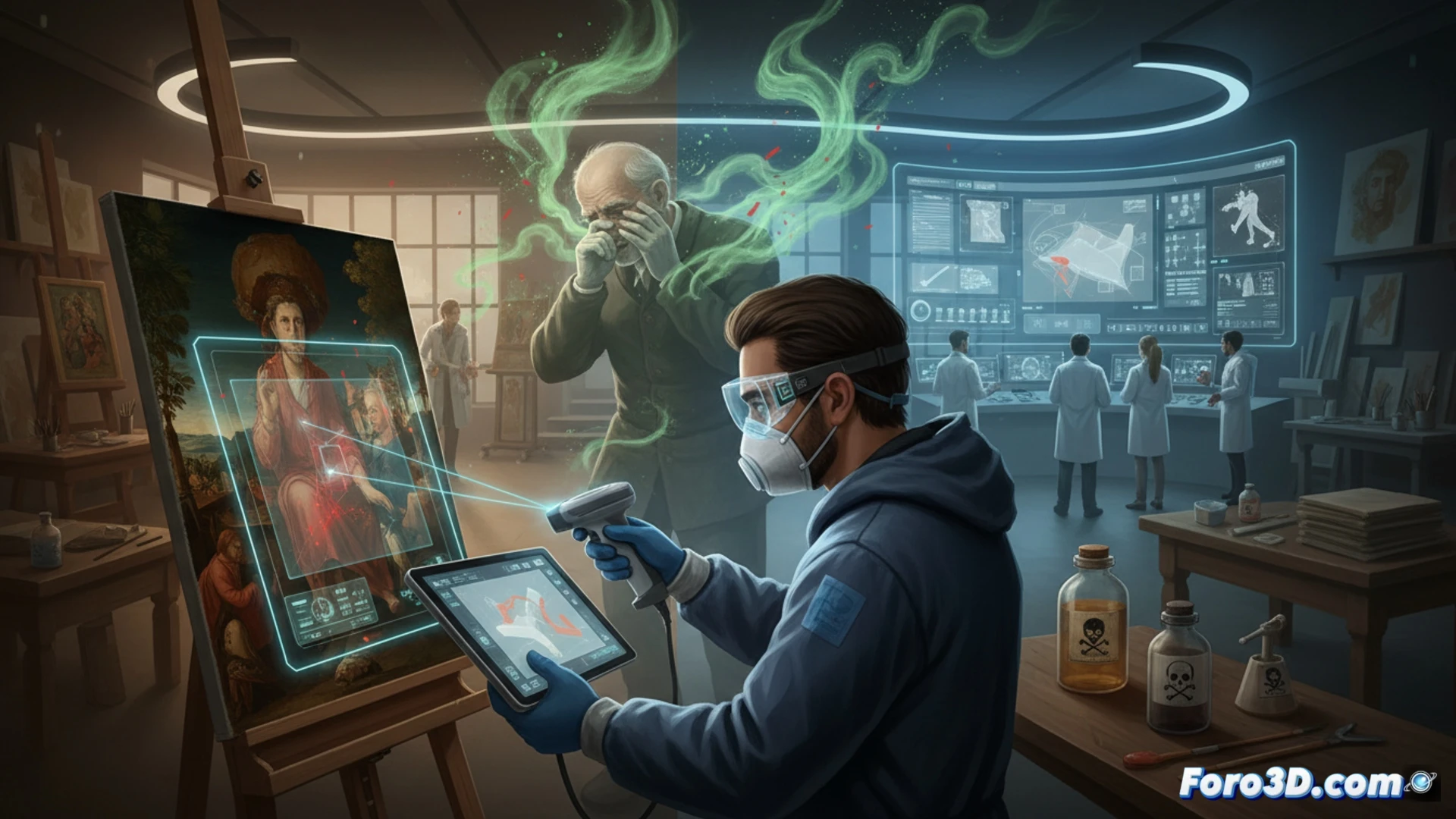
Photogrammetry and digital twins as a chemical barrier 🧪
Direct manipulation of a painting with craquelure or layers of old varnish forces the restorer to use organic solvents, epoxy resins, and fixatives that generate toxic and allergenic vapors. High-resolution photogrammetry allows capturing the artwork in 3D without physical contact. The restorer works on a digital twin from an ergonomic workstation, eliminating the need to apply chemical products for cleaning or consolidation tests. This drastically reduces dermal and inhalation exposure to compounds such as toluene or mercury present in historical pigments.
The human cost of artisanal precision 💪
Holding a detail brush for hours causes neck and lower back contractures, while focused lighting burns the restorer's retina. 3D scanning allows rotating, enlarging, and measuring the piece on screen without bringing the face close to the support. Volumetric documentation prior to treatment also reduces mental strain, as the professional can plan each intervention on an exact replica, minimizing errors and the stress of irreversible manipulation.
As an art restorer, what neurotoxic solvents or harmful dusts have you had to inhale or handle in your daily work, and how could 3D scanning reduce your exposure to these hidden health risks?
(PS: Restoring virtually is like being a surgeon, but without blood stains.)