Risk analysis in artisan trades reveals a silent reality: forced postures, overexertion, and lack of ergonomics in small workshops generate chronic musculoskeletal disorders. In response, body scanning and digital anthropometry offer a precise solution. By capturing the exact geometry of the artisan's body, it is possible to redesign their work environment to prevent injuries before they appear.
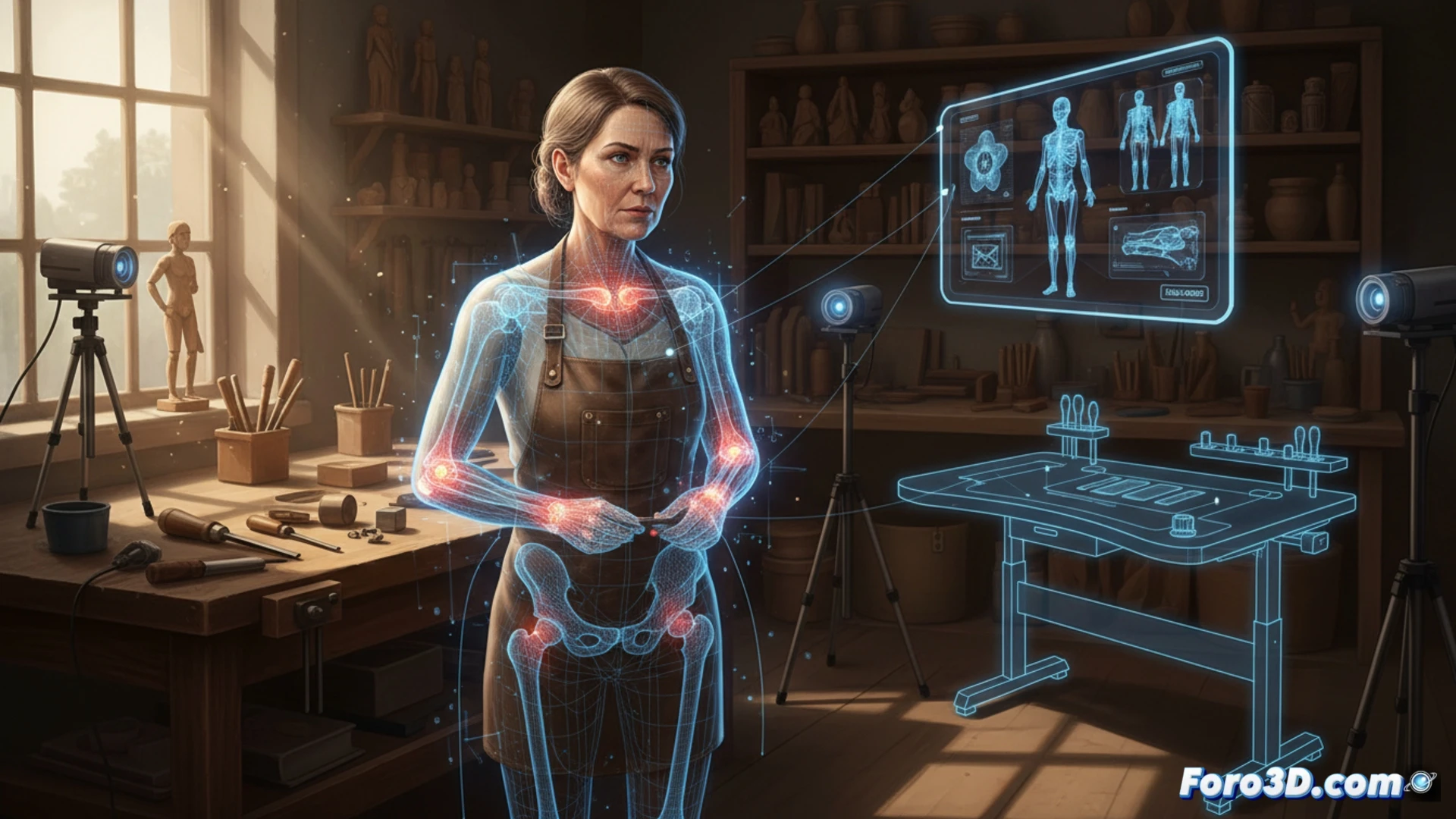
Digital anthropometry applied to artisan workstations 🛠️
3D scanning technology allows obtaining digital models of the artisan in different working postures. These models are imported into ergonomic simulation software such as Jack or AnyBody, where joint angles, spinal loads, and areas of muscle tension are analyzed. A documented case study shows how a pottery workshop used this data to design an adjustable workbench in height and inclination, reducing lumbar flexion by 40% during the workday. Additionally, hand scanning allows for the manufacturing of customized tools with handles that adapt to the palmar curvature, eliminating pressure points that cause tendinitis. The integration of motion sensors and synchronized video capture with the 3D model allows validating each adjustment in real-time, turning the workshop into a biomechanical laboratory.
Are we measuring the artisan's body or just their fatigue? 🤔
The uncomfortable question is whether the risk prevention industry remains anchored in generic checklists while the artisan accumulates microtraumas. 3D body scanning is not a technological luxury; it is a tool for labor justice. Customizing the workstation according to each person's unique morphology should be the standard, not the exception. Otherwise, we will continue treating pain with analgesics instead of eliminating it with volumetric data. Digital anthropometry forces us to look at the worker as an individual, not a statistic.
Is it possible to design a 3D body scanning protocol that identifies and quantifies specific tension points in artisan postures, to generate customized tools or adaptations that prevent chronic injuries?
(PS: Scanning your body for an avatar is like taking a 3D selfie, but without a selfie stick.)