The climbing competition rewrites its sustainability manual. It is no longer limited to caring for natural rock faces; it now encompasses cities, event organization, and society. World Climbing drives this change, aware that Olympic growth requires managing resources, reducing environmental impact, and reusing materials in every hold and harness.
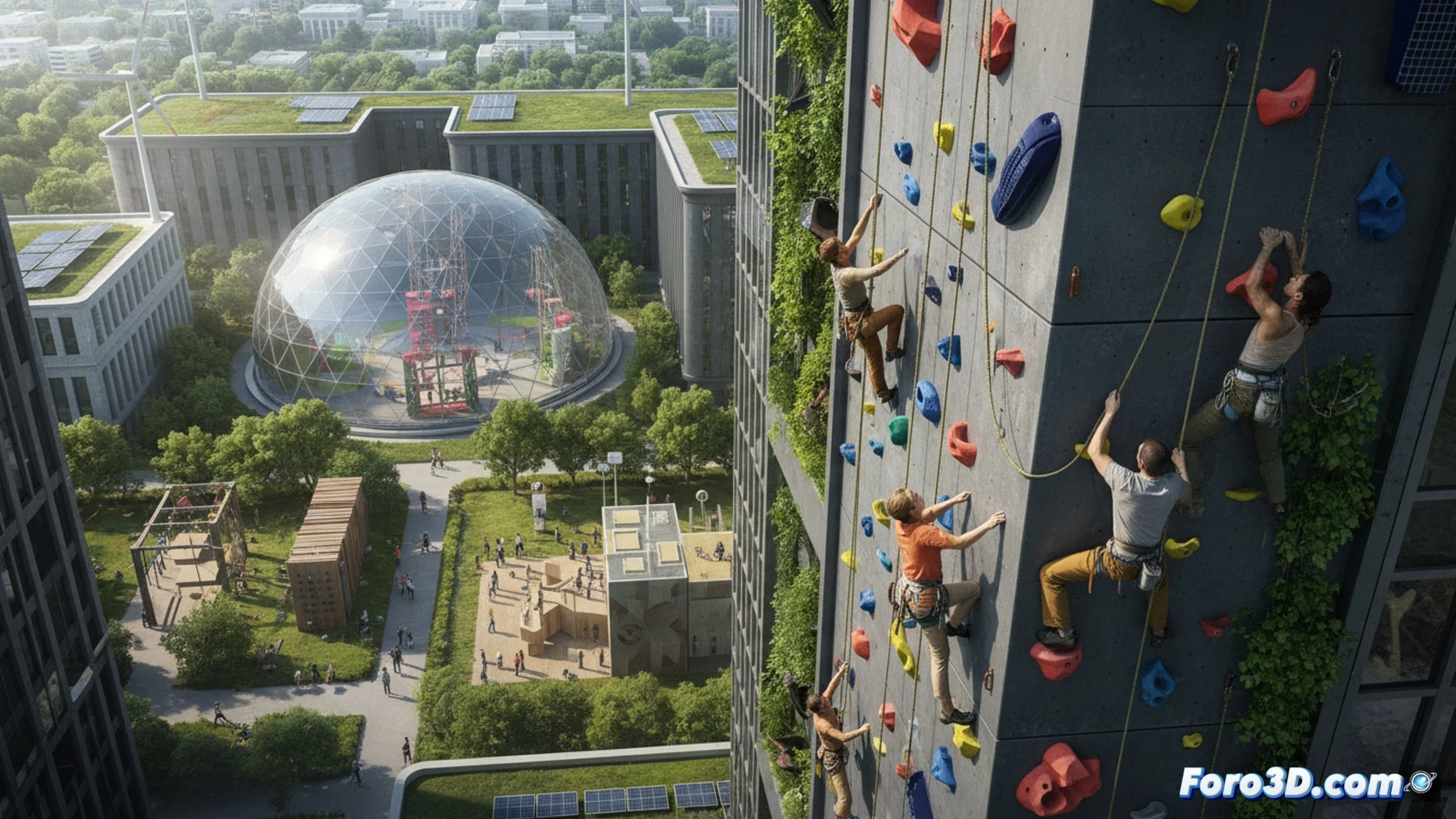
Circular resource management in technical competitions ♻️
The key lies in applying a circular approach: from manufacturing holds with recycled polymers to the modular design of demountable structures. Organizers optimize logistics to minimize transport emissions, use digital systems to reduce paper, and plan the reuse of anchors and carabiners between events. Every detail, from LED lighting to rope recycling, is audited to meet efficiency criteria. The goal is for a competition to leave a mark only on the scoreboards, not on the environment.
Sustainability also reaches the competition zone bar 🍃
Because being eco-friendly not only involves recycling holds, but also the plastic cups from the refreshment station. Now organizers require sponsors to ensure that even energy bars have compostable packaging. Of course, the athletes' sweat remains 100% organic and non-polluting. Although some purists miss the smell of magnesium and burnt rubber, at least now the carbon footprint of the podium is lighter than the conscience of a cheater.