Portuguese cuisine left an unexpected mark on Japan through a pickled dish that combines Portuguese vinegar and spices with the Japanese sensibility for freshness and balance. This slightly spicy and refreshing dish is an example of how culinary traditions adapt through cultural exchange, winning over palates without losing their essence.
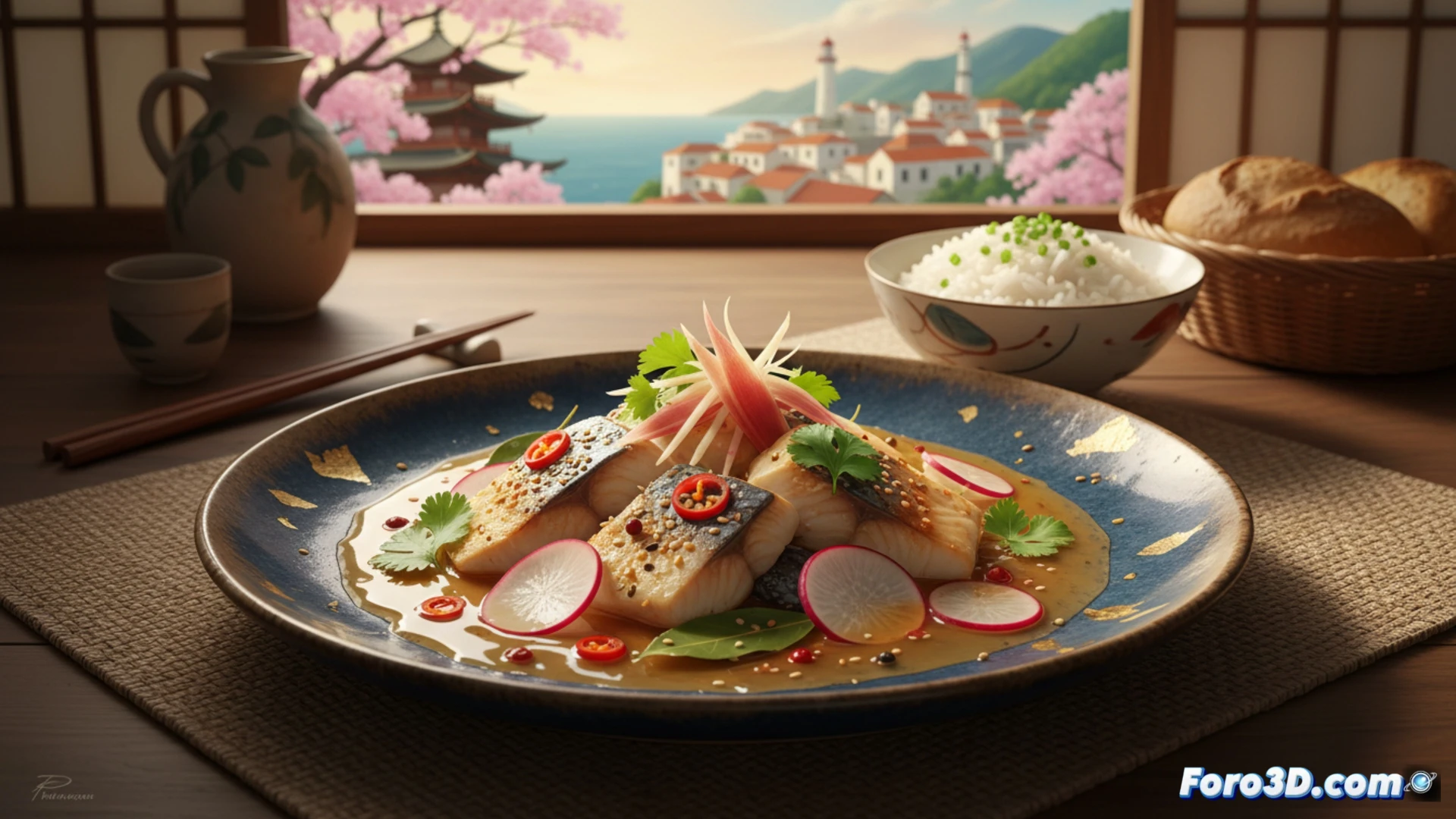
The technical adaptation of escabeche in Japanese gastronomy 🍣
From a technical point of view, the fusion is achieved by adjusting the acidity of Portuguese vinegar with local ingredients such as mirin and dashi. The marinating process is shortened to respect the texture of raw fish, while spices like paprika are softened with ginger and Japanese citrus fruits. This chemical and sensory balance allows the dish to retain its preserving character without overpowering the palate, adapting to the demands of a cuisine that prioritizes the purity of flavors.
When Portuguese vinegar became a flavor ninja 🥷
Portuguese escabeche arrived in Japan and, like a good immigrant, got to work. Now vinegar and spices act as secret agents: they enter without a sound, but leave the fish with a flavor that even the most traditional sushi didn't expect. Japanese chefs, who never leave anything to chance, adjusted everything so it wouldn't look like a cheap disguise. In the end, the dish is so balanced that it seems it was always Japanese, even though it secretly still uses grandma's Portuguese recipes.