On June 3, 2025, an American Airlines flight with 231 passengers from Philadelphia to Naples was diverted to Rome due to a critical administrative error. The airline replaced the Boeing 787-8 (57 meters) with a 787-9 (63 meters). Although the difference is only two meters, the Naples airport, classified as Category 8 RFFS, only accepts aircraft up to 61 meters. The error was detected as the plane approached Italy, forcing a nighttime diversion that disrupted the flight's logistics chain.
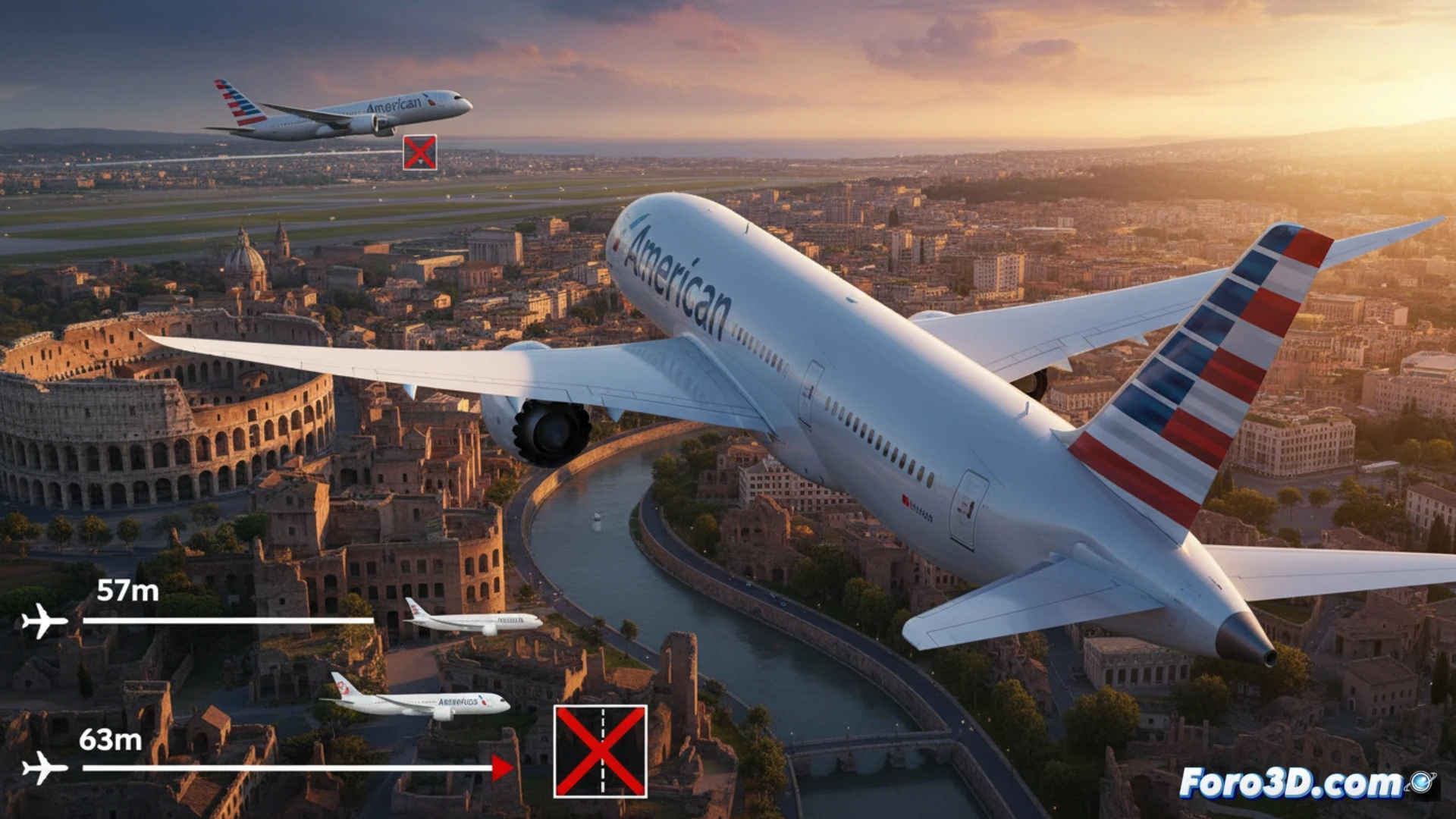
3D Visualization of the Air Supply Chain Assignment Error ✈️
To understand this failure, we can model the difference between both Boeing 787s in 3D. The 787-9 measures 63 meters, exceeding the 61-meter limit of Naples airport. When simulating the assignment process, it is observed that the error occurred in the administrative planning stage, where an operator did not verify the compatibility between the aircraft and the destination's RFFS category. A 3D logistics flow diagram allows identifying the exact point of failure: the airline's database did not update the airport's restrictions, causing a diversion that affected the entire route.
Lessons for Industrial Logistics: Preventing Two-Meter Errors 📏
This incident demonstrates that small errors in resource allocation can have massive consequences in the supply chain. 3D simulation of airports and aircraft allows planners to visualize physical constraints before failures occur. By integrating RFFS category models into assignment systems, costly diversions and delays are avoided. The lesson is clear: precision in logistics allows no margin for error, not even two meters.
How could an error of just two meters in the logistical planning of the cargo on board the American Airlines flight trigger an operational diversion with 231 passengers to Rome, and what lessons does this incident leave for process optimization in industrial production with additive manufacturing?
(PS: simulating an industrial plant is like playing The Sims, but without pools to remove the ladder)