The accumulation of sediments and the erosion of the seabed are blocking the cooling water intake systems at a coastal nuclear power plant. This silent but progressive phenomenon threatens to interrupt the vital supply to the reactors, increasing the risk of overheating. Without early detection, the problem can escalate into a technical disaster with catastrophic environmental consequences.
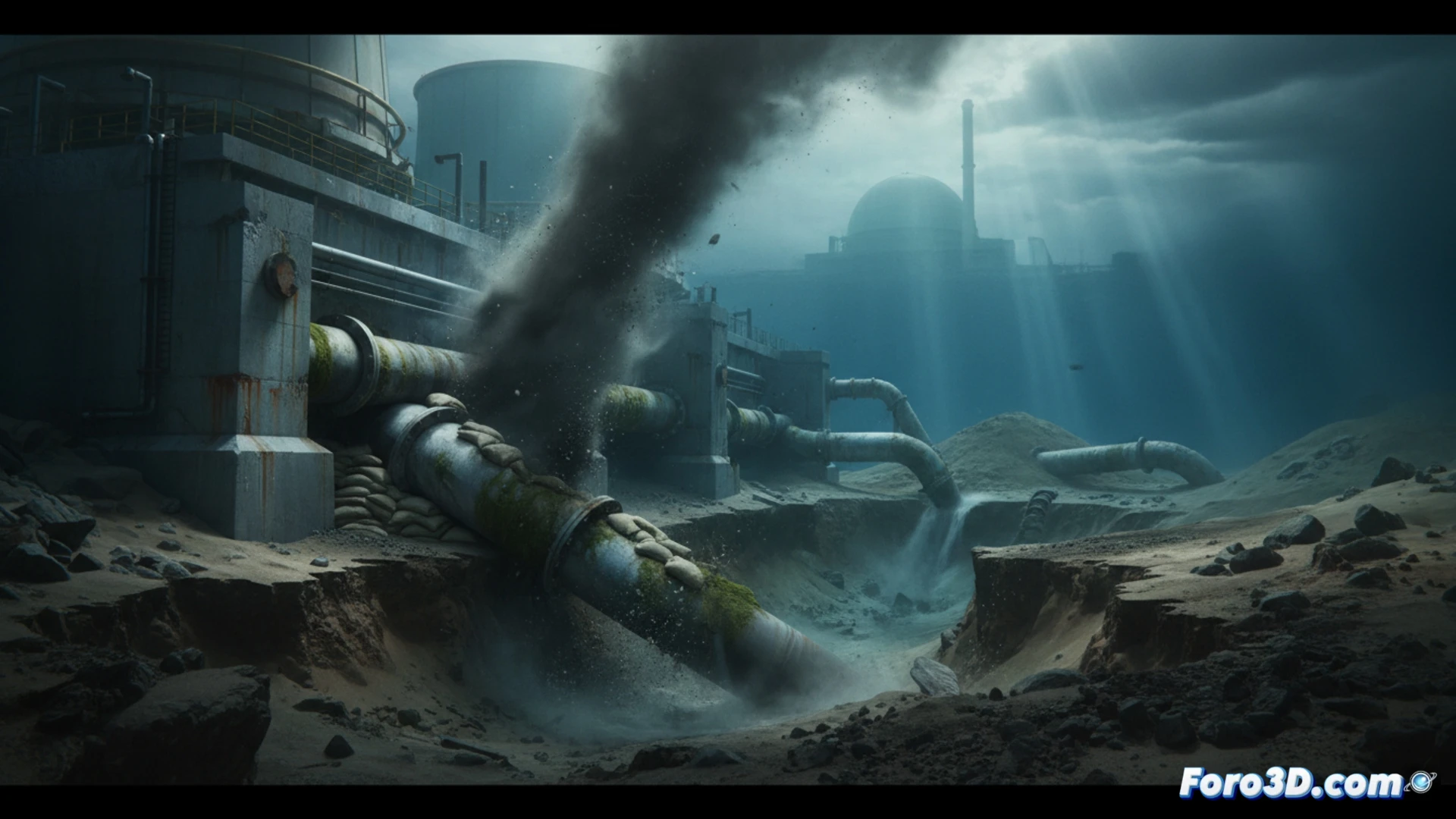
3D modeling and CFD simulation to predict hydraulic collapse 🌊
To analyze this threat, Blueview is used to generate point clouds of the seabed using high-resolution 3D sonar, identifying areas of scour and sediment deposits. This data is integrated into Ansys Fluent, where fluid dynamics and particle transport around the water intake are simulated. Finally, CloudCompare allows comparing temporal bathymetries, quantifying the erosion rate and predicting future blockages. The turbulent flow generated by the pump suction accelerates localized erosion, creating cavities that compromise the structural stability of the intake pipe.
Predictive monitoring as a barrier against disaster 🛰️
The solution is not just reactive, but predictive. Implementing a continuous monitoring system with multibeam sonars and periodic simulations allows anticipating critical sedimentation points. By visualizing the progress of erosion in 3D, operators can schedule selective dredging or redesign the intake grilles before the system fails. Ignoring this underwater risk is betting on a safety failure that no nuclear power plant can afford.
What real-time monitoring methods allow detecting submarine erosion on water intake pillars before it compromises the safety of the nuclear power plant
(PS: Simulating catastrophes is fun until the computer crashes and you are the catastrophe.)