Postural fatigue in flight decks not only affects pilot comfort but also compromises operational safety by reducing reaction times. Traditional ergonomic analysis, based on photographs and static measurements, has become obsolete compared to 3D process simulation. Today, it is possible to model every pilot movement within a digital twin of the cockpit, integrating motion capture data to predict musculoskeletal injuries before they occur in an actual flight.
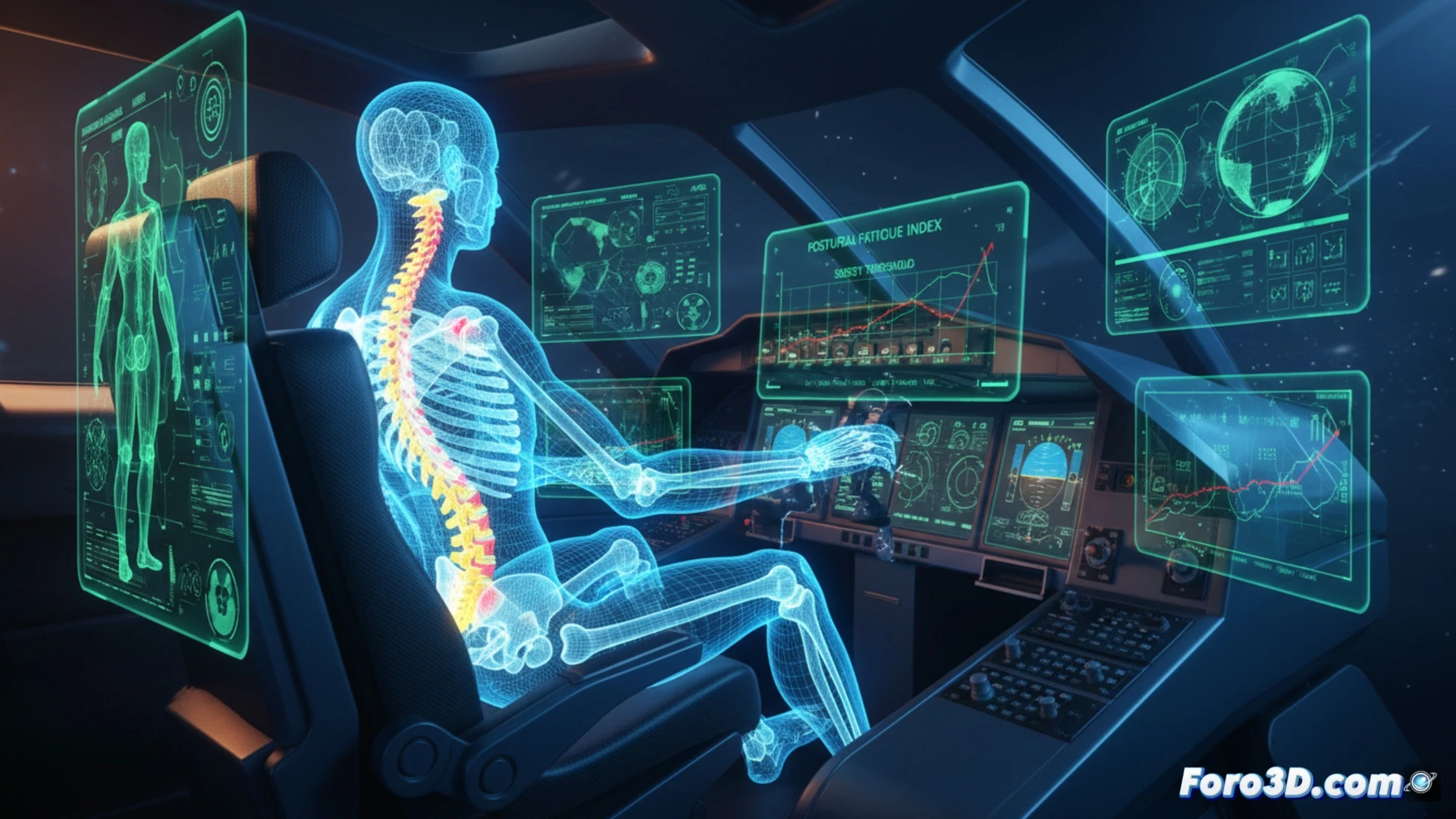
Digital human modeling and dynamic load evaluation 🛠️
Current technology allows importing digital human models (DHM) with variable anthropometry into simulation environments such as Unreal Engine or Unity. By synchronizing these models with data from inertial sensors and optical capture systems, an exact replica of the pilot's work process is generated. Analysis tools calculate in real time joint angles, force moments on the lumbar spine, and pressure at contact points with the seat. This approach makes it possible to redesign the layout of control panels and the location of controls to reduce biomechanical stress during critical maneuvers such as landing or takeoff.
Are we simulating the pilot or the process? 🤔
The temptation to optimize the cockpit as if it were an industrial production line can ignore human variability. Each pilot has unique fatigue patterns, influenced by their experience and physiology. Process simulation must include stochastic models that capture this diversity, not just statistical averages. Otherwise, we risk designing perfect cockpits for a non-existent pilot, while real operators continue to accumulate invisible strains on their shoulders and cervical spine.
What ergonomic simulation techniques allow predicting and mitigating postural fatigue in pilots during long-duration missions, thereby improving operational safety in the cockpit?
(PS: Simulating industrial processes is like watching an ant in a maze, but more expensive.)