The nutritionist, although associated with food health, faces occupational risks typical of an office environment: visual fatigue from screens, a sedentary lifestyle, and musculoskeletal disorders (MSDs). Added to this is the stress from dealing with the public and forced postures during consultations. From an occupational epidemiology perspective, these factors generate a silent burden of morbidity that deserves a detailed visual analysis.
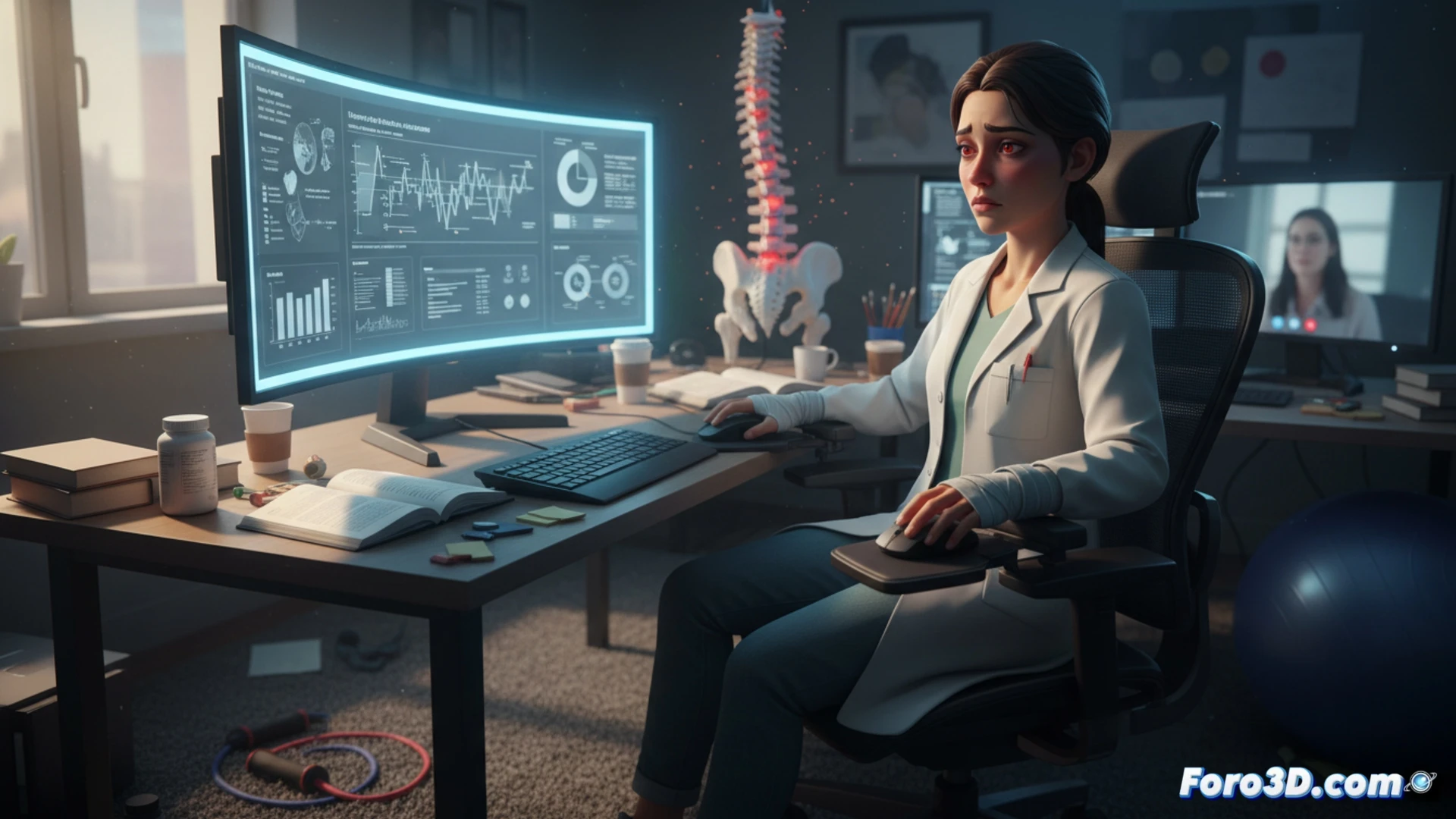
3D Modeling of Prevalence and Pain Zones 🖥️
We propose an interactive 3D infographic comparing the prevalence of MSDs and visual fatigue in nutritionists versus other office professions (programmers, administrative staff). The model will include a dynamic body heat map: the most affected areas (cervical, lumbar, and wrists) will light up according to accumulated hours in front of a screen. Additionally, 3D anatomical models will be integrated to contrast correct (ergonomic) and incorrect postures (cervical kyphosis, raised shoulders) during the nutritional consultation. Incidence data will be extracted from occupational public health studies, allowing the user to filter by weekly exposure hours.
Visualize to Prevent: The Body as the First Record 🧬
Visual epidemiology not only reveals numbers; it shows real physical wear and tear. By seeing a 3D heat map of their own back or neck, the nutritionist understands that the pain is not normal. This tool aims to turn prevention into a conscious act: adjusting monitor height, taking active breaks, and scheduling eye exams. Occupational public health begins by making the invisible visible.
As a nutritionist who spends long hours in front of 3D screens reviewing diets and analyses, how does the blue light peak from monitors affect your perception of food color and the accuracy of your visual health assessments?
(PS: at Foro3D we know that the only epidemic affecting us is the lack of polygons) 🎮