Ender Lilies: Quietus of the Knights proved that Unreal Engine 4 is not exclusive to hyper-realistic worlds. This indie title achieved a dark fantasy aesthetic with a living watercolor appearance, combining smooth animations with an oppressive atmosphere. For developers, the challenge was adapting a 3D engine to a 2D game without losing the pictorial essence. Here we break down the technical keys behind this visual achievement. 🎨
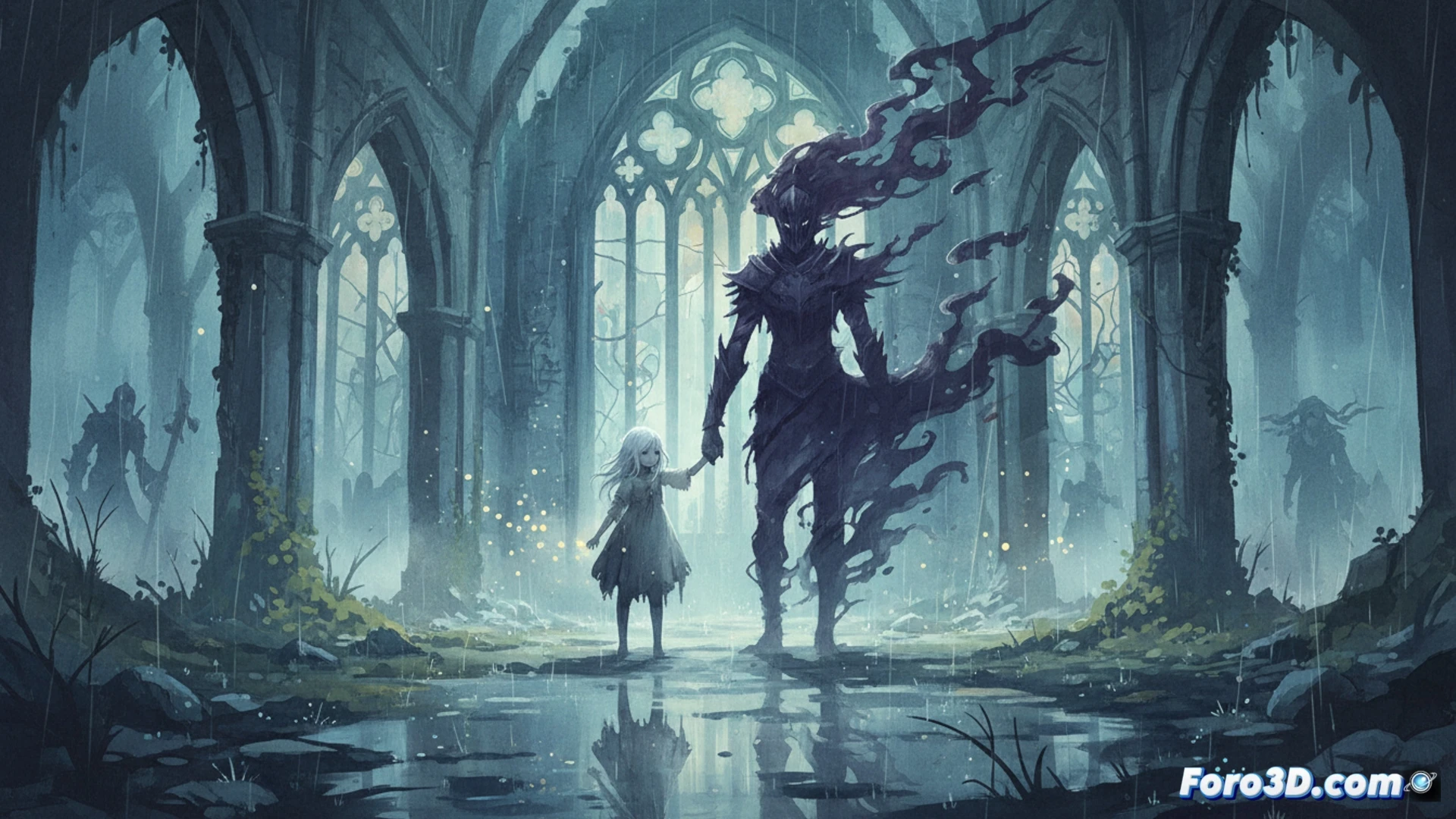
Lighting and shaders for a watercolor style 💡
The team used Unreal Engine 4's dynamic lighting system to create soft shadows that mimic ink dispersion on paper. Instead of static sprites, they applied custom shaders that blur edges and saturate colors in simulated wet areas. Post-processing played a crucial role: the vignette filter and Gaussian blur on background layers generate the depth of a painting. To optimize 2D assets in a 3D engine, they recommend using Flipbooks instead of meshes, and setting the Material Domain to Surface with a Translucent Blend Mode to control the opacity of each brushstroke. The key lies in fake normal maps: applying them to flat sprites so they react to directional light without needing complex geometry.
Lessons for indies seeking a pictorial soul 🖌️
Ender Lilies demonstrates that technical limitation can be an artistic advantage. If you work with Photoshop and Unreal Engine 4, prioritize tonal consistency over extreme resolution. Use post-processing layers to unify the palette and don't fear controlled visual noise; paper textures and fine grain reinforce the melancholy. For animations, maintain an intentionally low frame rate (12-15 fps) for character movements, while the environment flows at 60 fps. This contrast creates a unique visual signature that AAA games rarely explore. Remember: in indie development, style is not an ornament, it's the narrative.
As an indie developer, what specific lighting and post-processing techniques in Unreal Engine 4 do you recommend to emulate the melancholic painting style and atmospheric depth that Ender Lilies achieves without resorting to complex 3D models?
(PS: game jams are like weddings: everyone is happy, no one sleeps, and you end up crying)