The return of the Famicom Detective Club saga with Emio – The Smiling Man is not only nostalgic news, but a fascinating technical case study. Nintendo and MAGES have opted for a proprietary engine to orchestrate a visual novel that prioritizes narrative over 3D realism. The key to the project lies in how they have combined high-resolution digital illustration with a subtle facial animation system, making each character breathe emotion without the need for complex polygonal models.
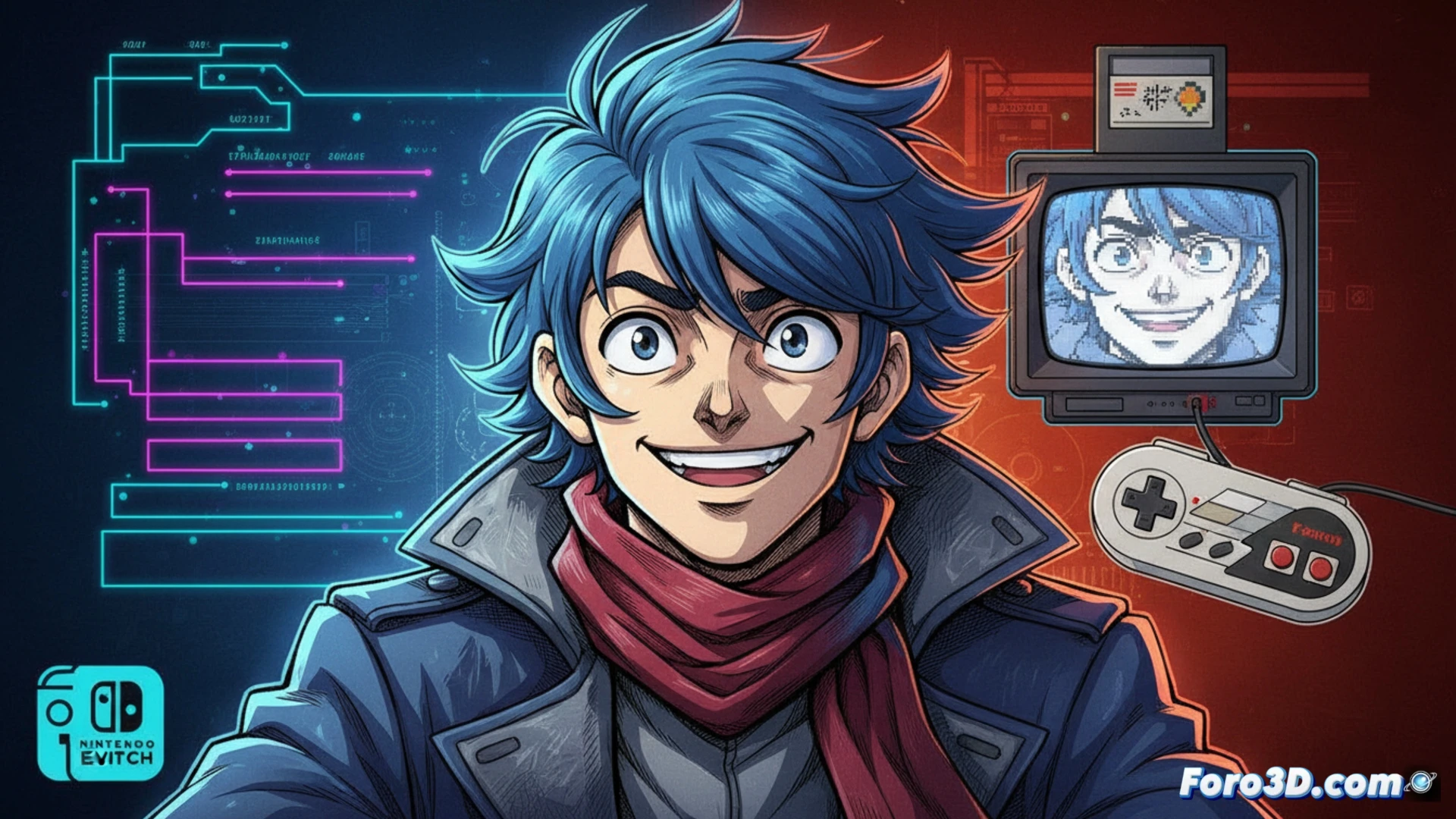
Workflow: Static illustration with an animated soul 🎨
Emio's artistic pipeline begins in Clip Studio Paint, where illustrators generate 2D characters with a level of detail rivaling high-end concept art. The true technical innovation comes from integrating these illustrations with a system similar to Live2D. Instead of rendering a 3D model, the proprietary engine applies subtle deformations to the layers of the original illustration. This allows lips to move while speaking, eyebrows to furrow, and eyes to blink, generating an expressiveness that maintains the aesthetic coherence of the original drawing. This approach optimizes performance by eliminating the computational cost of 3D lighting and shading, focusing all resources on the fluidity of facial transitions and anime-style cinematics.
Efficient narrative without technical complexity 🎭
The decision to use a proprietary engine with 2D animation over Live2D demonstrates a very clear design philosophy: the story is the engine. By avoiding the development of a full 3D system, developers can dedicate more time to polishing the timing of dramatic pauses and lip-syncing. For any visual novel creator, Emio is a reminder that technology should not overshadow the narrative. Investing in high-level illustrators and an efficient 2D deformation system can generate a greater emotional impact than an empty open world, proving that expressiveness doesn't always require polygons.
As a developer, which 2D sprite or limited animation techniques do you consider key to achieving emotional expressiveness in a character like Emio, and how do they compare to those used in the original Famicom Detective Club installments?
(PS: a game developer is someone who spends 1000 hours making a game that people complete in 2)