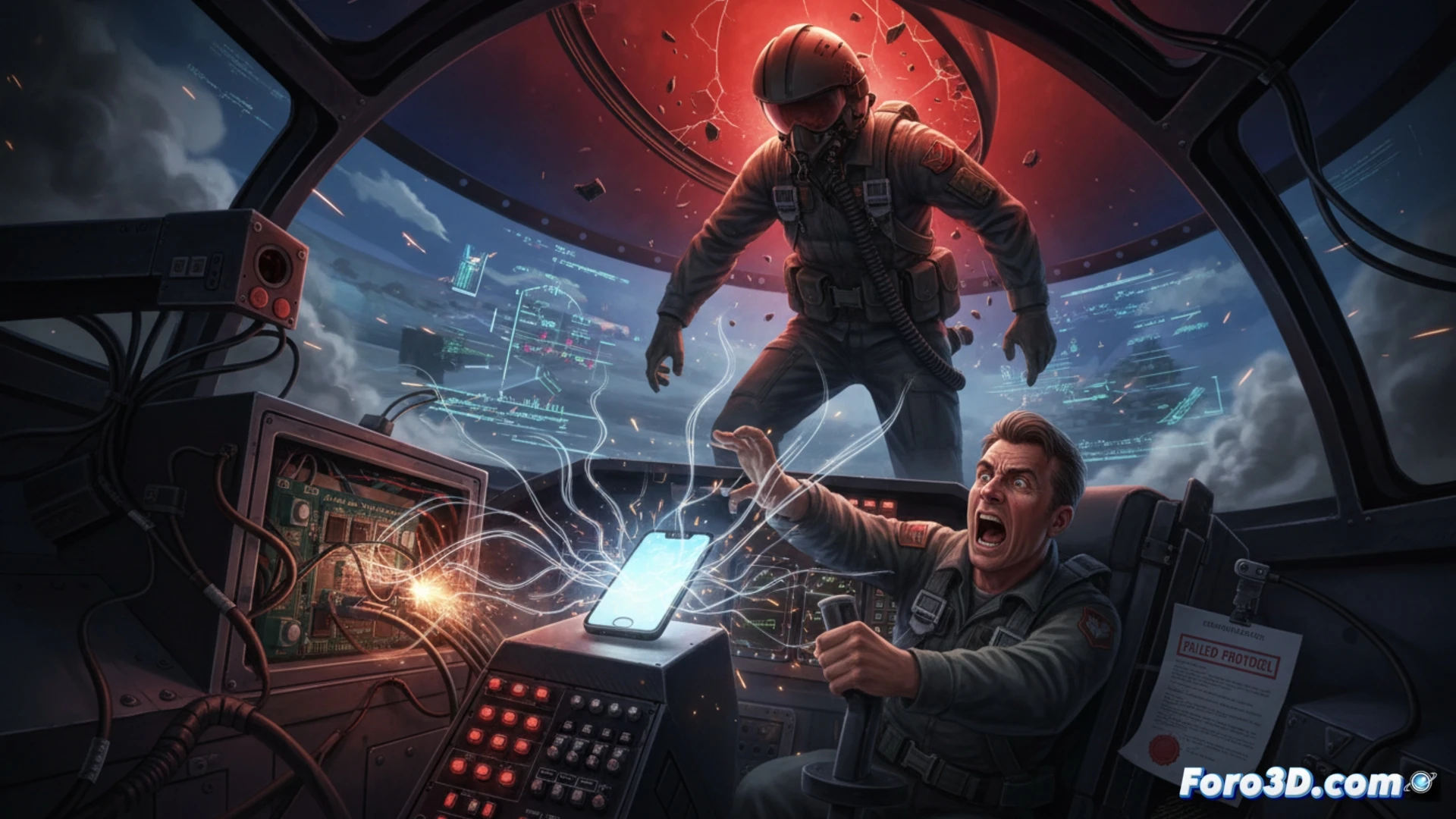
A failure of the emergency ejection system in a combat simulator, triggered by electromagnetic interference (EMI) from an operator's mobile phone, exposes a serious vulnerability in the design of these environments. The incident, modeled with tools such as CST Studio Suite, CATIA, and Blender, transcends the technical to become a case study in digital compliance. The lack of anti-EMI shielding and the absence of restrictive protocols regarding electronic devices in critical training areas violate basic safety standards, endangering the physical integrity of military personnel, a particularly vulnerable group.
Technical-regulatory analysis and legal responsibilities ⚖️
From a digital law perspective, the simulator manufacturer has an obligation to comply with electromagnetic compatibility (EMC) regulations such as Directive 2014/30/EU or its military equivalents. The simulation in CST Studio Suite shows that the frequency of a common smartphone can couple with the actuators of the ejection system, constituting a foreseeable design defect. The training center operator, for their part, breaches their duty of care by not implementing electromagnetic silence zones or Faraday cages. Both parties can be considered jointly liable for damages and losses, as well as for administrative infractions regarding occupational safety, according to the principle of technological risk prevention.
Towards a culture of anti-EMI compliance in defense 🛡️
This incident should be a catalyst for auditing shielding protocols in all combat simulators. Recommendations include: certifying equipment against EMI under military standards (MIL-STD-461), banning the use of mobile phones in simulation rooms through signal blocking systems, and conducting periodic electromagnetic immunity tests. Digital compliance not only protects the operator from sanctions but also guarantees the lives of soldiers in training. Ignoring these lessons is to expose oneself to a systemic failure that turns technology into a weapon against those who must train with it.
Given the risk of EMI in military simulators, such as the failure of the emergency ejection system, what digital compliance and cybersecurity regulatory measures should be implemented to prevent these incidents before they become legal liabilities?
(PS: fines of €79,380 are like failed renders: they hurt more the longer you've been at it)