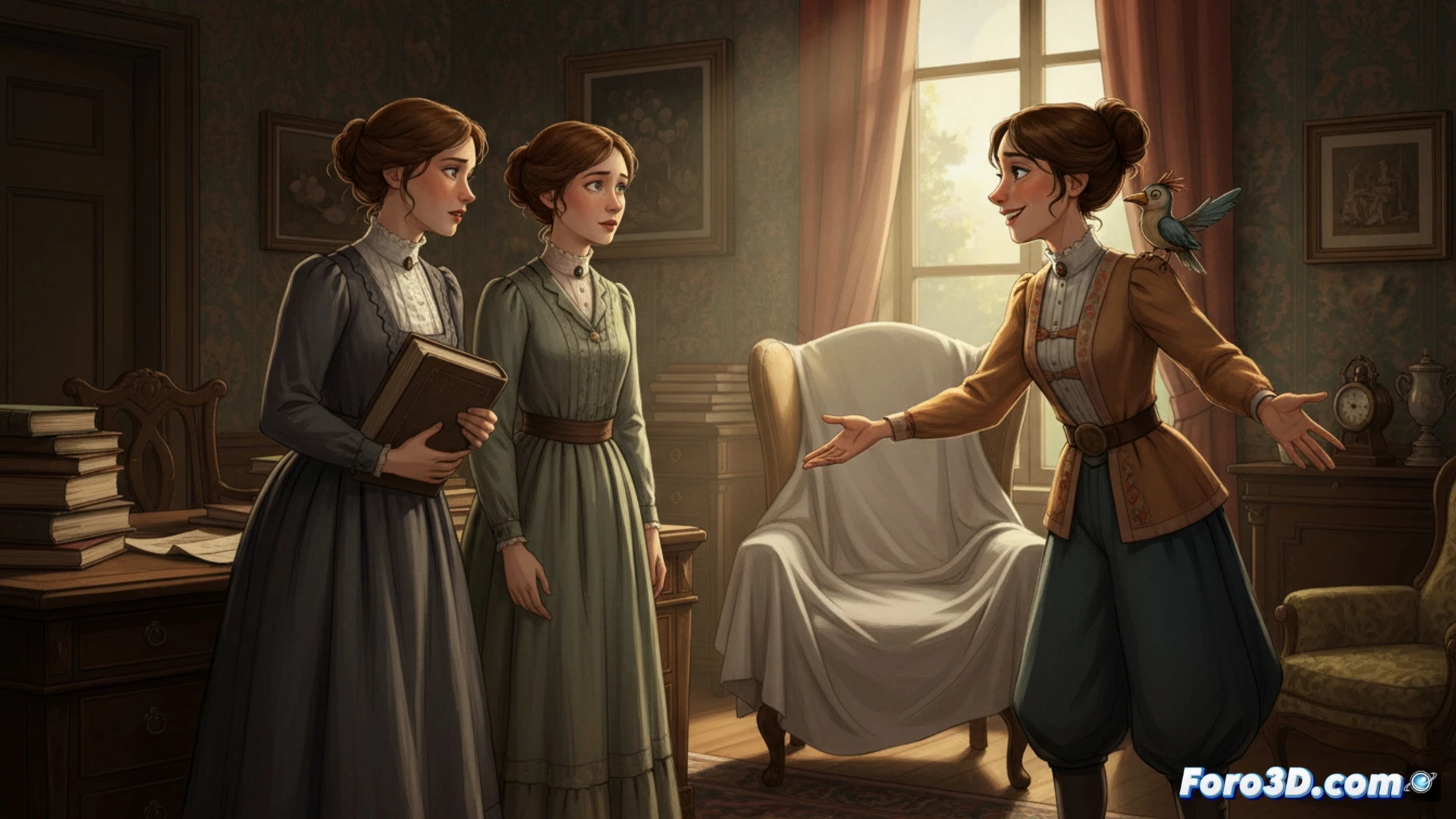
British filmmaker Elizabeth Hobbs adapts Katherine Mansfield's 1921 story in her new animated short film. The work follows two sisters who, after the death of their authoritarian father, attempt to reorganize their lives with a mix of clumsiness and restrained liberation. The director applies subtle humor to explore the weight of obedience and the fear of autonomy.
Artisanal animation and narrative layers 🎨
Hobbs uses a hand-drawn 2D animation technique, with strokes that mimic the texture of watercolor. The color palette shifts between sepia tones for memories of the father and more vibrant colors for the sisters' moments. The editing plays with smooth transitions that reflect the protagonists' internal confusion. The soundtrack uses silences and domestic sounds to reinforce the oppressive yet ridiculous atmosphere of family routine.
The father is dead, but his shadow still asks for tea ☕
The sisters spend the short film arguing about whether to move the wall clock or whether the deceased's parrot still belongs to the colonel. Hobbs portrays grief as a series of absurd decisions: they don't know whether to cry, celebrate, or keep making the beds as he ordered. The moral is clear: escaping the shadow of a tyrant is harder than dusting his belongings. In the end, one sister smiles. The other, not so much.