In Cyprus's parliamentary elections, the far-right party ELAM positioned itself as the third political force by obtaining 11% of the vote. The traditional parties DISY (27%) and AKEL (23.8%) maintained their leadership, while the centrist formations supporting the president suffered significant losses. With a turnout of 66.6%, the results reflect growing citizen frustration over corruption and the high cost of living, which could complicate governance in the near future.
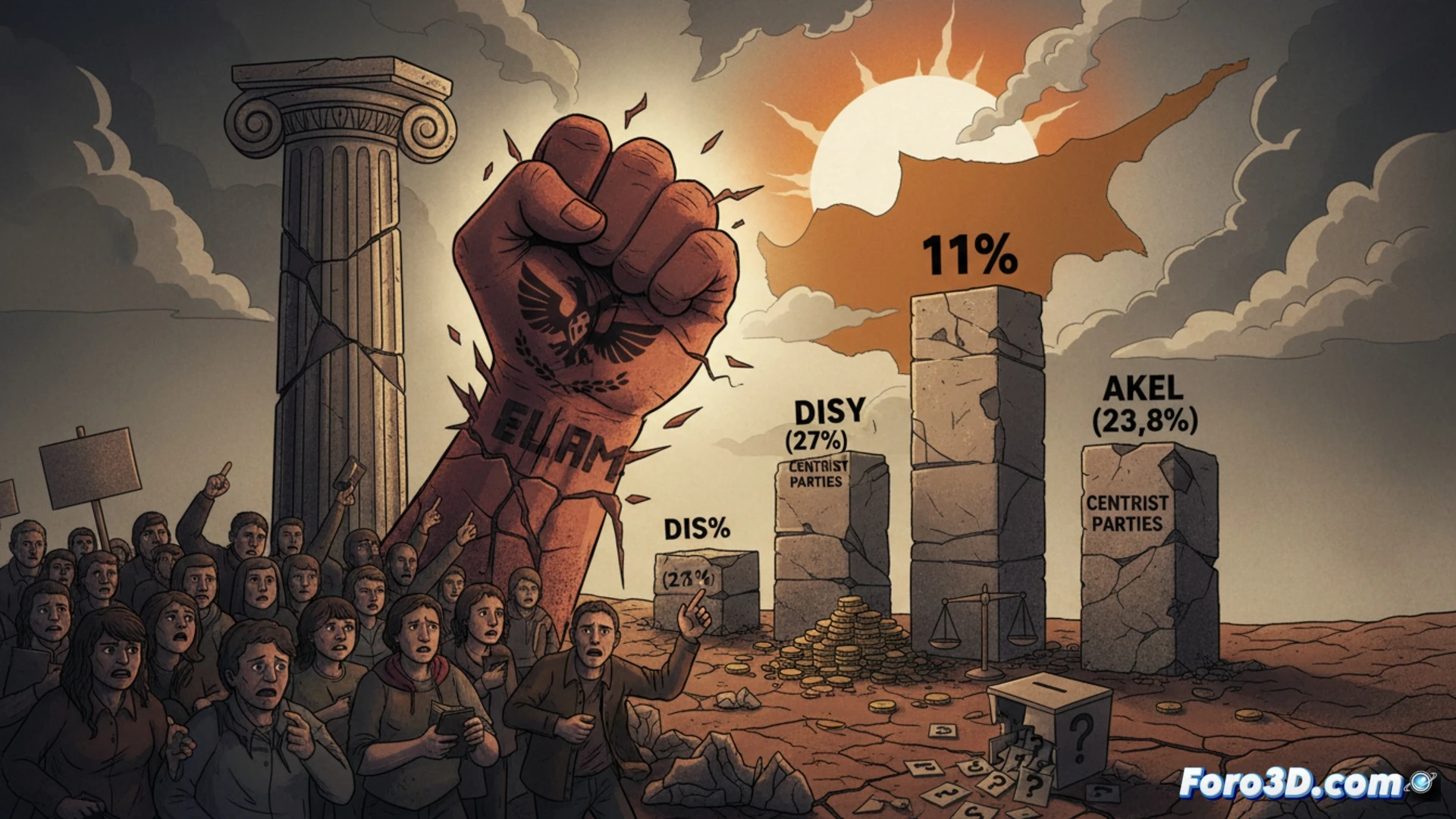
The digital pattern of the protest vote on open platforms 🗳️
The rise of ELAM can be understood as a protest vote channeled through social networks and digital forums where distrust of elites is amplified without filters. These spaces, with algorithms that prioritize polarizing content, allow parties like ELAM to connect with frustrated voters through simple and direct messages. Here, technology functions as an accelerator of political trends: YouTube and Facebook's recommendation systems do not distinguish between viable proposals and populism, they only measure engagement. The result is an ecosystem where discontent organizes faster than institutional solutions.
The democracy app: failed update, reboot required 📱
If Cyprus were an app, the election results would be the equivalent of a one-star review on the Play Store. Users (voters) report serious bugs: recurring corruption, price inflation, and an interface (the government) that does not respond to their commands. The developers' (politicians') solution is usually to release a cosmetic patch and ask for patience. But voters, like advanced users, have found an unofficial mod called ELAM that promises to clean up the system, although many suspect it comes with more malware than solutions.