The Buzzer, a minor character from Marvel's Golden Age, created by Stan Lee and Al Avison, represents a fascinating case of intellectual property. A World War II veteran with mongoose-like super speed, this ephemeral hero illustrates how Marvel protects even its most obscure characters under a corporate copyright that prevents their free use in the public domain.
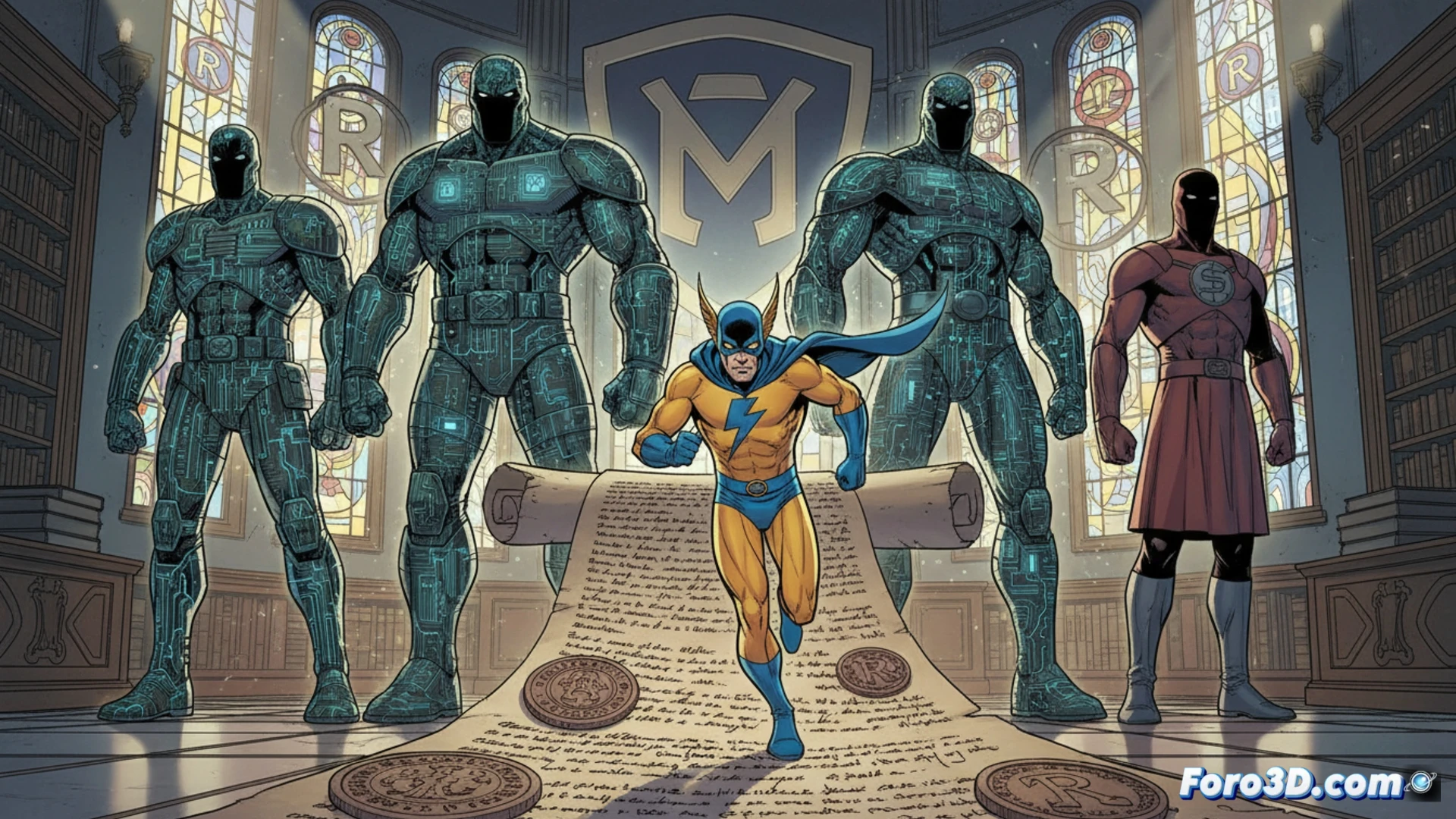
Legal protection and barriers to 3D digitization ⚖️
Although The Buzzer appeared in only a few Invaders stories, Marvel retains exclusive rights to his name, appearance, and origin. For creators of 3D models or NFTs, this means that any digital representation of the character requires an official license. Corporate copyright extends protection up to 95 years from publication, blocking its use in commercial projects. However, radical transformations or parodies could qualify as fair use, as long as they do not directly compete with Marvel's market.
Implications for digital art and remix culture 🎨
The case of The Buzzer warns 3D artists about the risks of digitizing classic heroes without verifying their legal status. While major characters like Captain America are strictly monitored, forgotten secondary characters may fall into gray areas. The best practice is to consult the original publication date and look for characters that have entered the public domain, or create derivative works that are sufficiently transformative to avoid infringement.
What implications does this decision have for video game studios using AI in their assets?