The new Transformers series (Skybound), under the creative direction of Daniel Warren Johnson, doesn't just reboot the civil war between Autobots and Decepticons; it redefines it visually. For a VFX expert, the most significant change is the abandonment of clean, polished surfaces in favor of a heavy, brutal mechanical aesthetic. Here, battle damage isn't an accessory; it's the primary visual narrative, a testing ground for fragmentation and material wear simulation that any visual effects pipeline should study.
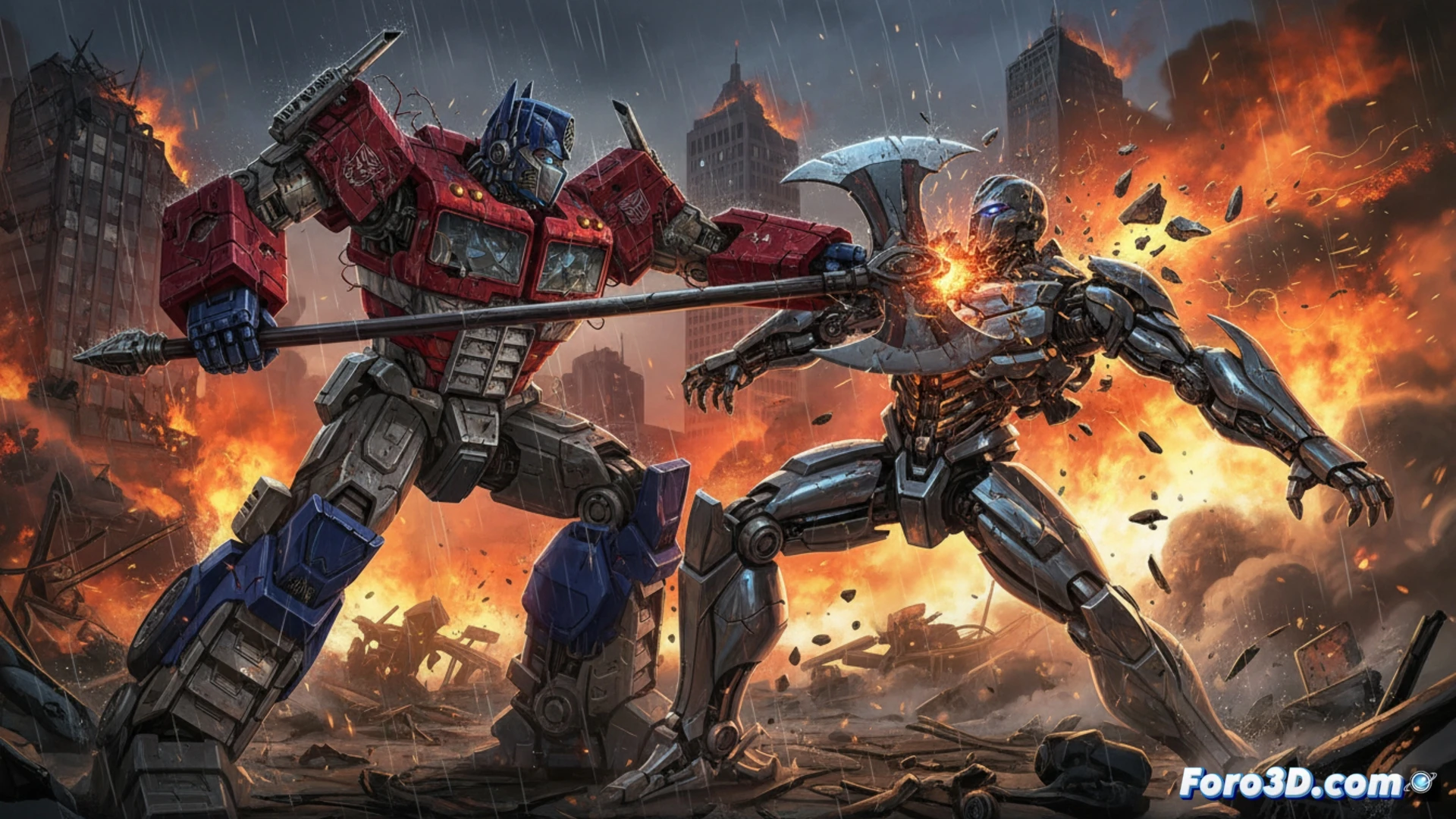
Fragmentation and material wear simulation in the 3D pipeline 💥
The key to Johnson's approach lies in procedural texturing and fracture simulation. While other franchises opt for a heroic finish with perfect specular geometry, here every blow leaves a scar. In a real 3D pipeline, this would translate to using rigid body dynamics (RBD) simulations for flying scrap pieces, combined with wear maps generated by the physics engine (as in Houdini). Stress lines, rust, and dents are not hand-painted; they are the result of a collision simulation that deforms the base mesh. This dynamic destruction approach allows the metal to feel real, with a weight that is perceived in every movement—something current game engines seek to replicate with real-time damage systems.
The weight of war: from panel to final render ⚙️
What makes this comic unique is its direct translation into fluid and particle dynamics. The battle is not clean; there is oil, sparks, and metallic dust. In VFX, this is achieved through simulations of viscous fluids for the hydraulic oil dripping from damaged joints and particle systems for cutting sparks. Johnson makes the reader feel the impact, something visual effects artists strive for in every action shot. If this aesthetic were transferred to a feature film, the VFX supervisor would prioritize sheet metal tear simulation over light flares, proving that a robot's true strength lies not in its shine, but in the evidence of its endurance.
What do you think about this advancement?