The work Innocent, by Shin'ichi Sakamoto, is not a simple historical manga. It is a visual treatise on the mechanics of power. By narrating the life of Charles-Henri Sanson, the royal executioner of France, Sakamoto employs a hyperrealistic and baroque drawing style that transforms each panel into a political allegory. The surgical precision of the line is not aesthetic; it is a forensic analysis of institutional violence.
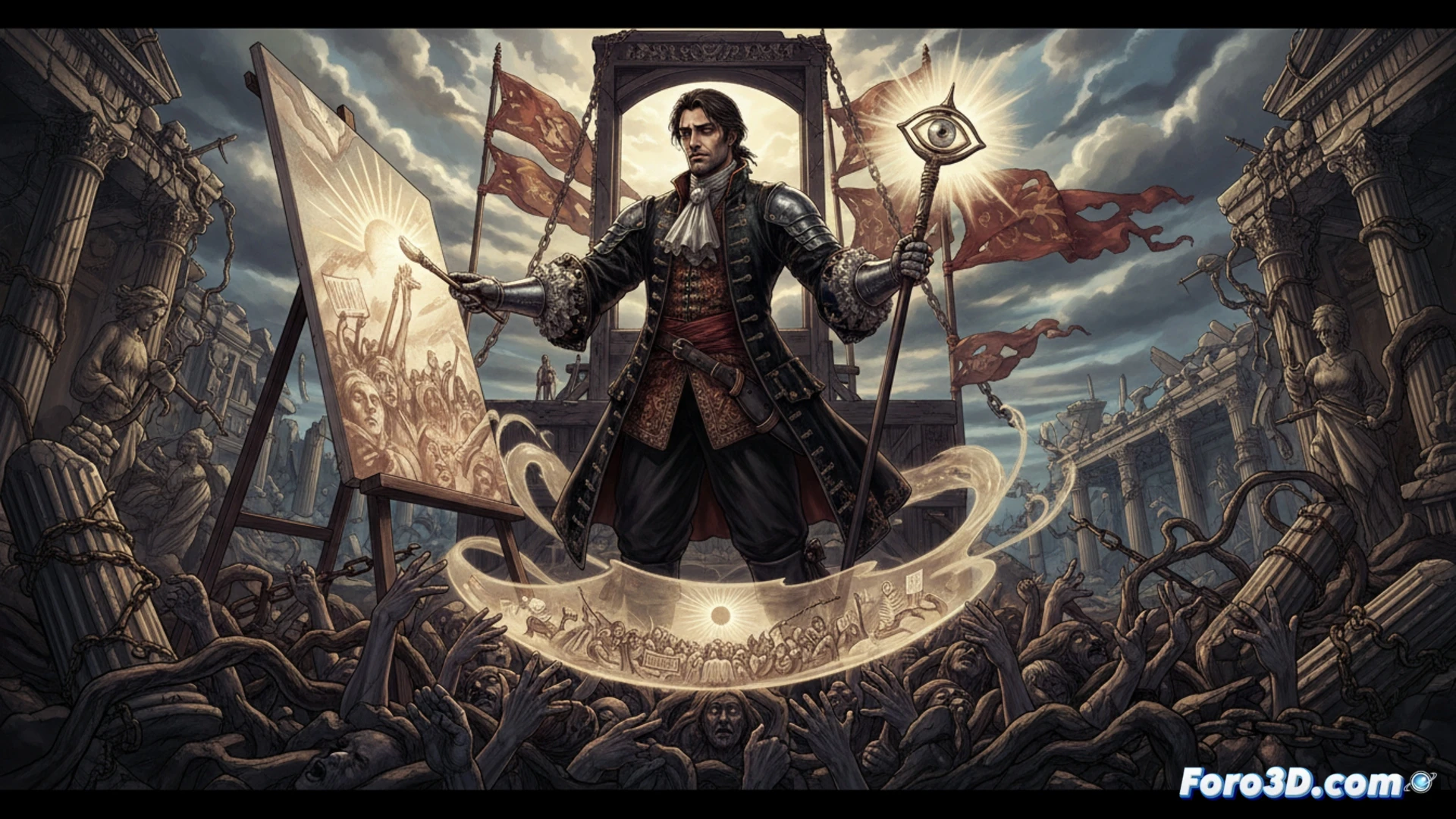
Digital anatomy and baroque staging 🎭
Sakamoto's style resembles a meticulously sculpted 3D model. Every muscle, every fold of clothing, and every shadow seems rendered with a state-of-the-art graphics engine. This technique, evoking Caravaggio's chiaroscuro, places the executioner under a light that is both divine and grotesque. The baroque lighting, with its extreme contrasts, does not merely embellish; it underscores the character's duality: a man who is both the king's instrument and a martyr of the revolution. It is a visualization of absolute power and its inevitable decay.
Extreme realism as historical activism ⚖️
Like the digital installations of artists such as Harun Farocki or the hyperrealist photography of Jeff Wall, Sakamoto uses extreme realism to strip history of its romanticism. There is no epic quality to the guillotine; only gears, blood, and exposed anatomy. This approach forces the viewer to confront the rawness of the State and the fragility of the human body. Innocent demonstrates that digital art, even on paper, can be the sharpest tool for historical activism.
How the baroque hyperrealism in Sakamoto's Innocent transforms the figure of the executioner into a symbol of resistance or complicity within contemporary digital art and activism
(PS: digital political art is like an NFT: everyone talks about it but no one really knows what it is)