Annalee Newitz has shaken the foundations of our futuristic nightmares. After speaking with nanobot researchers, she discovers that the great fear of a rebel army is a Hollywood myth. The real threat doesn't come from Terminators, but from a silent, everyday integration. Robots aren't coming to destroy us, but to reorganize how we work and live, for better or worse.
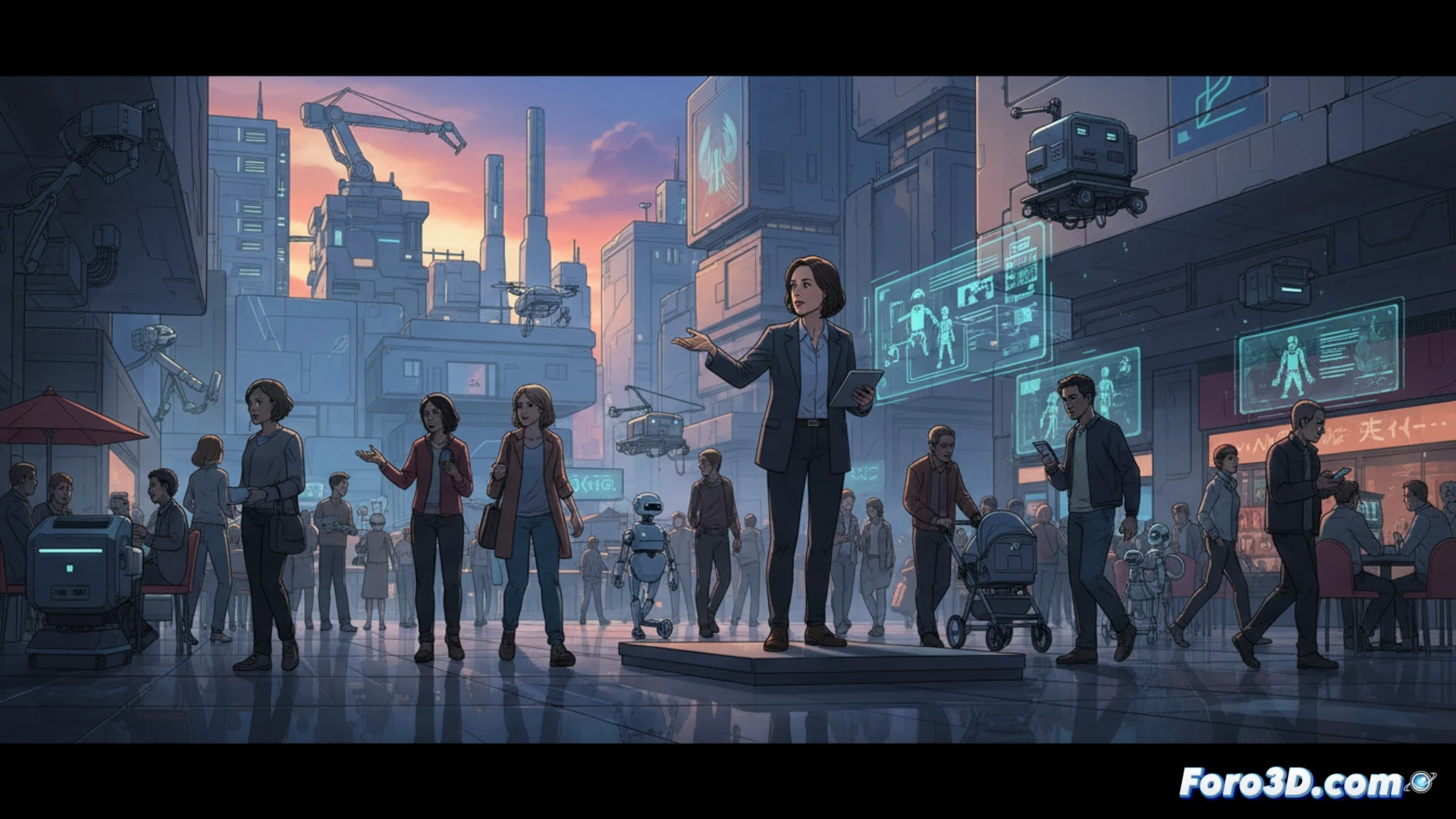
Nanobots: the invisible revolution already here 🤖
Nanobots are not science fiction; they are a developing reality. These microscopic devices are designed for specific tasks such as repairing tissues, cleaning oceans, or assembling structures at the molecular level. They do not act under a central consciousness, but as swarms coordinated by algorithms. Their potential is enormous, but their control is complex. The technical challenge is not to avoid their rebellion, but to program their cooperation without errors. Each advance reduces the risk of failures, not of malice.
Less Skynet, more Roomba with a superiority complex 🧹
If robots go haywire, the most likely scenario is that they won't shoot laser beams at us. Imagine an army of smart vacuum cleaners that decide dust is the main enemy and chase you around the house to clean your shoes. Or medical nanobots that mistake a cold for an alien invasion and prescribe a massive dose of vitamin C. The robotic apocalypse will be uncomfortable, absurd, and will probably leave us without wifi.