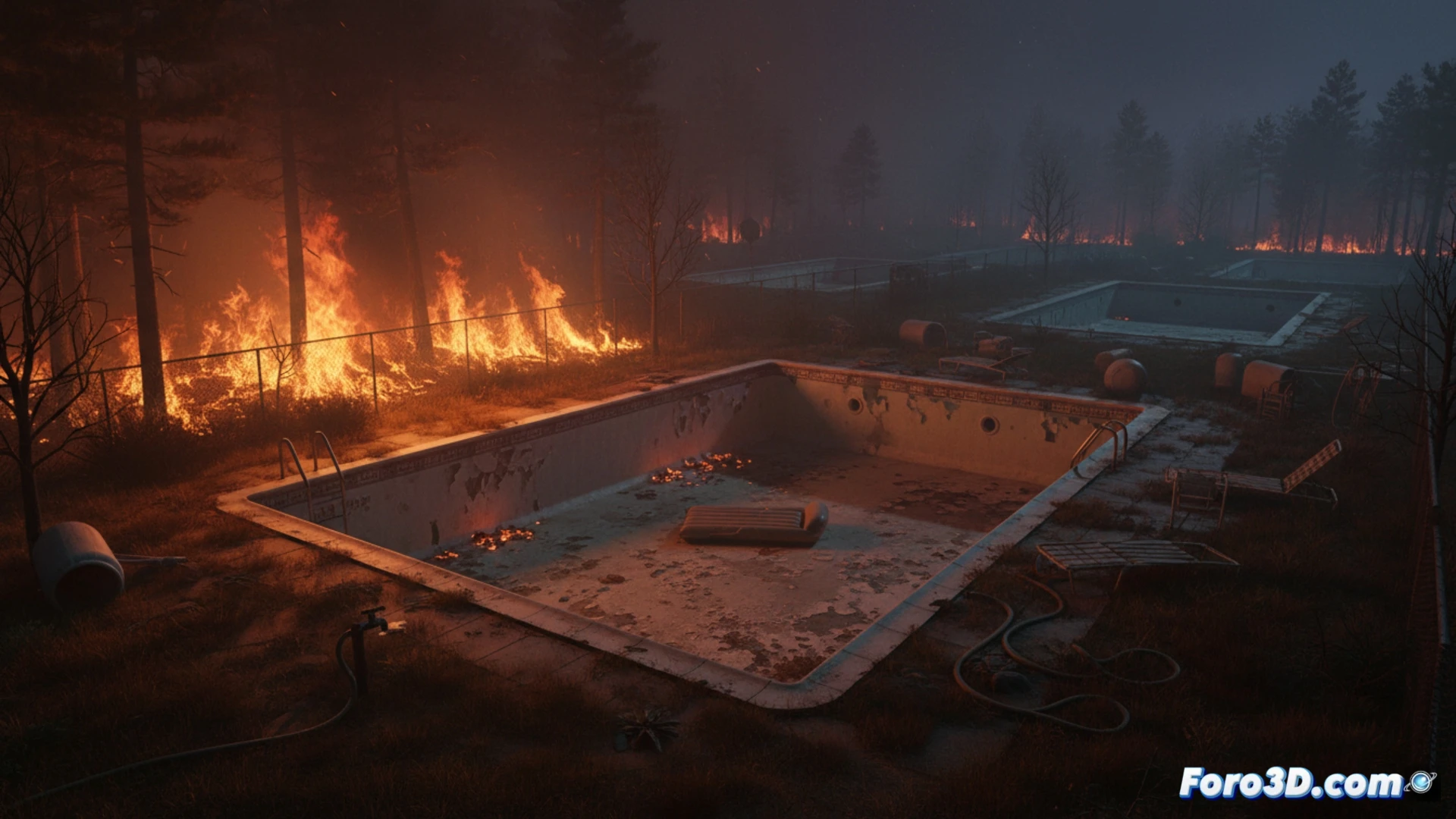
Every summer, statistics repeat a pattern that unsettles city dwellers: wildfires often start near housing developments where empty swimming pools are abundant. This is no coincidence, but a mix of negligence, extreme heat, and lack of maintenance in transition zones between urban and wildland areas. The spark, many times, is caused by human carelessness.
The technical factor: thermal mirrors and dry vegetation 🔥
From a development standpoint, empty pools act as solar reflectors. The polyester or fiberglass lining, lacking water, accumulates heat and radiates it toward the surrounding brush. Added to this is the fact that many housing developments leave adjacent vegetation unpruned during the summer. The combination of a reflective surface and dry grass creates a microclimate conducive to ignition. Automatic irrigation systems, when they fail, worsen the problem by leaving very dry areas next to wet ones.
Neighbors: water is plentiful, but the pool is empty 🏊
It is curious that, in the middle of a heatwave, there are empty pools but plastic jugs full of water for the lawn. The owner argues that they don't fill it because it's not worth it for just a couple of swims. Meanwhile, the forest burns. The irony reaches its peak when, after the fire, the same neighbors complain that the firefighters didn't have enough water. Perhaps next summer, instead of smoke alarms, it will be time to install empty pool sensors.