Signalis is not only a tribute to 90s survival horror, but a technical case study on how to emulate the PS1 aesthetic with modern tools. The game uses Unity as its base engine, but its visual magic lies in a meticulous combination of low-poly modeling in Blender, dense pixel texturing in Photoshop, and post-processing filters that replicate the distortion of a CRT tube. We analyze the process behind this retro style. 🎮
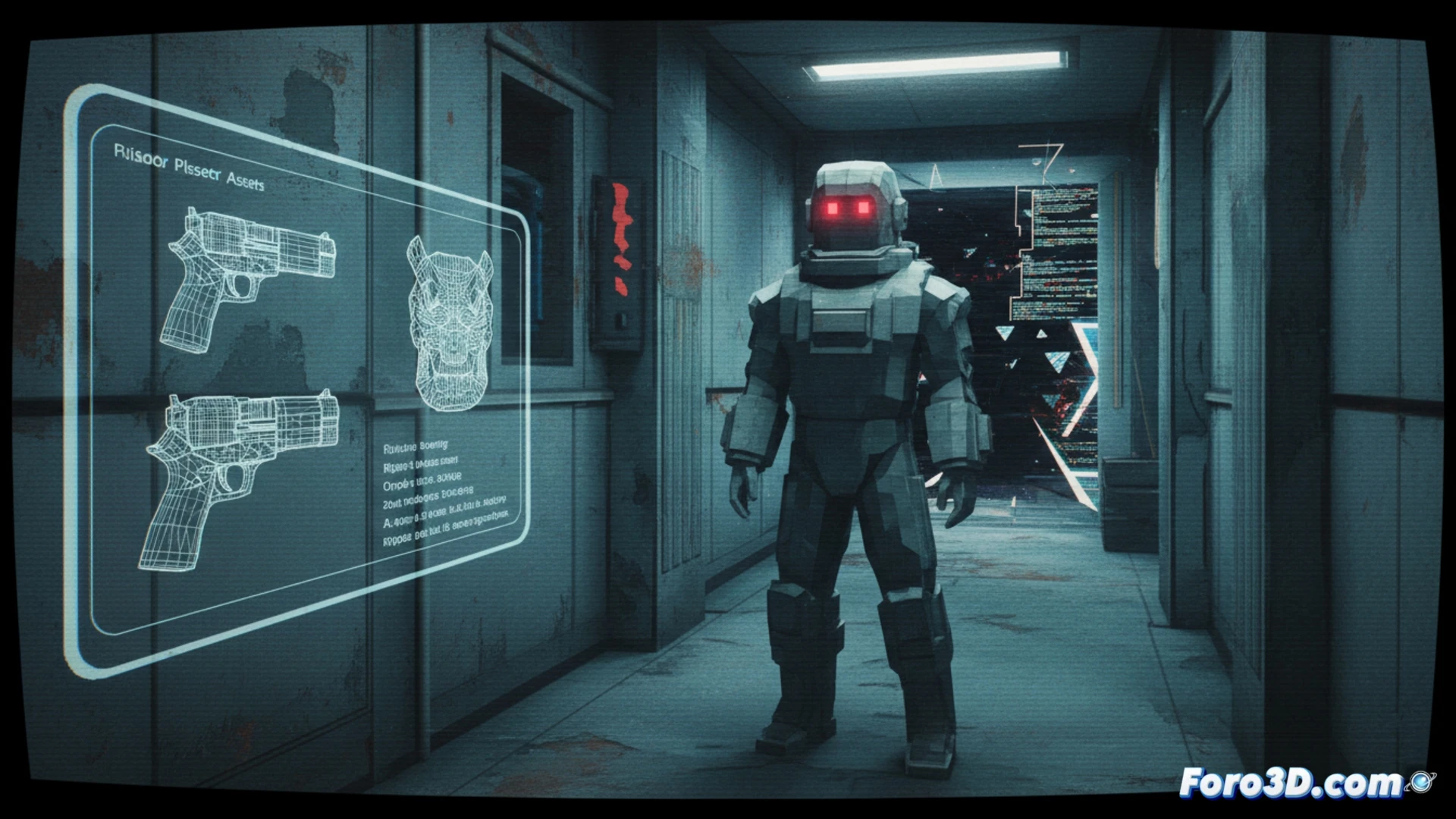
Low-poly modeling and dense pixel textures in Blender and Photoshop 🧊
The rose-engine team opted for a workflow that prioritizes technical limitation. In Blender, characters and environments are modeled with an extremely low polygon count, similar to the first PlayStation. This not only saves time but forces designers to be expressive with simple shapes. The key lies in the textures: in Photoshop, 32x32 or 64x64 pixel maps are painted with high contrast. By applying these low-resolution textures to simple models, that characteristic jagged and grainy look is generated. In Unity, bilinear filtering (anisotropic filtering) is disabled so that pixels appear sharp and not blurred.
CRT filters and tips for replicating the style in Unity 📺
The final finish of Signalis is achieved with post-processing filters. A CRT noise effect (scanlines) is applied to simulate horizontal scanning lines, along with subtle chromatic aberration that separates the red and blue color channels at the edges of the screen. For indie developers, the advice is simple: in Unity, use a custom Shader Graph to apply noise and edge distortion. Don't overdo the effects; the success of Signalis lies in the filter being noticeable but not annoying, allowing the game's oppressive atmosphere to be sustained on a coherent technical foundation.
As an indie developer, what specific Blender and Unity techniques did the Signalis team use to replicate the technical limitations of the PS1, such as wobbly geometry, low texture resolution, and color dithering, without sacrificing modern gameplay?
(PS: 90% of development time is polishing, the other 90% is fixing bugs)