Andy Warhol, Rubens, or Raphael didn't paint every stroke of their masterpieces. They delegated execution to assistants. Their true value wasn't in their hand's steadiness, but in their refined judgment and taste honed after years of practice. To develop this essential skill, the article proposes a concrete method: analyze one artwork per day to understand why it works or doesn't, and learn to defend creative decisions with rigorous critique.
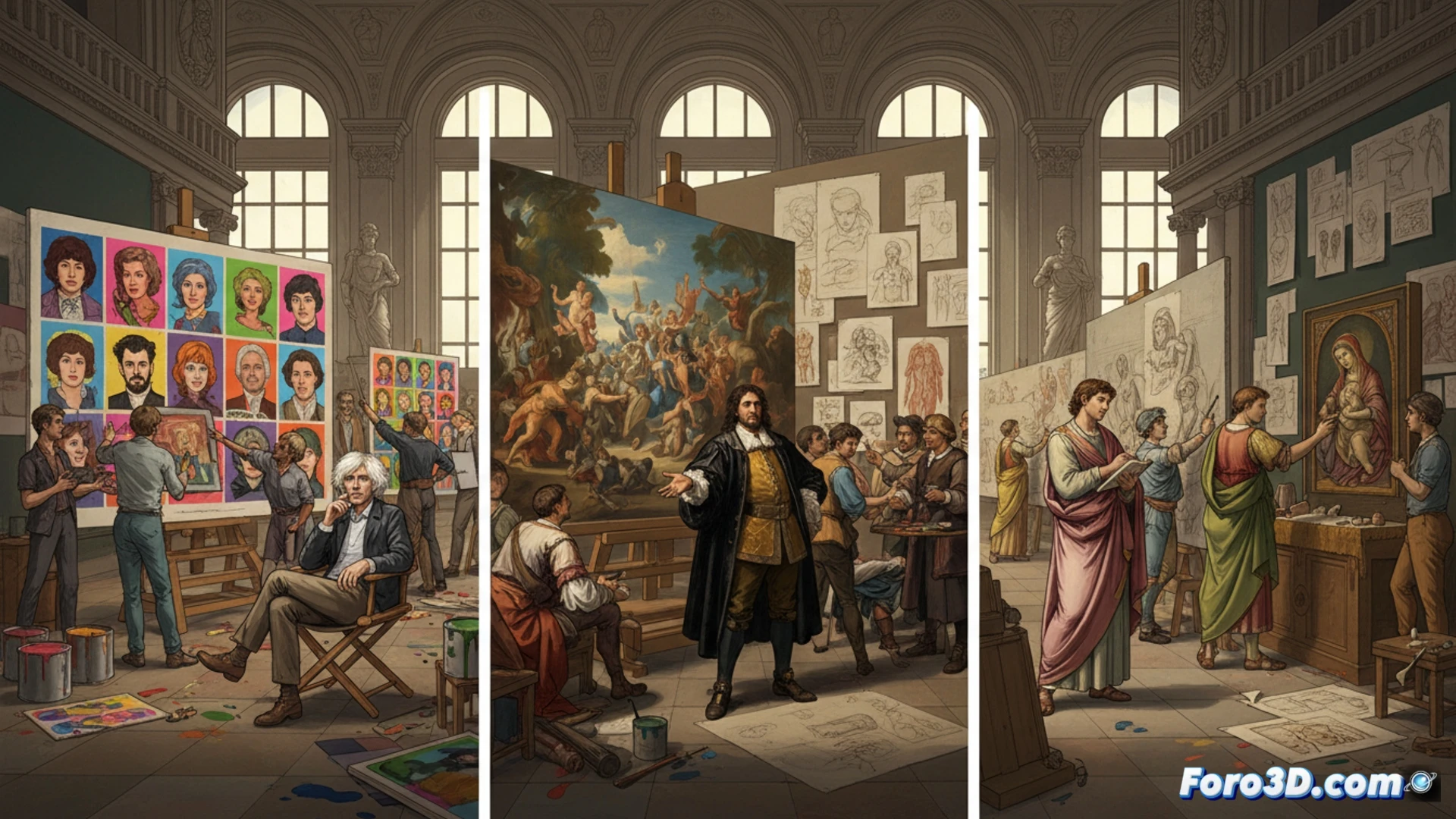
The Eye as Engine: Daily Analysis and Defense of Judgment 🎨
The key is to train your eye with discipline. Choose an artwork, digital or physical, and ask yourself: what elements support it? Composition, color, contrast, or visual rhythm. Note why it fails or succeeds. Then, replicate the method of designers like Paul Rand: defend every decision with solid arguments, not personal tastes. This rigorous critique, applied to your work and others', forges a judgment that no software can replace. Without analysis, you only repeat patterns.
The Someone Else's Brush Syndrome: When Delegating Goes Wrong 😅
Sure, delegating sounds like a work paradise: you give ideas, others sweat. But watch out, because without that trained judgment, your assistant (or your intern) will hand you a painting that looks like a failed 90s meme. It's not their fault; it's yours for not knowing how to explain why that blue doesn't work. Next time you want to imitate Warhol, make sure you have a critical eye, not just a director's chair.