On the night of March 16, 1244, before the flames of Montségur Castle consumed over 200 Cathars, a group of fugitives is said to have descended the steep slopes of the pog, carrying a cargo of sacred objects. This treasure, which would include the legendary Cathar Grail, Gnostic manuscripts, and gold ingots, has never been found. Digital archaeology today offers a unique opportunity to solve this 800-year-old enigma. 🏰
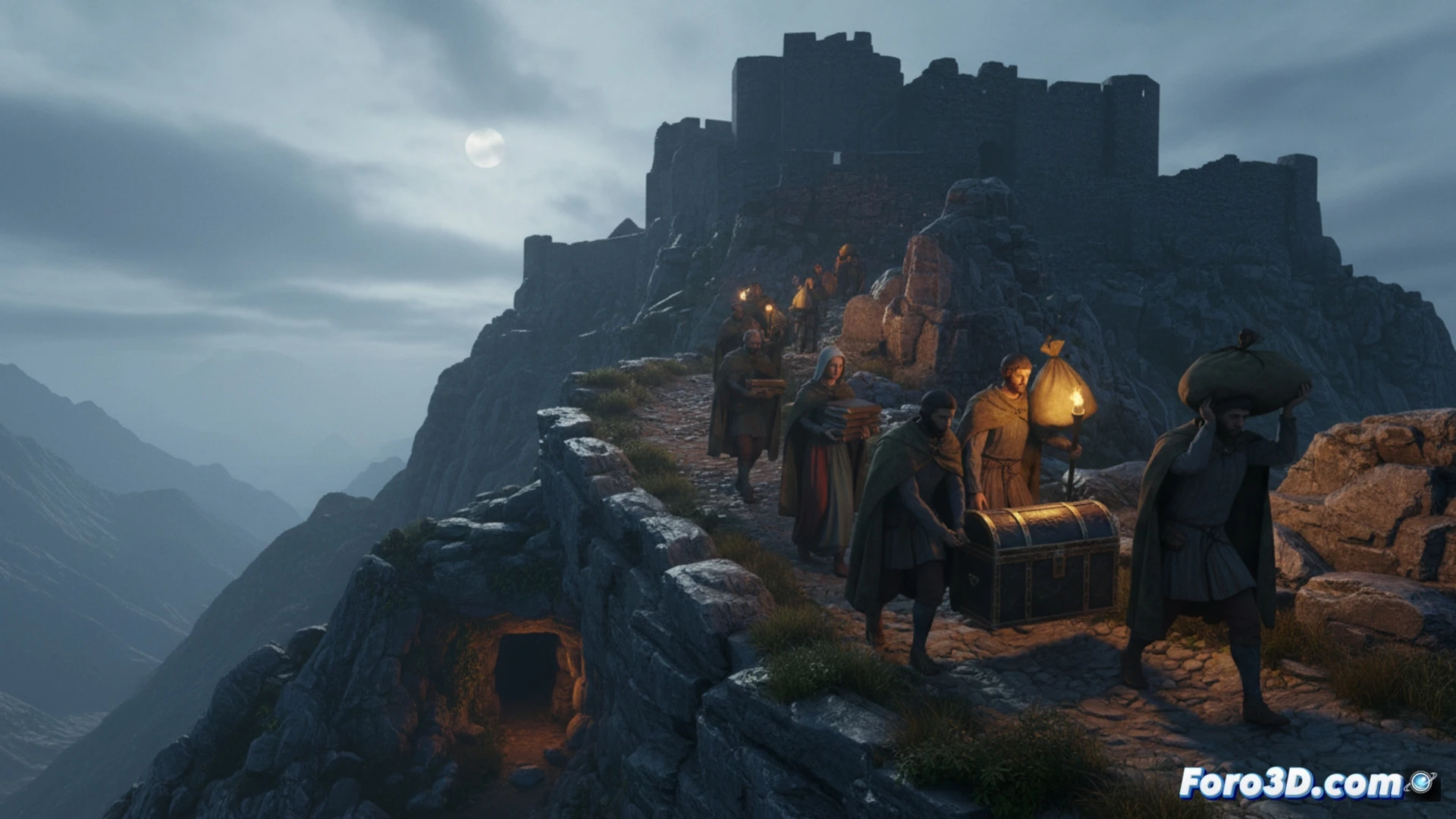
Aerial Photogrammetry and Escape Route Simulation 🗺️
The first technical step involves generating a high-resolution digital terrain model (DTM) of Montségur Castle and its surroundings. Using a drone equipped with a multi-return LiDAR sensor, the current dense vegetation can be penetrated to capture the original 13th-century topography. With this data, a textured polygonal mesh is built in Blender or RealityCapture, replicating every rocky outcrop and possible hiding place. Next, pathfinding algorithms are applied to simulate the most logical escape routes, considering the weight of the objects, the slope, and visibility from the watchtowers of the besieged site. These simulations allow identifying areas of low interception probability, which correspond to the zones where the cargo could have been hidden.
Interactive Visualization for Archaeological Prospection 🔍
The final result is an interactive 3D viewer that integrates layers of historical and geophysical information. Archaeologists can virtually tour the castle, toggle simulated vegetation on and off, and examine cracks in the bedrock that would be invisible to the naked eye. This digital twin not only preserves the heritage but also optimizes future surveys, reducing costs and avoiding damage to the site. The Cathar treasure remains lost, but technology brings us closer to its shadow.
How the route of the Cathar fugitives from Montségur Castle can be digitally reconstructed based on archaeological data and historical sources to create a 3D visualization faithful to the night of March 16, 1244.
(PS: If you dig at a site and find a USB drive, don't plug it in: it could be Roman malware.)