The closure of nuclear power plants once seemed a logical goal for many European governments. The premise was simple: replace that baseload power with wind and solar farms. However, the intermittency of these sources and the lack of large-scale storage have turned that plan into a budgetary and technical headache that no one anticipated.
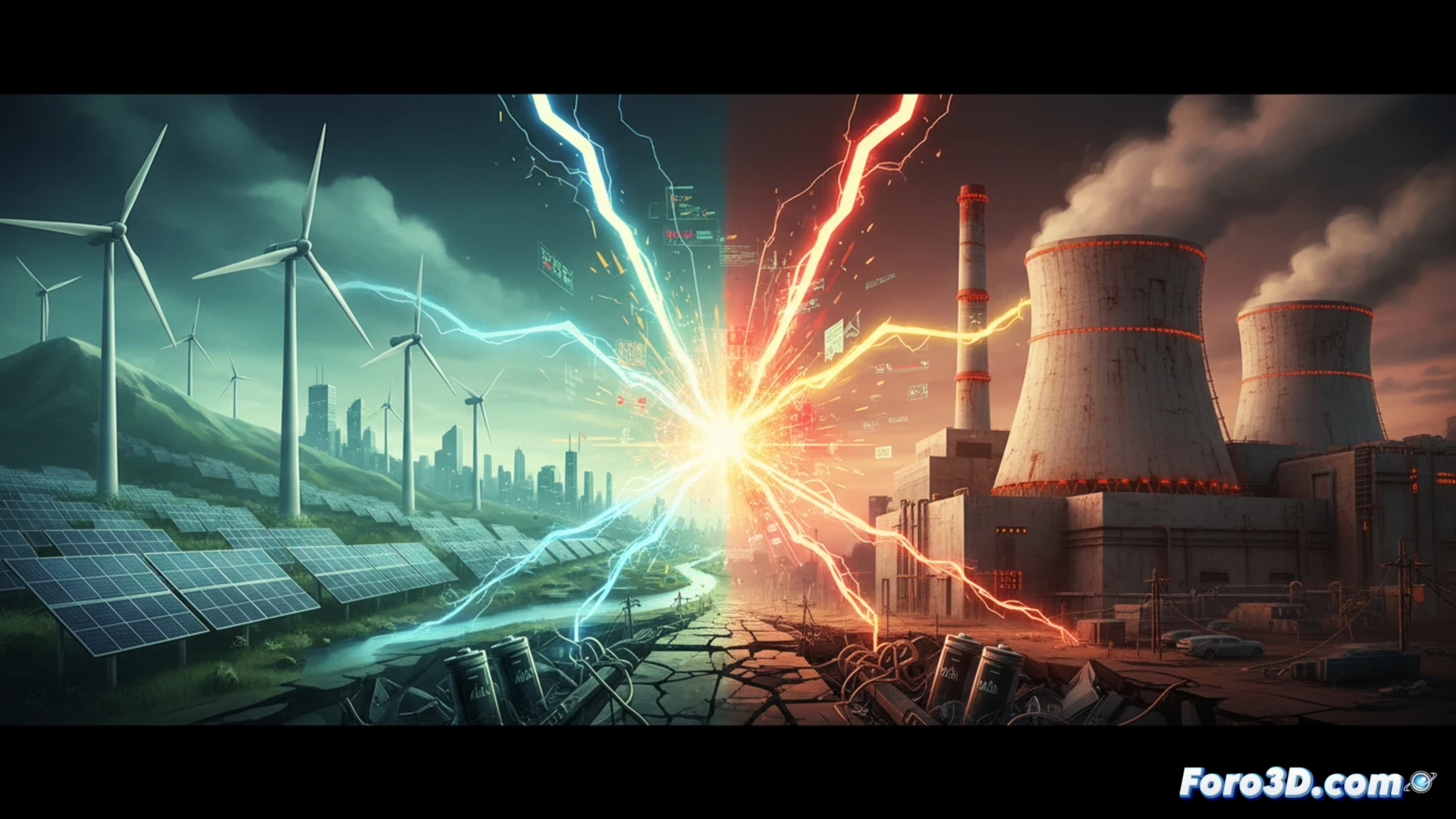
The technical trap of intermittency and storage ⚡
A 1 GW nuclear plant operates 90% of the year. To match that output with solar, you need panels spread over an area equivalent to a small city, plus batteries capable of storing energy for cloudy days. Current pumped-hydro or lithium storage technology does not scale at the required pace. Germany found this out: after shutting down its reactors, it had to import electricity from French coal and fire up gas plants. The direct replacement does not exist.
The electrical patch no one wanted 🔌
Politicians promised a smooth transition to a happy world of windmills and solar panels. The reality is that, to avoid blackouts, they have had to extend the life of coal plants and sign agreements with France to buy its nuclear energy. It's like selling your diesel car to buy a bike, but ending up renting an SUV because the hill to work is too steep. Planning, zero.