The ambitious Palacio del Sur in Córdoba, designed by Rem Koolhaas, promised to be a global architectural landmark. However, after investing millions in preliminary phases, the project was canceled due to economic unfeasibility. This case is a perfect example to analyze how 3D modeling and BIM tools not only serve to visualize design but also to detect financial and structural risks before the concrete begins to set.
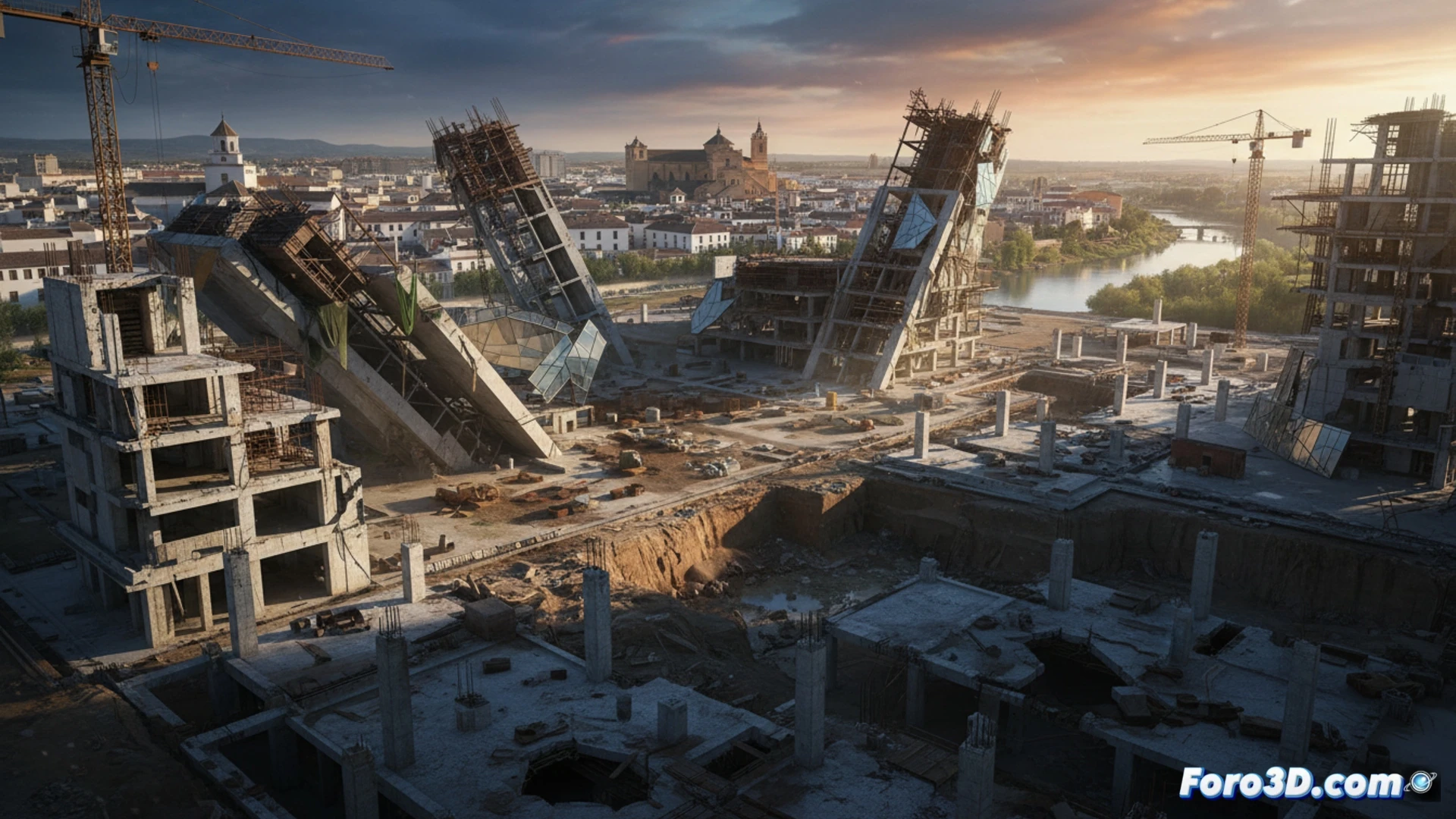
Visualization and viability: the role of the digital model 🏗️
In the early stages of the Palacio del Sur, conceptual renders showed an organic and fluid structure that challenged the limits of civil engineering. From a BIM perspective, this type of project requires a digital twin that integrates cost, schedule, and material data. An advanced parametric model could have simulated the impact of geometric complexity on the budget, alerting to cost overruns. The question is not just how the building looked in 3D, but what data its geometry concealed.
What BIM could not prevent (but could predict) 📉
The cancellation of the Palacio del Sur demonstrates that architectural modeling is not just a visual marketing tool. A rigorous BIM workflow, with lifecycle simulations and return on investment analysis, can turn a formal dream into a tangible feasibility study. While Koolhaas gave us a powerful image, the lesson for industry professionals is clear: a good render without a solid data model is just a postcard of what could have been.
As a BIM architect, what concrete lessons can we draw from Koolhaas's failed Palacio del Sur in Córdoba to prevent the lack of integration between conceptual design and local regulations from derailing a project during the construction phase?
(PS: BIM is like having a building in Excel, but with nice windows.)