Animal Crossing: New Horizons is a fascinating case study in the video game development industry. Its apparent visual simplicity hides a complex technical workflow that combines Autodesk Maya, ZBrush, and Nintendo's internal engine. The goal was not photorealism, but to achieve a stylized PBR aesthetic where materials, from furniture wood to villager fur, react consistently to dynamic sunlight, all optimized for the Nintendo Switch hardware.
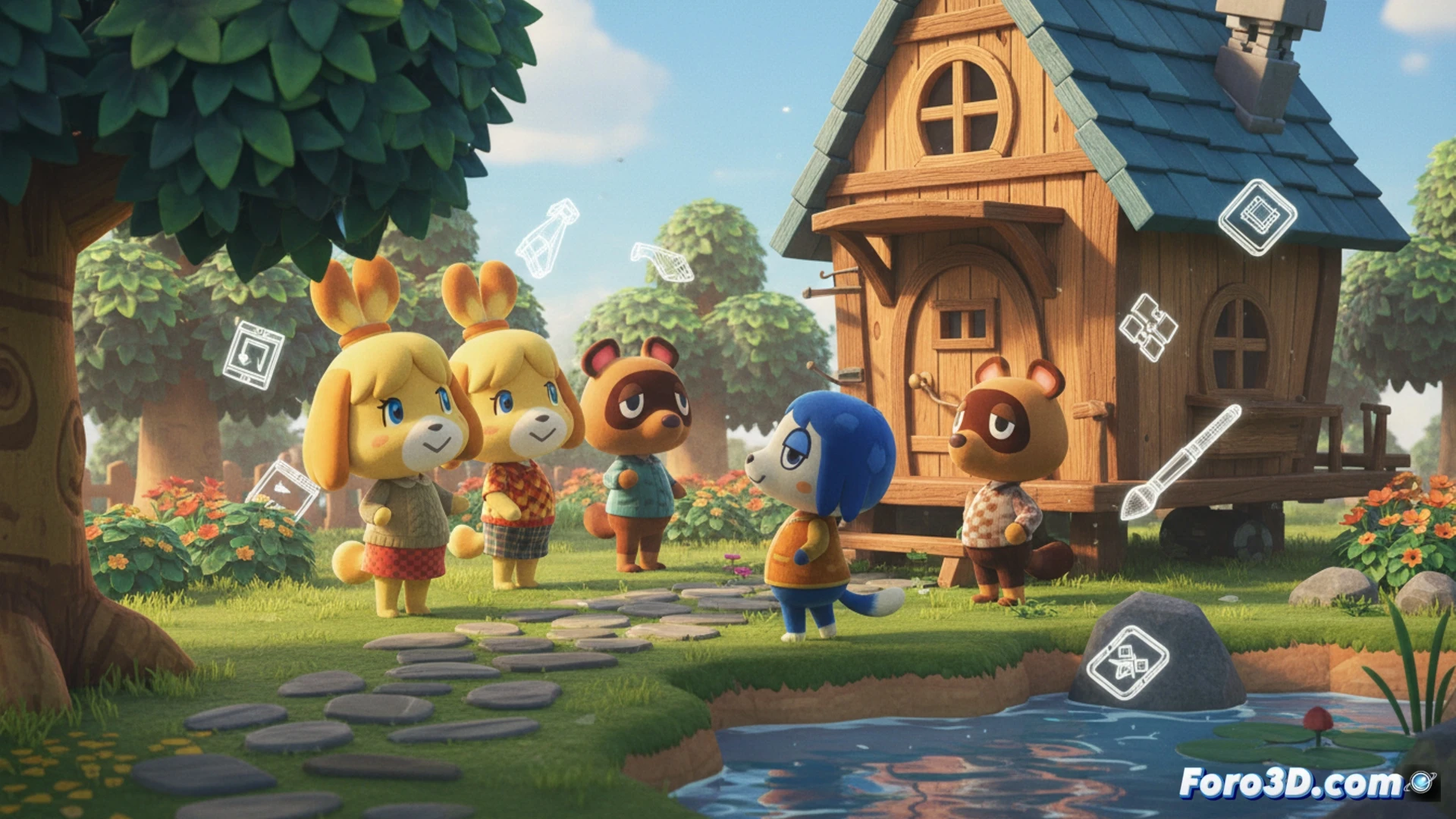
Workflow: From Maya and ZBrush to Nintendo's Internal Engine 🎨
The process begins in Autodesk Maya, where the base modeling of characters is done, prioritizing clean shapes and efficient topology for animation. For furniture and decorative objects, the team turns to ZBrush, where they sculpt organic details like wood grain or wear on metallic surfaces. The key lies in the transition to Nintendo's internal tools: here, normal mapping and ambient occlusion are applied to simulate micro-details without increasing the polygon count. Textures are painted with a focus on smoothness, avoiding excessive noise, and are configured so that PBR parameters (roughness and metalness) interact with the global illumination system. The internal engine optimizes these assets using toon shading that softens specular highlights, allowing the dynamic sun to change the color temperature of objects in real-time without overloading the GPU.
Lessons for Developers: Optimization Without Sacrificing Visual Identity 🧠
The greatest technical achievement of Animal Crossing is its ability to fool the human eye. Although the game uses PBR, a system typical of realistic engines, Nintendo adapts it to a pastel palette and flat textures. This is achieved by limiting the dynamic range of materials and using very high roughness maps to blur highlights. For developers, the lesson is clear: it's not necessary to have the most powerful engine, but to understand how each tool (Maya, ZBrush, proprietary engine) contributes to a unified artistic vision. The result is a world that feels tactile and alive, demonstrating that technical optimization and artistic style can coexist perfectly.
How does Animal Crossing: New Horizons apply PBR rendering techniques to its stylized characters and environments without compromising performance on a console like the Nintendo Switch?
(PS: shaders are like mayonnaise: if they break, you start all over again)