When you browse the internet or stream a series, you don't think about the tiny oscillator pulsing inside your router or phone. But that component, if it generates excessive phase noise, can turn your signal into a chaos of interference. In systems like 5G, where precision is key, this noise degrades quality, reduces coverage, and causes errors in data transmission. Controlling it is not a luxury, it is a necessity so your connection doesn't become a nightmare.
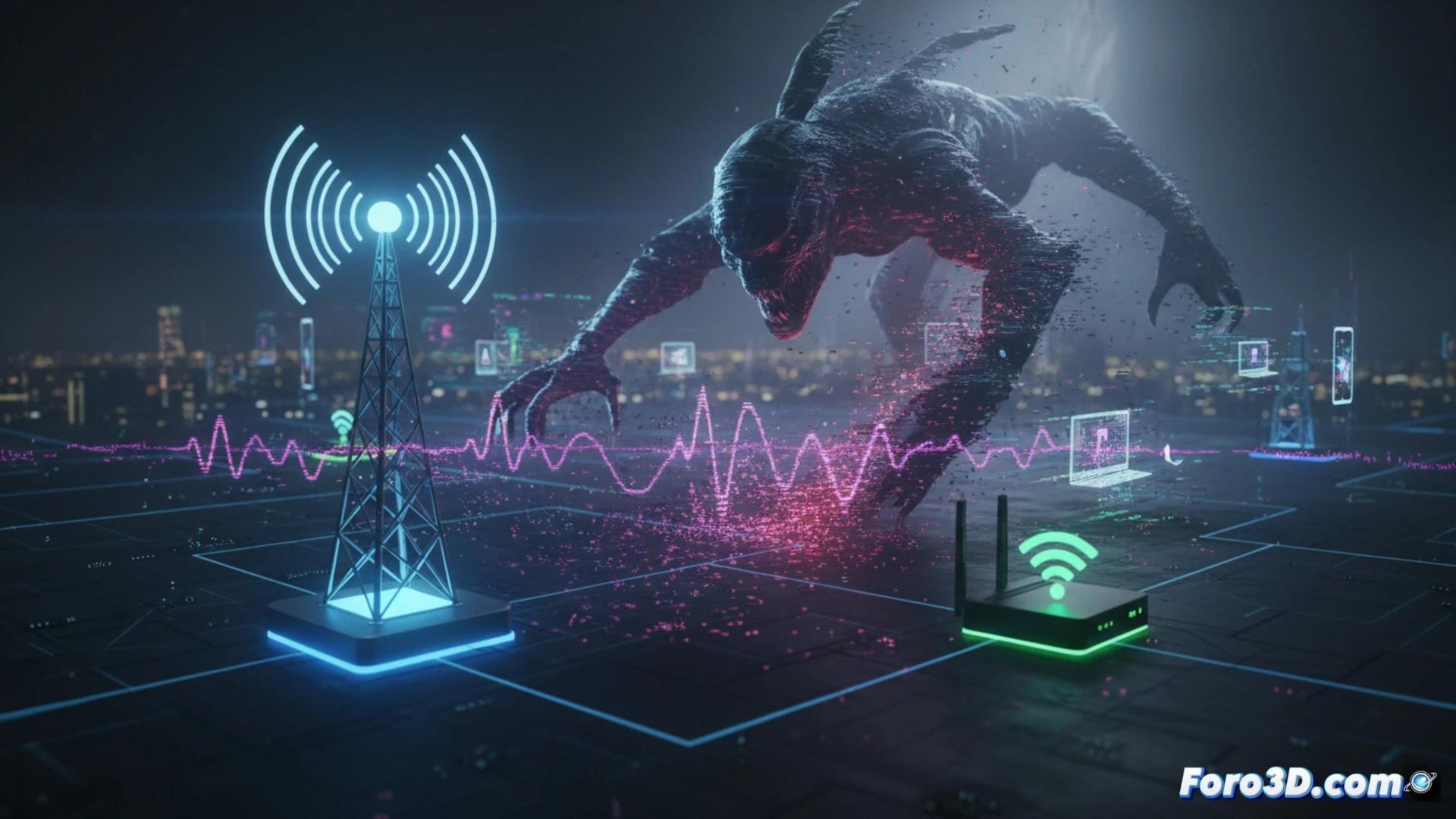
How phase noise affects modern integrated circuits 🛠️
In the design of integrated circuits for communications, phase noise manifests as an unwanted fluctuation in the local oscillator frequency. This causes the modulated signal to shift from its assigned channel, generating interference between adjacent carriers. To mitigate this, engineers use phase-locked loops (PLL) with optimized loop filters and low-noise voltage-controlled oscillators (VCO). Digital cancellation techniques and shielding against power supply noise are also employed. The goal is to maintain spectral purity, essential for data integrity in dense networks such as high-frequency ones.
When your router decides to play jazz instead of Wi-Fi 🎷
Imagine your router, instead of emitting a clean and orderly signal, started improvising like a jazz saxophonist. That is, in essence, phase noise: the oscillator loses the beat and starts vibrating on its own, adding false notes to your connection. The result is that your series video pauses right at the crucial moment, or your phone stubbornly shows loading while you curse the operator. In the end, controlling this noise is not just for physicists; it is the difference between smooth streaming and an out-of-tune concert in your living room.