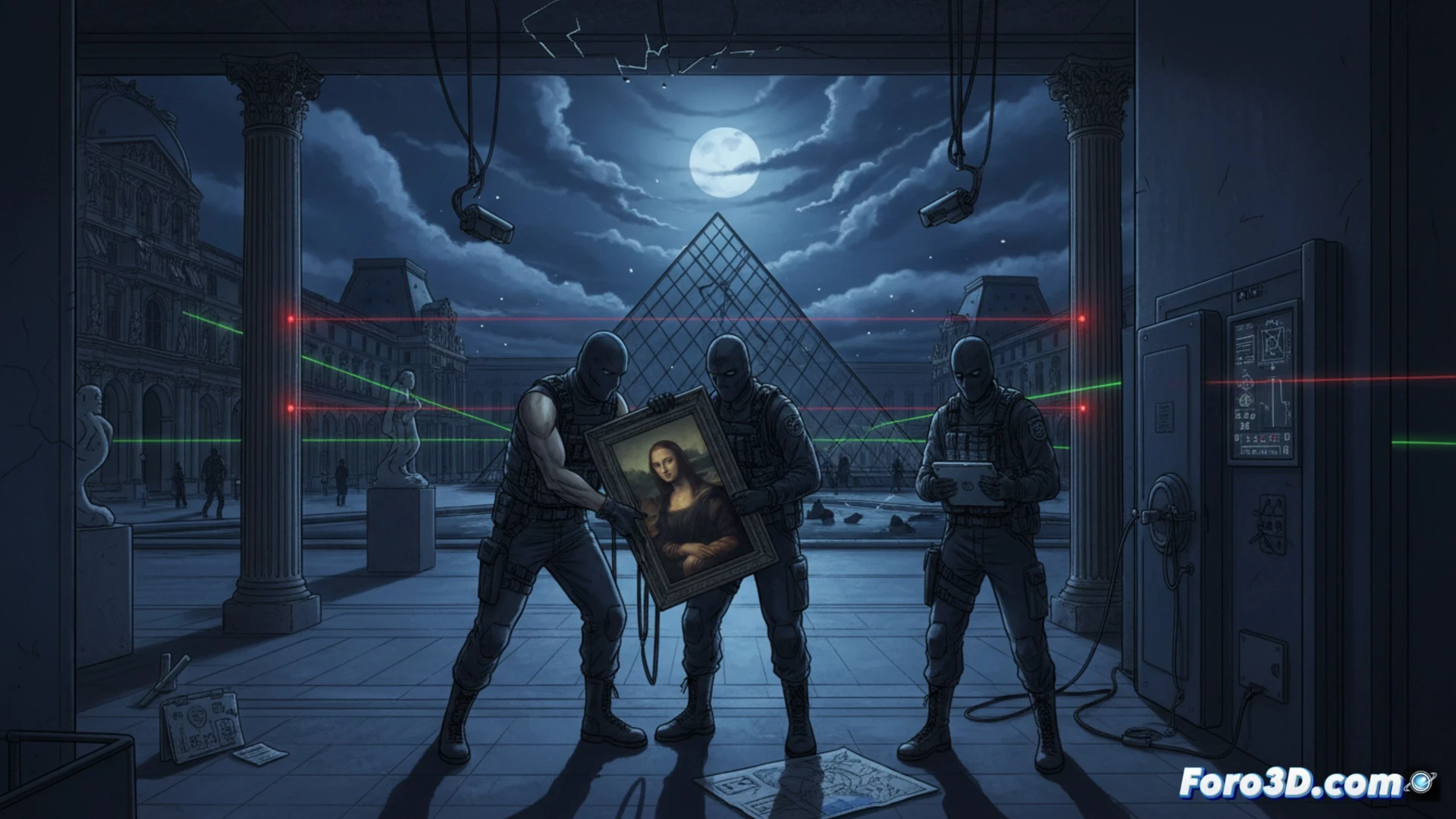
A new book signed by two investigative journalists reconstructs the theft at the Louvre Museum that occurred on October 19, 2025. The work details how the thieves were identified after exhaustive intelligence and surveillance work. The case, which kept the art world on edge, culminated in the capture of the suspects, who upon arrest denied their involvement with absurd alibis before confessing.
Intelligence and surveillance: the technology behind the capture 🔍
The key to police success lay in cross-referencing security camera data, movement pattern analysis, and financial tracking. Investigators used facial recognition systems and geolocation to track the suspects from planning to escape. Although the gang had studied the museum's routines and disabled local sensors, they underestimated the response capability of security forces, who coordinated a real-time operation with artificial intelligence support.
The alibi that didn't fool even the janitor 😅
When arrested, the thieves tried to justify themselves with excuses worthy of a bad movie script. One claimed he was at the museum for a virtual reality tour; another, that he was looking for his lost cat among the display cases. But what ultimately sealed their fate was that, upon confessing, they admitted the plan was perfect... except for one detail: they forgot that the Louvre has more cameras than paintings.