The human body does not only follow a 24-hour cycle; recent research reveals that our immune system operates on a seasonal calendar. The duration of sunlight modifies the expression of key genes for defense, directly affecting the effectiveness of vaccines. This finding suggests that the time of year we receive an injection can be almost as important as the formula itself, opening a new frontier in predictive epidemiology.
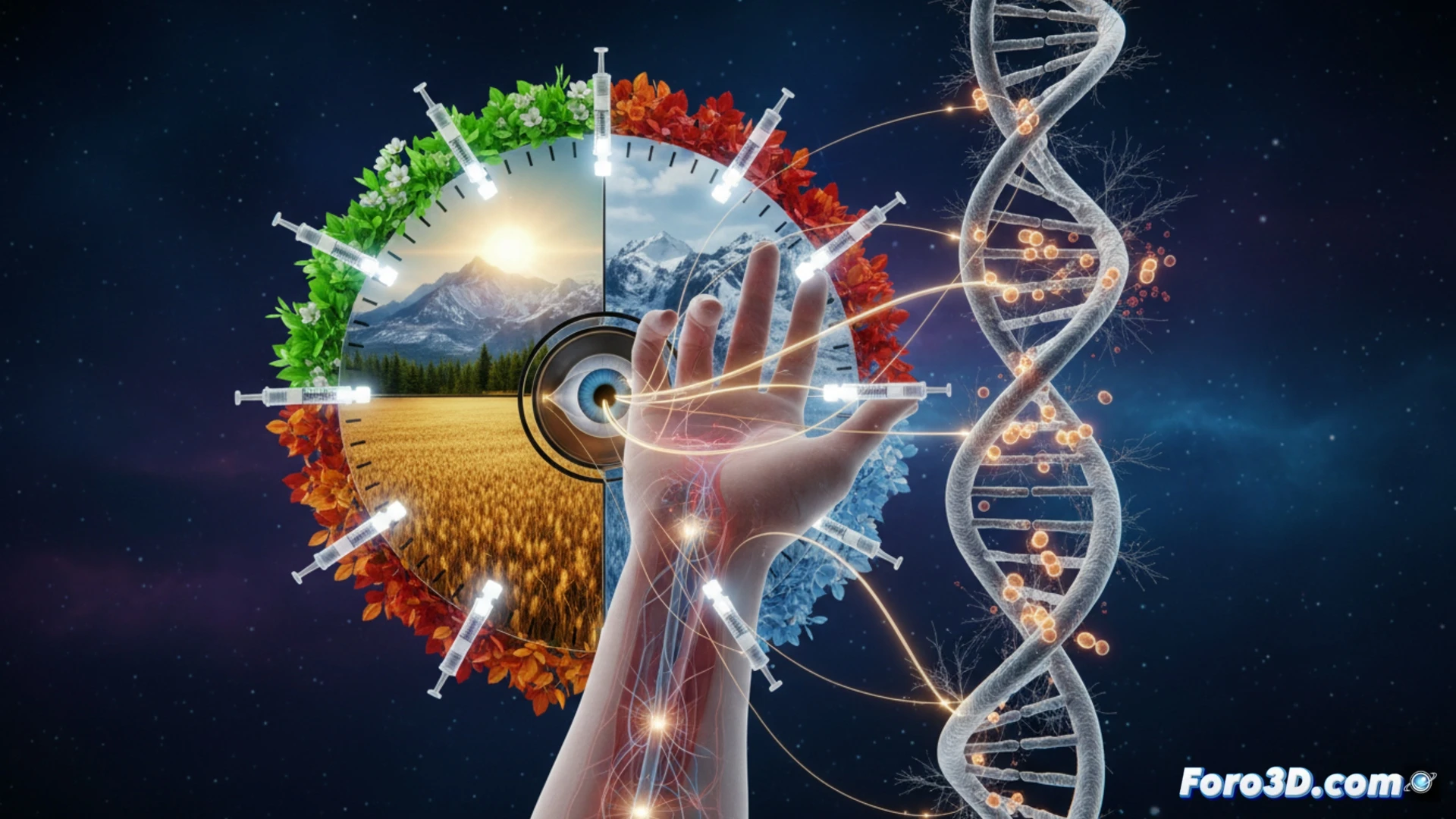
Visualizing seasonal immunity with 3D data 🧬
To model this phenomenon, we propose an interactive 3D infographic that crosses two variables: immune gene expression (measured in cytokine and T cell levels) and the actual efficacy of the flu vaccine, segmented by season. The visualization would overlay this data on seasonal incidence maps, showing how the winter efficacy peak coincides with greater activity of inflammatory genes. An animated timeline would allow the user to adjust the geographic latitude, revealing that the optimal vaccination time shifts according to sun exposure. For example, in the northern hemisphere, the ideal window is concentrated between October and December, when seasonal circadian rhythms enhance the immunological memory response.
Syncing the calendar with our biological clock ⏰
If science confirms that a vaccine's efficacy can vary by up to 20% depending on the season, why do we still apply uniform schedules? The answer lies in the complexity of implementing a dynamic model. However, integrating this data into public health systems would allow personalizing vaccination campaigns, prioritizing vulnerable populations during months of higher immune response. It is not just about creating a more potent vaccine, but about administering it at the precise moment our body is genetically prepared to defend it.
Could chronotherapy applied to seasonal vaccination reduce the immunological inequality between populations with different sunlight exposures?
(PS: public health graphs always show curves... just like ours after Christmas)