Photographer Mary Gelman documented May 9 in St. Petersburg and observed how the Immortal Regiment, a tradition honoring World War II veterans, mutated from a family tribute into a piece of propaganda. Citizens marched with photos of their grandparents, but the context of global isolation tinged the act with political meaning. Nostalgia blends with the reality of a country looking inward while the world watches from outside.
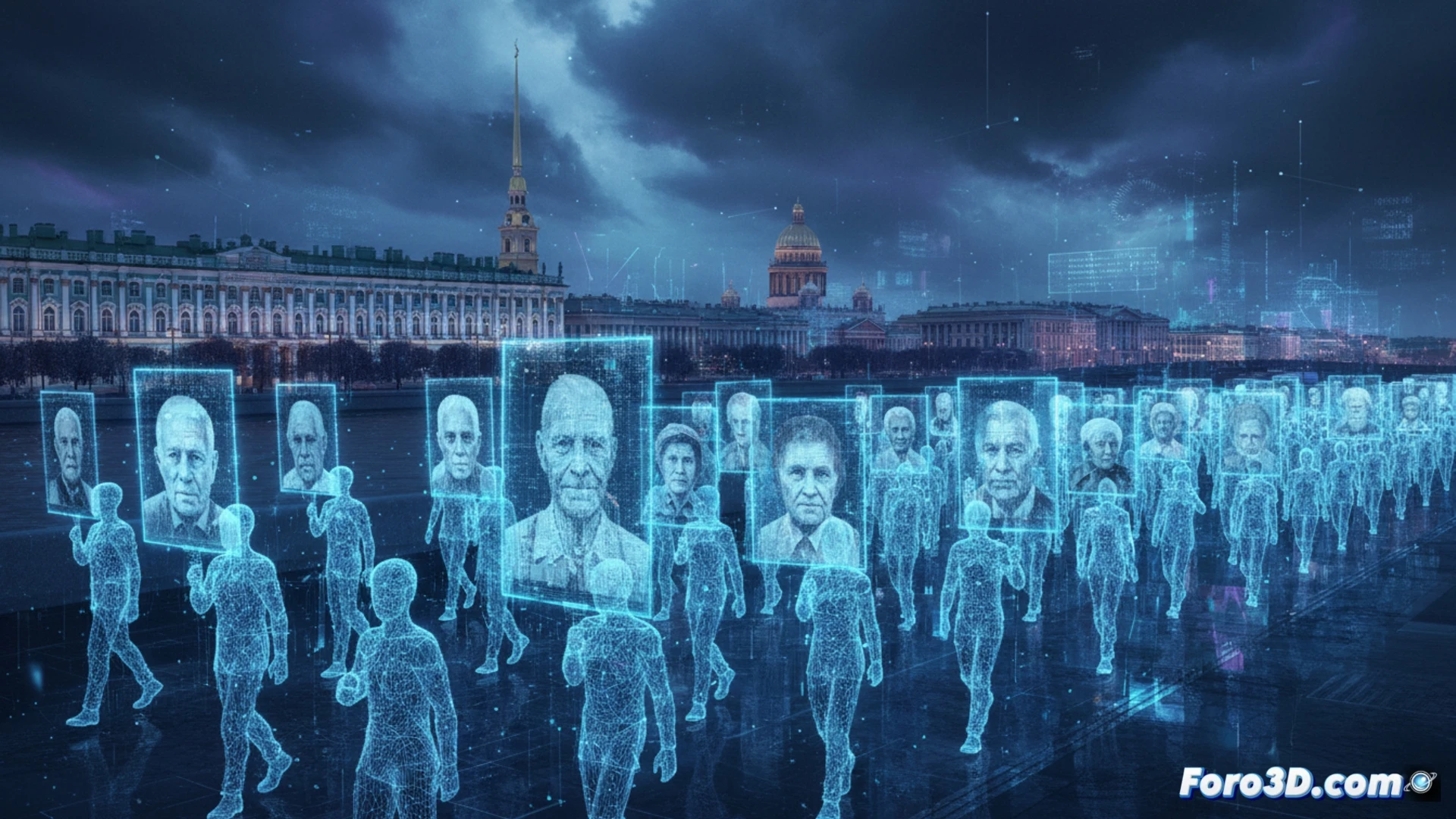
Cameras and codes: the logistics of programmed remembrance 📸
The visual deployment of the Immortal Regiment requires remarkable technical infrastructure. From photo editing applications to restore old images to mass printing systems and geolocation platforms that organize marches in real time. Russian servers process terabytes of family portrait data, and social media algorithms amplify user-generated content. Memory becomes a digital product, optimized to go viral in a controlled information ecosystem.
Selfie with grandpa: the patriotic filter of the 21st century 🤳
Young people no longer carry printed photos; they prefer a digital frame with their great-grandfather's face and a filter that adds the Russian flag. It's easier than explaining who that man in the photo really was. Some even use apps that generate a hologram of the relative for the march, as if they were a video game character. Tradition modernizes: now you can honor your ancestor and upload the story to TikTok before the parade ends.