The manufacture of homemade weapons, known as ghost guns, leaves behind a map of microscopic evidence. When a block of metal is machined in a workshop, cutting bits generate unique striations and patterns on the surface. The milling trace becomes the digital signature of the process. Now, high-resolution 3D scanning allows these marks to be captured, creating a forensic pipeline that links the weapon directly to the tool that created it.
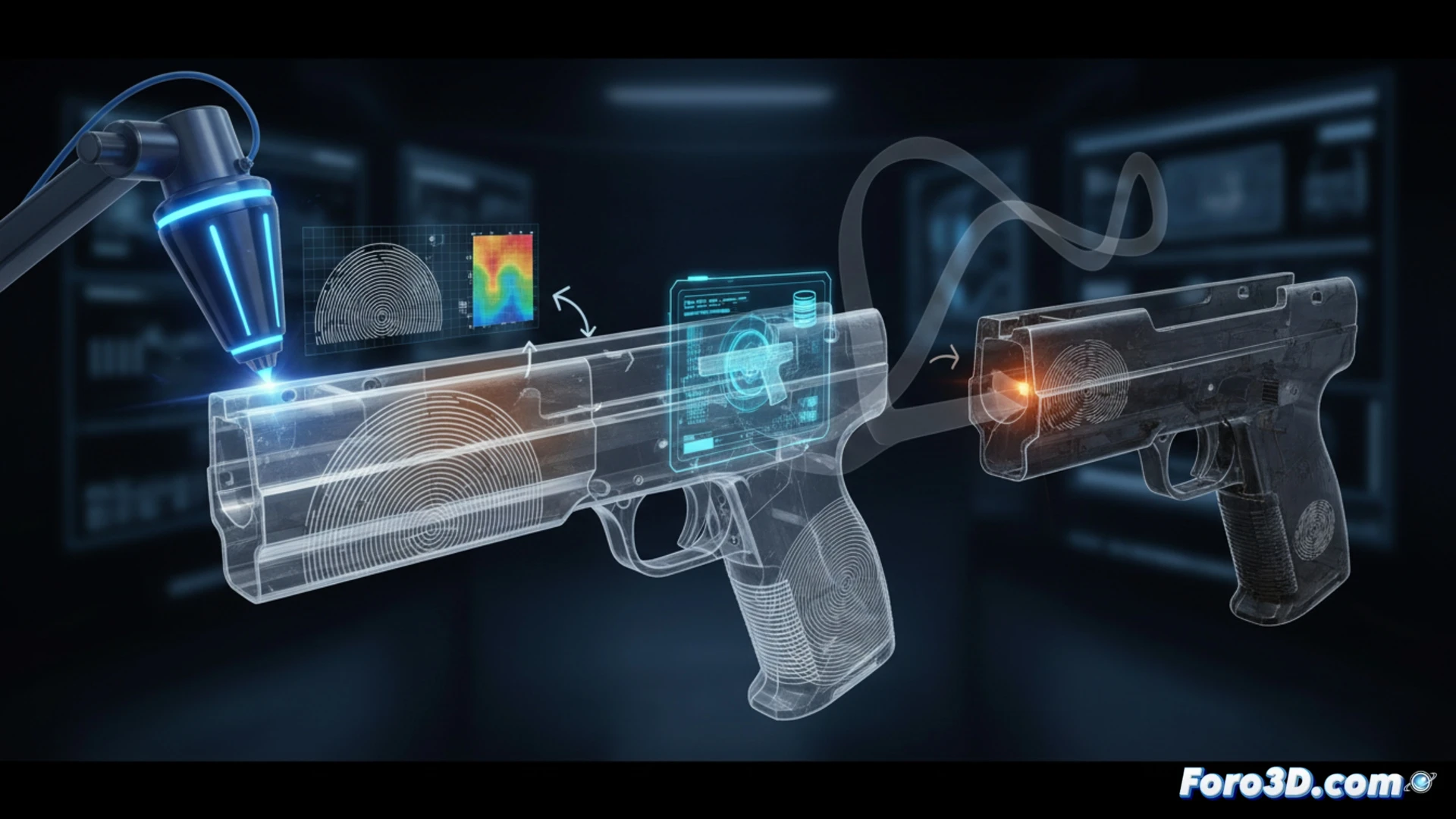
Forensic pipeline: from point cloud to machining simulation 🔍
The workflow begins with capturing the seized piece using a structured light scanner or confocal microscope, generating a point cloud with micrometer resolution. This 3D model is aligned against a database of commercial cutting tools. Metrology software compares the milling ridges and valleys with known profiles of drill bits and end mills. The critical step is the inverse simulation of the machining process: the tool path is modeled to reconstruct the CNC feed and speed parameters. This simulation allows identifying not only the brand of the milling cutter, but also the specific model of lathe or milling machine used in the weapon's manufacture.
The workshop's digital fingerprint in the metal ⚙️
This approach transforms an inanimate object into a silent witness. By documenting tool wear and machining vibrations, 3D expert analysis can point to a specific suspect or workshop. The technology not only proves that the weapon was manufactured, but demonstrates how and with what equipment. For the forensic community, the analysis of milling traces represents a qualitative leap: where there was once only an anonymous block of metal, there now exists a digital chain of custody that closes the circle of evidence.
Can a high-resolution 3D scanner identify the specific type and wear of the milling cutter used in the manufacture of a ghost gun, forensically linking it to a particular machine or workshop?
(PS: don't forget to calibrate the laser scanner before documenting the scene... or you might be modeling a ghost)