Precision agriculture promises perpetual harvests in glass towers, without soil or rain. While sensors adjust nutrients drop by drop, the lunar cycle of sowing and rest is archived in a technical manual. Humans, once connected to the waiting for the fruit, now look at a screen. The bond with fertile soil fades among algorithms and promises of efficiency.
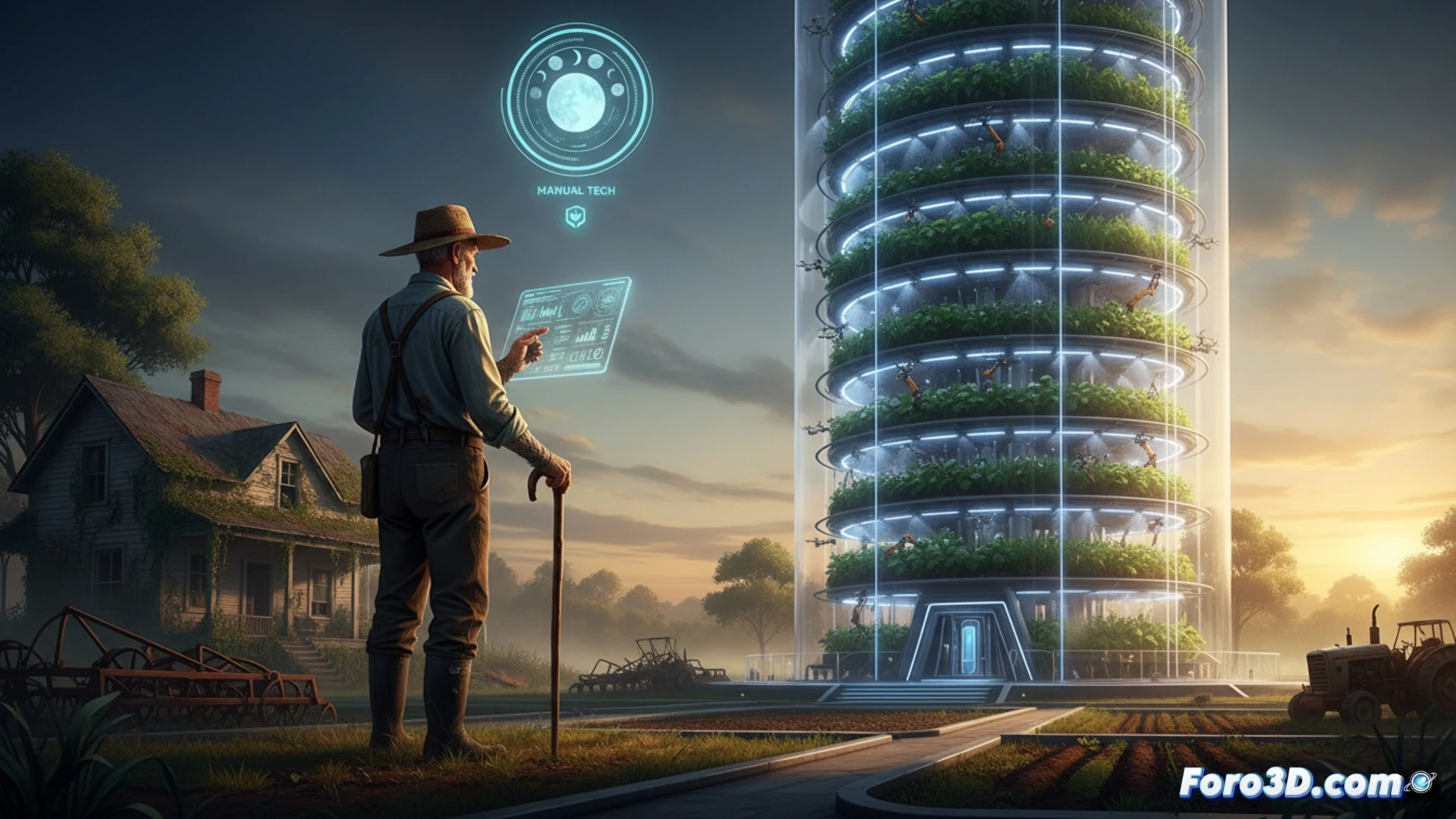
Vertical hydroponics: when soil becomes a memory 🌿
High-altitude hydroponic systems replace mulch with mineral solutions and sunlight with spectral LEDs. Climate control and automation eliminate variables like frost or drought, but also erase the need to observe the sky. An engineer with a tablet decides irrigation, not the farmer's touch. Production becomes predictable, although energy costs and technological dependence grow. The field ceases to be an ecosystem to become a vertical factory.
Farmer 2.0: from the hoe to the USB charger 🔌
Now the farmer doesn't smell of earth, but of machine coffee and recycled plastic. Instead of waking up with the rooster, he does so with a cloud-synchronized alarm. If he used to water by intuition, now he receives a notification on his wrist: Hydrate your lettuces, human. Sweat has been replaced by stress over the drone's battery. The good news is there are no more harvests lost to frost; the bad news is that if the WiFi goes down, we go without dinner.