3D technology is transforming radiology by converting flat images into navigable physical or digital models. This allows specialists to visualize complex anatomies, plan surgeries with precision, and communicate diagnoses more clearly. A practical example is the reconstruction of a bone tumor to assess its true extent before an intervention.
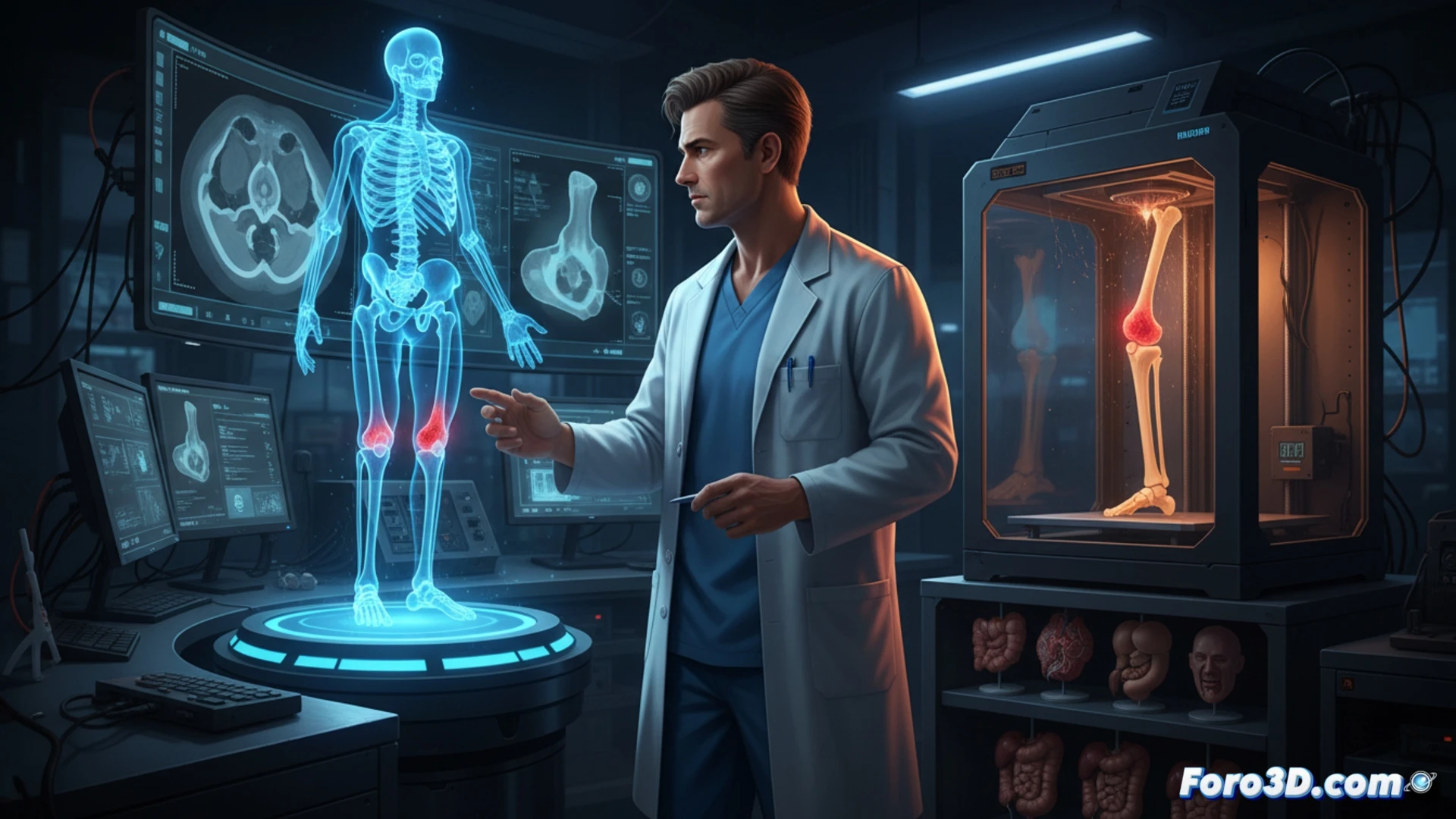
From tomography to tactile model: the technical workflow 🛠️
The process begins with a CT or MRI scanner generating DICOM slices. Programs like 3D Slicer or InVesalius segment the structures of interest, separating bones or tissues. Then, software such as Meshmixer or Blender refines the mesh and exports it for printing (STL). The radiologist uses these models to measure distances, simulate surgical approaches, or fabricate custom guides, reducing risks in the operating room.
The 3D printer: the new colleague who never complains 🤖
The radiologist now has a silent companion that doesn't ask for coffee or argue about diagnoses. The 3D printer translates their report into an object that the surgeon can rotate, measure, and even drop on the floor without breaking. However, when the print fails in the middle of the night, the radiologist discovers that technology still needs a human technician, not a miracle.