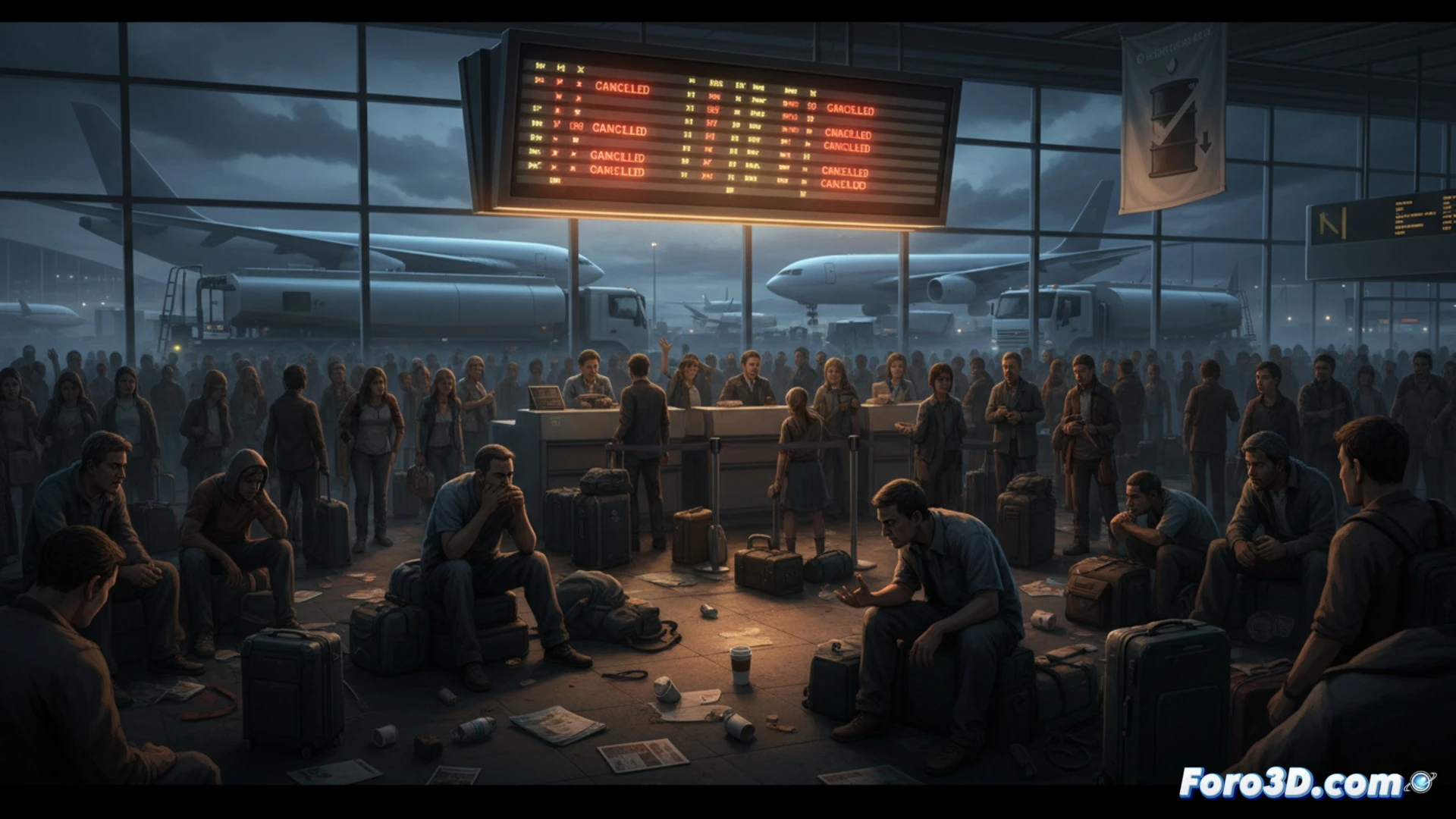
The escalation of the conflict in the Middle East has sent the cost of jet fuel soaring, doubling in weeks. This has forced airlines, especially low-cost carriers, to cancel flights with low occupancy. Hundreds of passengers have been left stranded, facing the frustration of seeing their plans disrupted with no immediate alternatives. Although compensation rights exist, legal limits leave many without a complete solution.
How AI Optimizes Routes to Mitigate the Impact of Fuel 🤖
Faced with fuel price volatility, airlines are turning to planning systems based on machine learning algorithms. These models analyze real-time data: consumption per route, weather forecasts, and historical occupancy. The goal is to adjust frequencies and eliminate routes with negative profitability. However, technology cannot predict geopolitical crises. Decision-making remains reactive, and the mass cancellation of flights shows that algorithmic efficiency has limits in the face of global uncertainty.
The Drama of Becoming a VIP Passenger: Stranded and Flightless 😅
Affected passengers have discovered that their frequent flyer status doesn't help get a plane off the ground without fuel. Now, instead of accumulating miles, they accumulate hours at the airport. The airline offers them a coffee voucher and a hard seat, while they dream of the next conflict being only between their patience and the customer service counter. At least, cheap fuel for their cars remains a consolation.