The rise in prices of basic foodstuffs in Japan reveals an evident contradiction: the official discourse of economic growth clashes with the reality of households adjusting their budgets each month. While companies protect their profit margins, wages do not grow at the same pace. This dynamic pushes families to cut expenses or resort to debt to cover basic needs such as rice or fish.
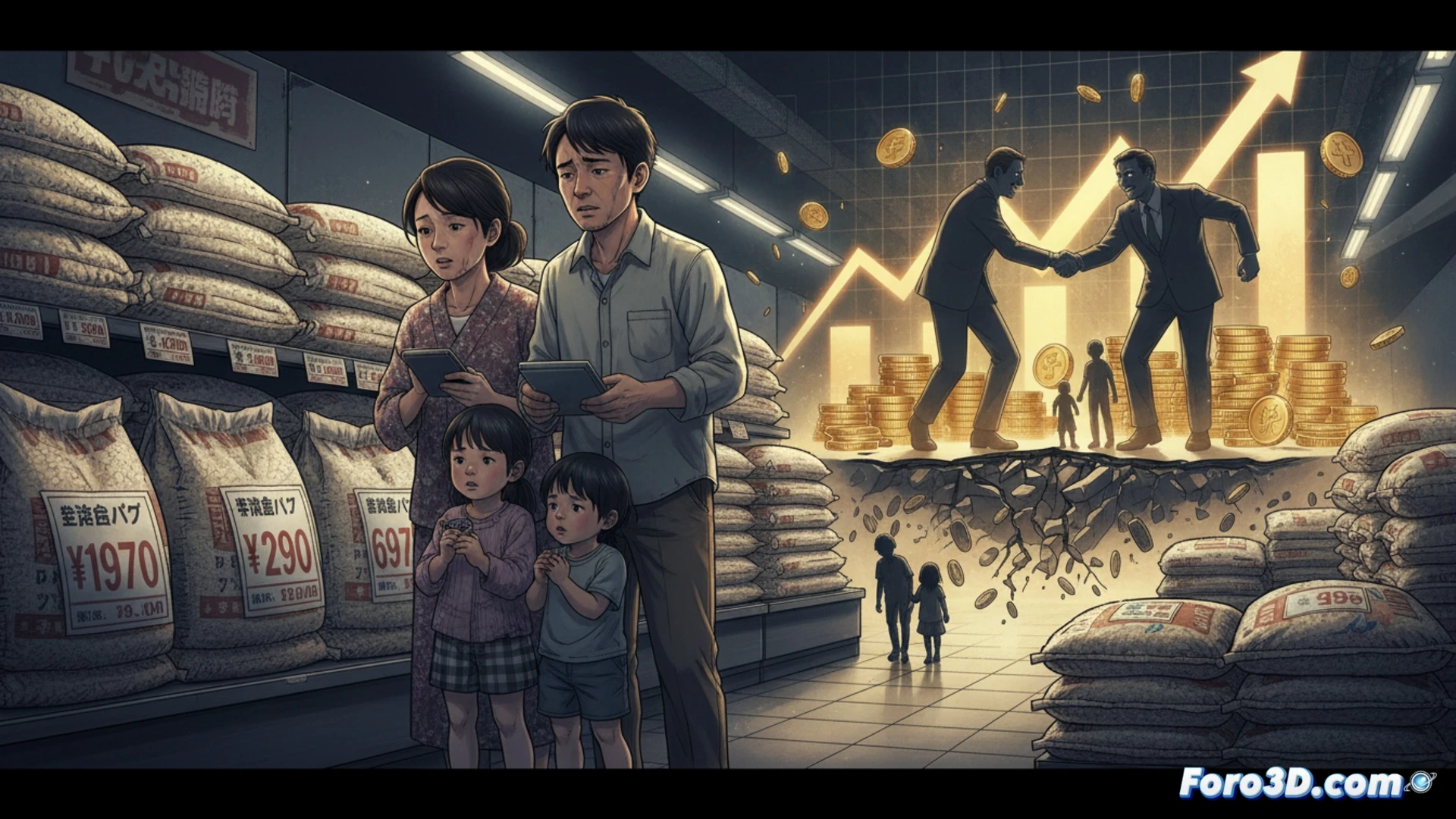
How technology fuels inflation without solving the basics 🍚
Japan invests in blockchain traceability systems and IoT sensors to optimize the food supply chain. However, these tools do not address the underlying problem: value distribution continues to favor intermediaries and large retailers. Automation reduces logistics costs, but that saving is rarely passed on to the final consumer. As long as temporary price controls on essential products and a real increase in the minimum wage are not implemented, technology only masks an economic structure that prioritizes corporate profit over household stability.
Ninja solution: meditate while rice goes up 20% 🥋
According to some financial gurus, the solution is simple: if you can't afford rice, try eating quinoa or, better yet, do like the samurai and learn to live on an empty stomach. Of course, while executives at large corporations adjust their annual bonuses, Japanese families discover that the true spirit of overcoming consists of stretching a frozen salary. But don't worry: the government promises to study the problem while prices continue their upward course. Maybe next year it will be time to meditate also on how to pay the rent.