Time management has become a secular religion. We plan every hour as if we were CEOs of our own existence, with meticulous schedules and apps that remind us even when to breathe. But this cult of productivity comes at a cost: we eliminate creative boredom, that empty space where ideas once germinated. Now, an afternoon spent doing nothing feels like an existential failure, and the simple act of being, without producing or monetizing, seems like a luxury we cannot afford.
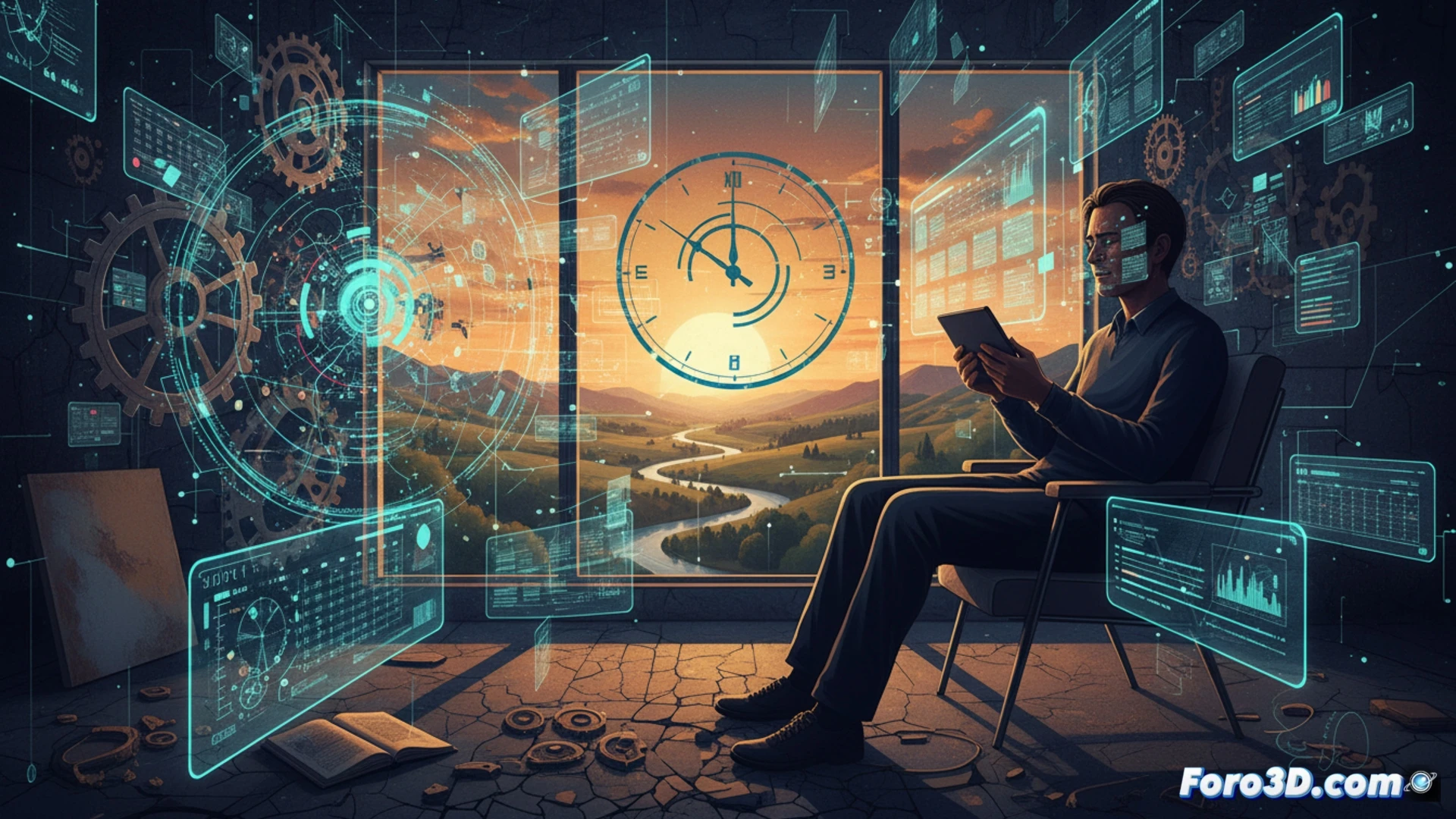
How Time Optimization Kills Lateral Thinking 🧠
When we fragment the day into 25-minute blocks with pomodoros, we eliminate the mental transition periods where creativity often emerges. The brain needs downtime to connect disparate ideas. By saturating every minute with productive tasks, we nullify the ability to daydream. From neuroscience, it is known that the default mode network only activates when there are no external stimuli. Without those moments of idleness, we lose the ability to solve complex problems and generate original solutions. Total optimization is, paradoxically, a form of cognitive impoverishment.
Next Goal: Monetize Blinking as an NFT 😅
Now we just need someone to develop an app that measures your performance when scratching your head. Because it seems we don't rest; we recharge batteries to be more efficient. The other day I saw a guy in the park meditating with a smartwatch that told him if he was making good use of the silence. Soon there will be an online course titled How to Monetize Your Nap in Three Steps. And meanwhile, we keep losing the best part of life: those dead afternoons when you do nothing and, without knowing how, the idea that changes your day comes to you.