The Museo del Prado presents an exhibition that required an unprecedented conservation effort over the last six years. Twenty-one pieces were restored, including the altarpiece of Saint Mark and Saint Anianus from the Seu de Manresa and the polyptych of the Virgin of the Milk from the Cathedral of Córdoba. Curator Joan Molina led a team of specialists for over three years to showcase the Italian impact on Spanish Gothic art.
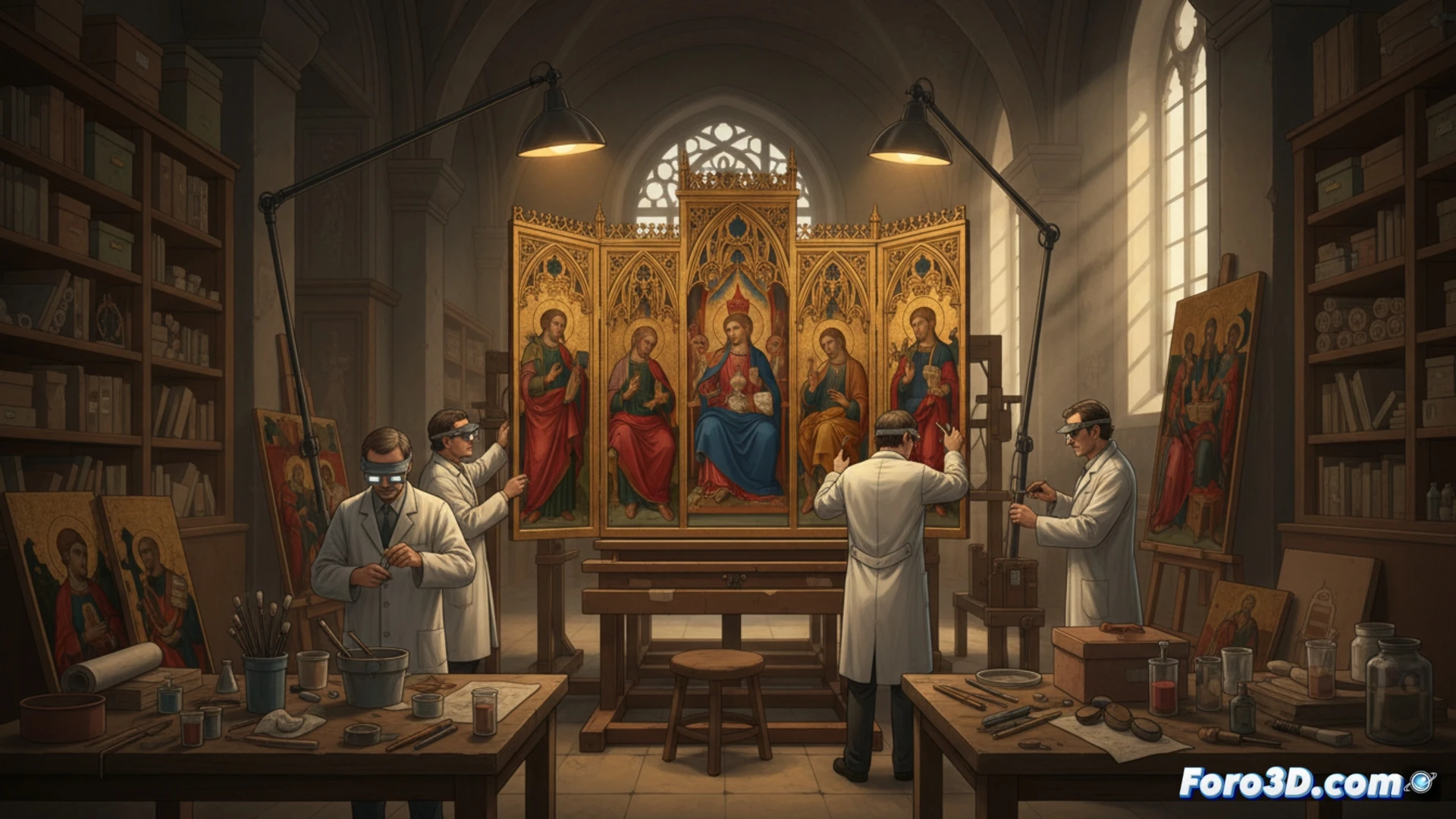
Restoration techniques and digital analysis in the exhibition 🎨
The team applied X-rays, infrared reflectography, and stratigraphic analysis to document each layer of paint and varnish. Overpaints and structural damage to wooden supports were identified, correcting historical deformations. Cleaning with lasers and selective solvents allowed the recovery of original colors without damaging the paint layers. The process included chromatic reintegration of gaps with reversible watercolor, following criteria of minimal intervention. Each piece was photographed in high resolution to create a digital archive accessible to researchers.
Restorers: those who bear the brunt of Gothic art 🛠️
While curators talk about Italian influences and renewed visions, the restorers sweated blood to ensure a saint didn't lose a finger or a virgin didn't look like a painting by Dalí. Between brush and scalpel, they debated whether an 18th-century overpaint was art or simply a nuisance. In the end, they managed to make the Manresa altarpiece not look like a poorly solved puzzle. Gothic always wins, but they bear the brunt.