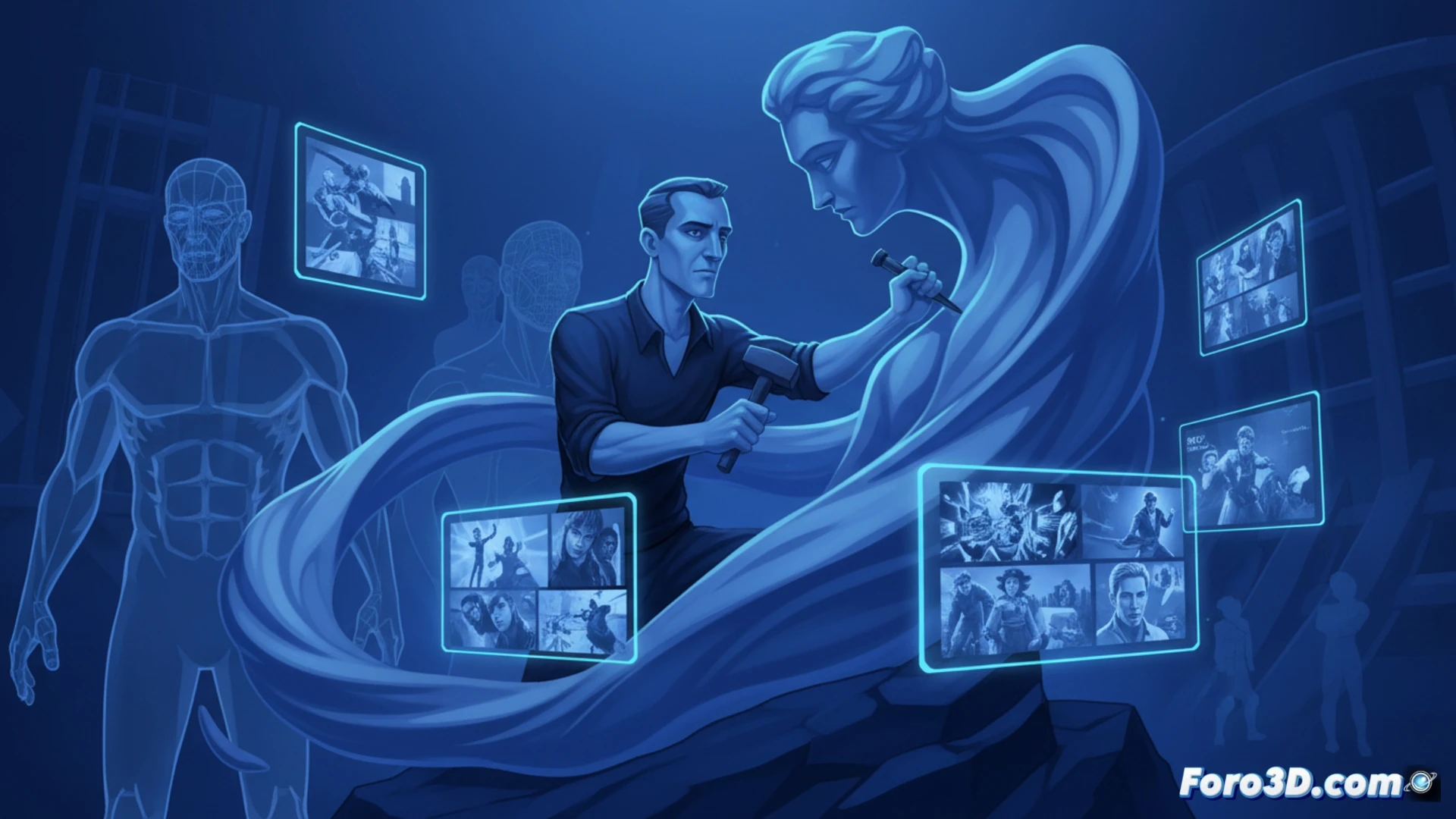
Scott McCloud, renowned comic theorist, took visual narrative to a new level with The Sculptor. The work tells the story of an artist who makes a fatal deal with Death: in exchange for sculpting any material with his hands, he has only 200 days left to live. But what truly distinguishes this graphic novel is not just its tragic plot, but its technical execution. McCloud used a single shade of blue for all shadows, generating a depth and atmosphere that few black-and-white works can match. This aesthetic decision was not a whim; it was a masterclass in visual direction that any 3D previsualization professional should study.
How to apply blue monochrome to 3D previsualization and digital storyboarding 🎨
In the world of digital storyboarding and 3D previsualization, the temptation to saturate every scene with realistic textures and colors is constant. However, McCloud's technique demonstrates that restriction is a powerful tool. By limiting the color palette to a single shade of blue for shadows, the viewer's eye focuses exclusively on composition, framing, and character emotion. For a 3D previs artist, this translates into blocks of light and shadow that define form without distractions. We can simulate this effect in rendering engines like Unreal Engine or Blender by using a single directional color for secondary lights and a cool tone for shadow areas. The result is a dense, cinematic atmosphere that directs the audience's attention to the main action, exactly as McCloud did in the panels of his masterpiece.
McCloud's lesson: limitation as a creative driver ✨
McCloud's decision to use a single blue was not technical, but narrative. In The Sculptor, death and creation coexist on the same visual plane; blue represents both the coldness of the end and the depth of art. For a 3D content creator, this reflection is vital. It's not about showing how many effects you can stack, but about choosing what to remove so the story can breathe. Just as the comic's sculptor carves stone, we must carve the digital image, leaving only the essentials. The next time you work on a storyboard, ask yourself: if I could only use one color for my shadows, which one would best tell my story? That is the true essence of visual narrative.
What do you think about this breakthrough?