The Po’ boy, that sandwich born in New Orleans, is an emblem of American street food. Its essence lies in a light, almost ethereal bread that embraces generous fillings. We're talking about juicy seafood like shrimp or crab, or fried meats that provide an unmistakable crunch. It's not just any sandwich; it's a textural and flavor experience that has earned its place in popular culture.
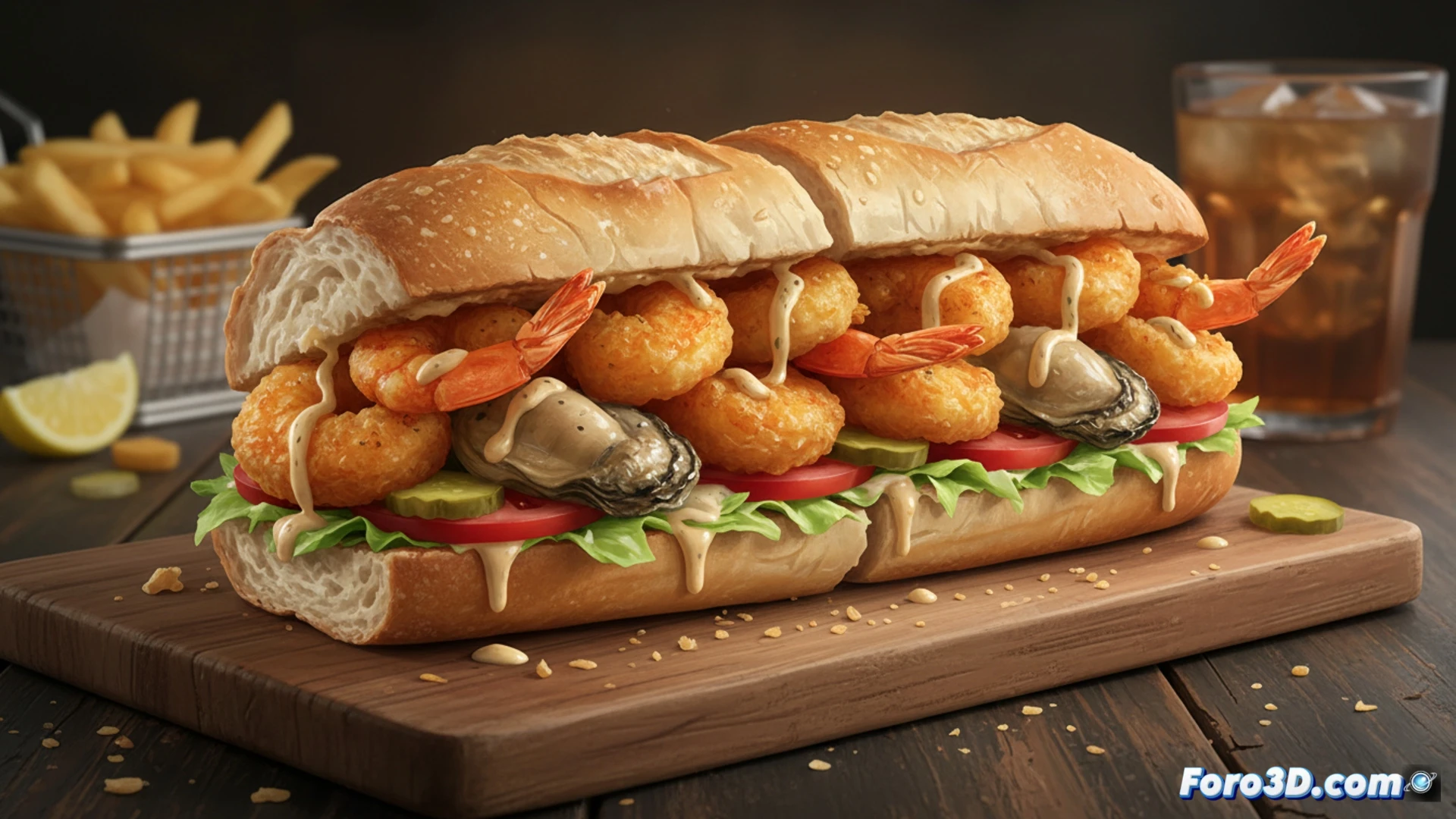
The engineering of the perfect bread: a challenge of texture and structure 🥖
The technical key to the Po’ boy lies in its bread. It's not just any baguette. The goal is a very airy and light crumb, almost like a cloud, that absorbs the juices from the filling without falling apart. The crust should be thin but slightly crispy. Achieving this structure requires precise control of dough hydration and fermentation time. A baking failure produces a hard bread that breaks the harmony of the whole, a mistake no Louisiana cook can afford.
The drama of the fillings: when seafood refuses to cooperate 🦐
Now, let's talk about the filling. Frying shrimp or crab seems easy until you try to get them crispy and not a grayish mass. It's a balance between the heat of the oil and the cook's patience. If the oil isn't hot enough, the batter gets soggy and you have a disaster. If it's too hot, the seafood burns on the outside and stays raw on the inside. It's like a game of chance where the stake is your dinner. And the bread, that light bread, ends up being the silent witness to your culinary success or failure.