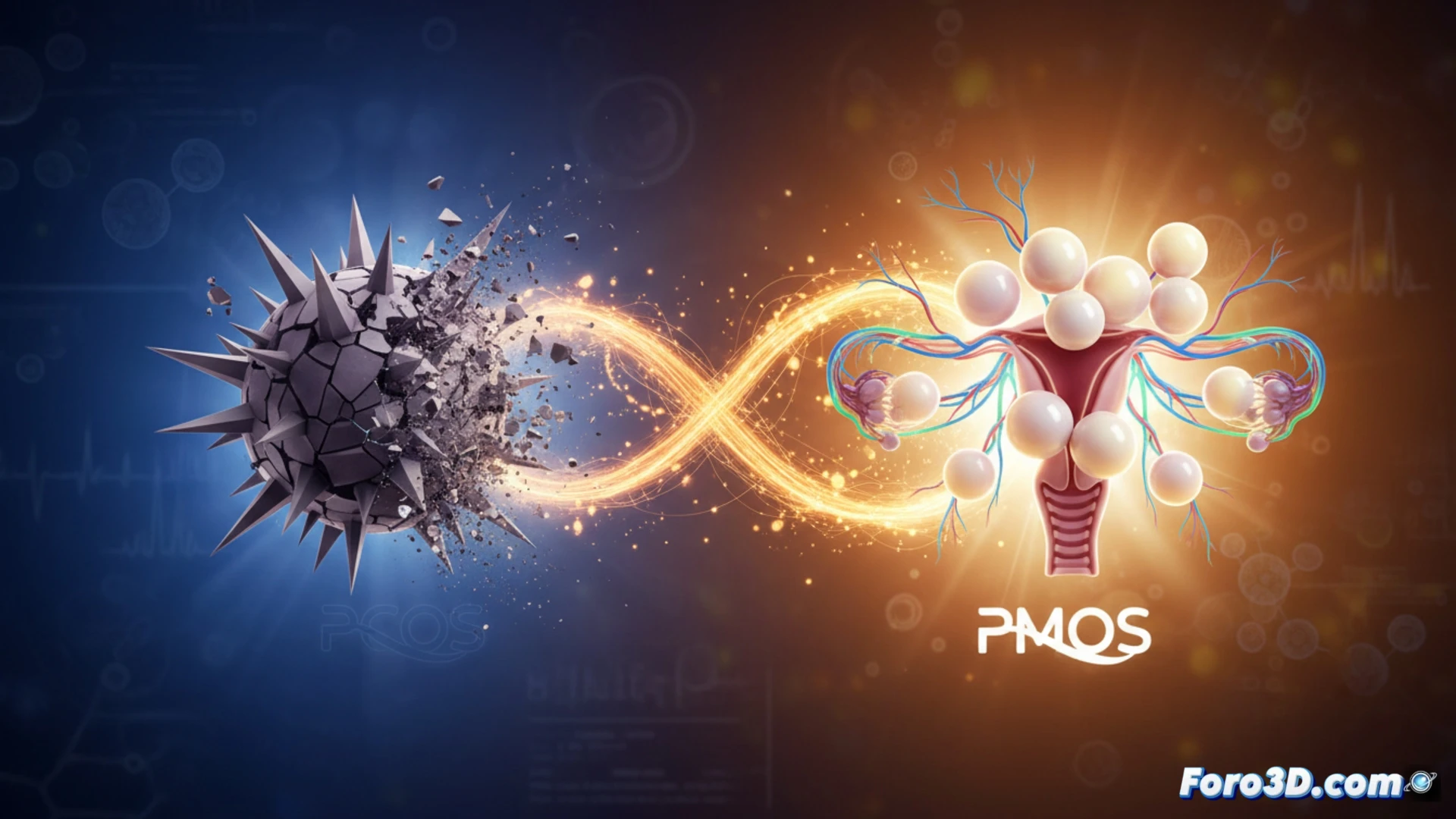
Polycystic Ovary Syndrome (PCOS) is now history. During the European Congress of Endocrinology, its official renaming as Polymetabolic Ovarian Syndrome (PMOS) was announced. This change corrects a widespread misconception: the ovaries are not filled with dangerous cysts, but with immature eggs that do not mature due to an overabundance of follicles. A terminological success that clarifies the true metabolic origin of the disorder.
Diagnostic Imaging: How Technology Dismantles Myths 🩺
High-resolution ultrasound and magnetic resonance imaging have been key in demonstrating that the dark spots visible on the ovaries are not harmful cysts. They are antral follicles, eggs arrested in their development due to a hormonal imbalance. Artificial intelligence algorithms applied to image analysis now allow for precise differentiation of these follicles from actual cystic lesions. This technology helps avoid misdiagnoses and unnecessary treatments, focusing attention on the real metabolic component of the syndrome.
Changing the Name Doesn't Take Away the BBQ, But It Helps 🍖
That it is now called PMOS will not reduce insulin resistance nor make carbohydrate cravings magically disappear. But at least, when a patient hears the diagnosis, she will stop imagining her ovaries as a piñata full of suspicious lumps. The medical community hopes the new name will reduce panic and increase understanding. In other words, that they stop asking if it can be cured with laser surgery.