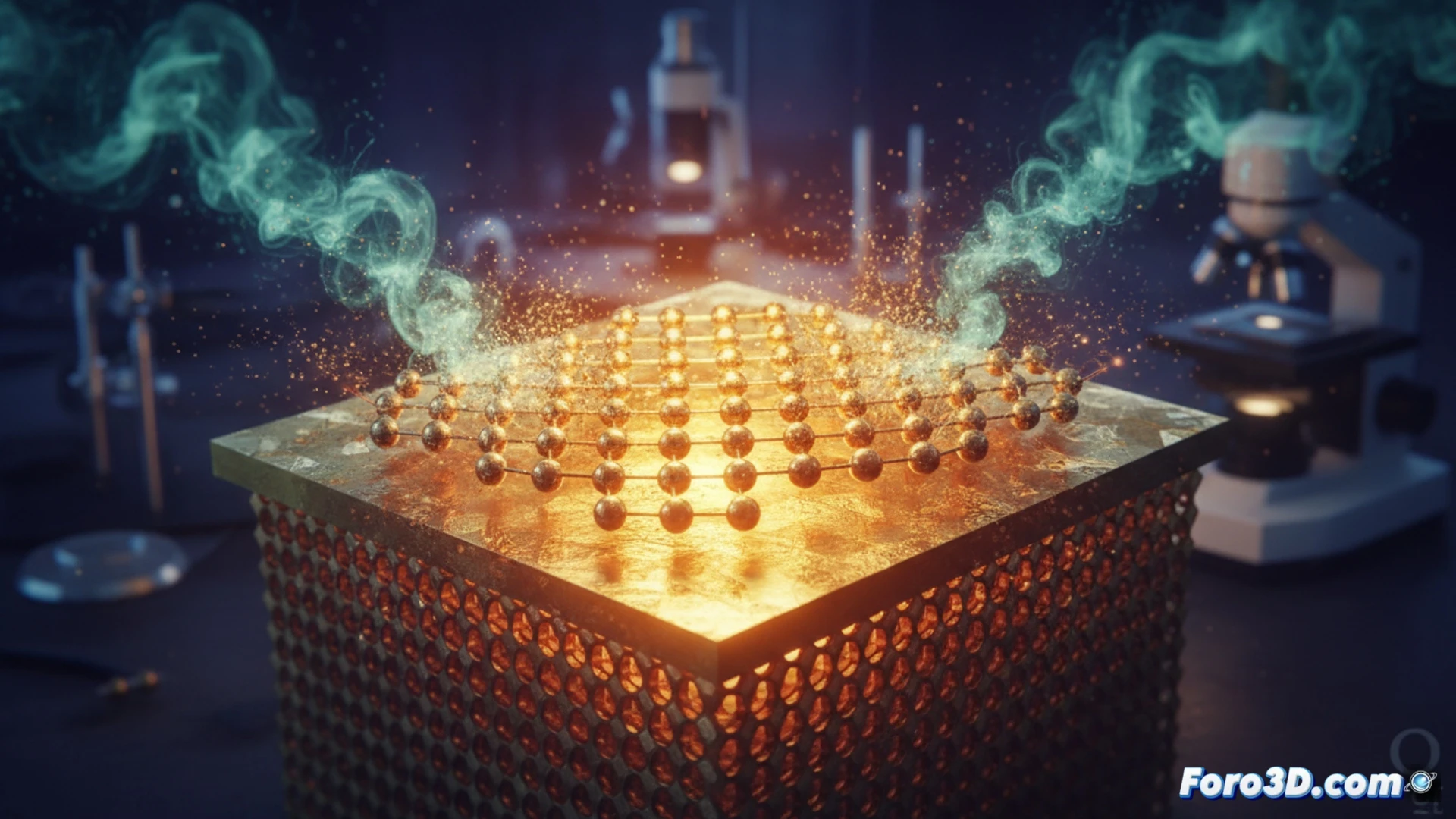
Gold has always been a symbol of purity and resistance to the passage of time, but science has just explained why it does not rust like steel or copper. A study in Physical Review Letters reveals that, when a new surface is exposed, gold atoms reorganize into a hexagonal geometry that prevents corrosion. This mechanism, called surface reconstruction, occurs instantly and naturally.
The atomic dance that challenges traditional chemistry 🧬
When a piece of gold is cut or scratched, the atoms on its surface shift from a square arrangement to a hexagonal one. This reorganization is not random: researchers observed that the new geometry makes it difficult for oxygen molecules to adhere, blocking oxidation. The process is so fast that it is barely perceptible, but it marks a key difference compared to metals like iron, whose surfaces cannot achieve this protection. The key lies in the energetic stability of that hexagonal configuration.
The secret of gold: a selfish element that doesn't want to share electrons ⚛️
While steel rusts as if it were in a toxic relationship with oxygen, gold prefers to stay home and not mix with anyone. Gold atoms, by reorganizing into hexagons, form a kind of exclusive club that oxygen cannot enter. It's as if the metal says: no, thanks, I'm fine as I am. So, if your gold ring keeps shining, it's not magic: it's pure, well-organized atomic laziness.