During World War II, Japanese General Tomoyuki Yamashita allegedly ordered the looting and hiding of tons of gold and valuables in tunnels and caves in the Philippines. Decades later, this legendary loot remains a myth that combines history, greed, and technology. Today, digital archaeology offers non-invasive tools to explore these hiding places without destroying their original context.
Photogrammetry and LiDAR: Mapping the Legendary Underground 🗺️
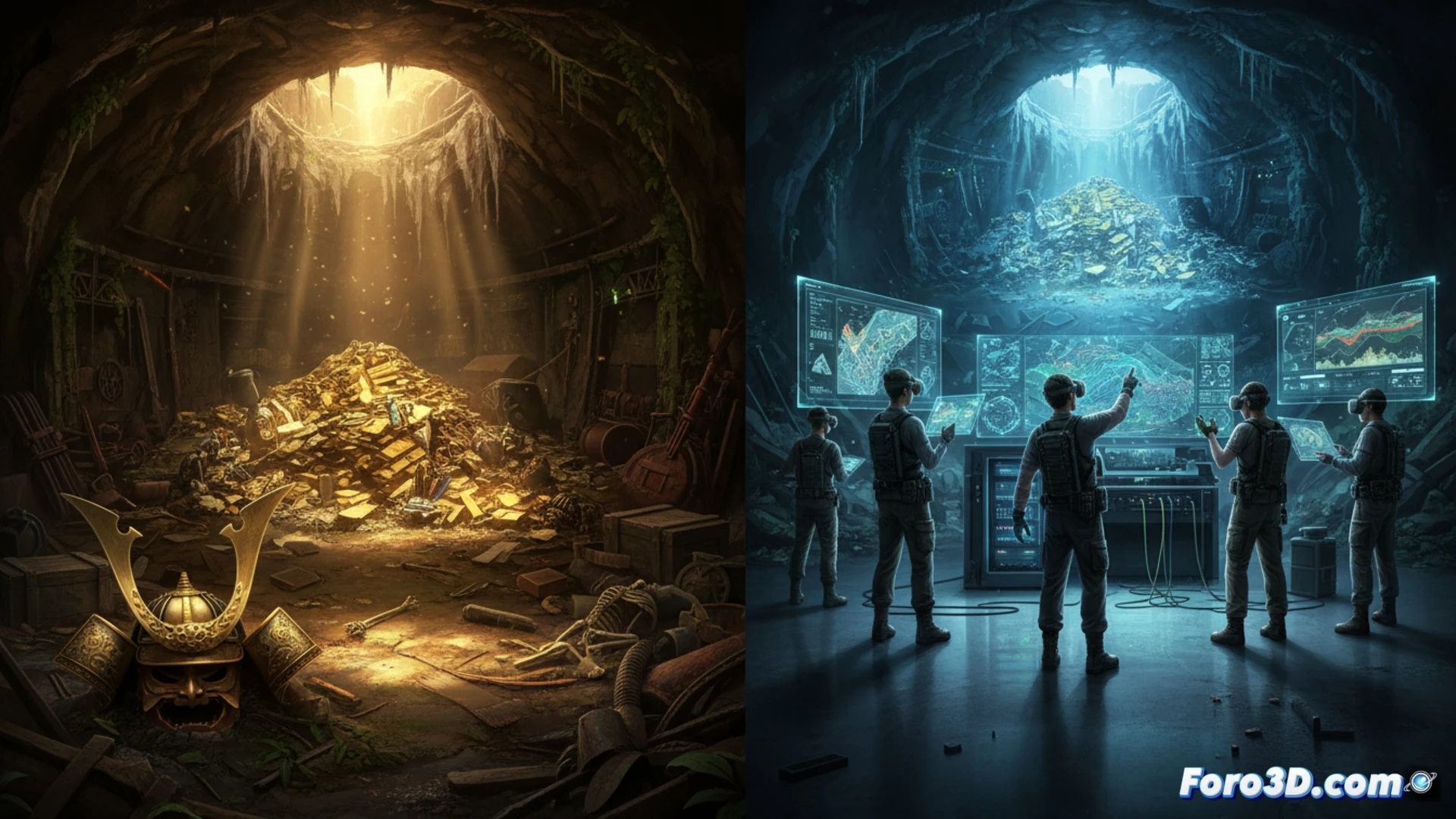
The search for Yamashita's Gold has evolved from reckless excavation to digital analysis. Techniques such as LiDAR scanning allow penetrating the dense vegetation of Philippine jungles to detect topographic anomalies suggesting artificial cavities. Photogrammetry, on the other hand, generates high-precision 3D models of cave entrances, documenting each rock layer and possible stone seal. These digital twins allow archaeologists to simulate virtual excavations, assessing structural risks and preserving cultural heritage without moving a single rock.
The Risk of Destroying History for a Myth ⚠️
The greatest danger of the Yamashita myth is not that the treasure does not exist, but that the gold rush leads to the destruction of caves with real archaeological value. Digital archaeology reminds us that the context of an object is more valuable than the object itself. By applying 3D techniques, we can separate legend from reality, preserving for the future both potential findings and the underground ecosystems that house them.
Would you export to Sketchfab or a custom viewer?