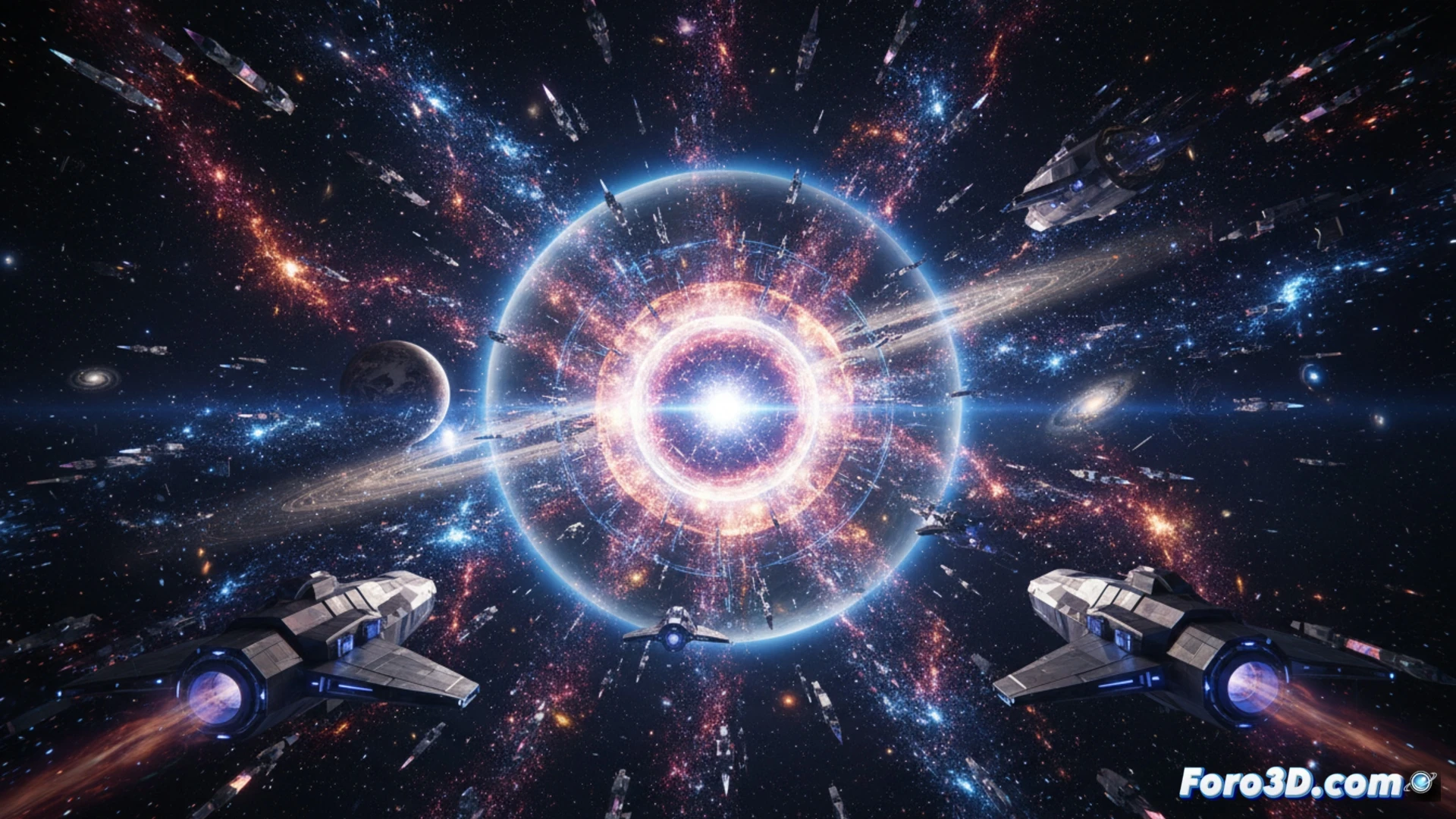
Quantic Dream has confirmed that Star Wars: Eclipse will run on an evolution of its proprietary engine, the same one that powered Detroit: Become Human. This internal software, optimized for next-generation hardware, must solve two key challenges: photorealism in cinematic scenes and the simulation of space battles with thousands of simultaneous particles. The key lies in its hybrid rendering system, which combines real-time global illumination with voxel cone tracing techniques to achieve unprecedented shadows and reflections in high-density environments.
Technical Pipeline: MotionBuilder, Maya, and the Weight of NPCs 🛠️
Quantic Dream's workflow relies on Maya for modeling and environment sculpting, and on MotionBuilder for facial and body motion capture. Unlike studios like Naughty Dog or Rockstar, which use more standardized engines, Quantic Dream bets on a closed pipeline that allows granular control over animation. The real technical challenge is the density of NPCs: the engine must manage hundreds of non-playable characters on screen without sacrificing texture quality or 60 frames per second. To achieve this, they use a dynamic level of detail (LOD) system that reduces the geometry of distant objects without losing photorealistic lighting.
The End of Middleware? Lessons for Indie Developers 🚀
Quantic Dream's decision to maintain a proprietary engine contrasts with the current trend of using Unreal Engine 5. For independent developers, the Eclipse case demonstrates that middleware is not mandatory, but it is risky. Investment in internal tools is only justified if the game demands extreme control over particle rendering (such as ship explosions) and memory management for massive NPCs. If your project does not require that level of fidelity, you will save time by using commercial solutions.
What specific technical challenges does the simulation of massive particles on a galactic scale present in the Eclipse engine to maintain photorealism without sacrificing real-time performance?
(PS: game jams are like weddings: everyone is happy, no one sleeps, and you end up crying)