The release of Unicorn Overlord has once again turned the spotlight on Vanillaware, a studio known for its unmistakable 2D pictorial style. Behind its fluid animations and illustrated-book aesthetic is not a commercial engine, but proprietary software that combines traditional illustration with mesh deformation. We analyze the technical pipeline that allows a handful of artists to generate such a vivid fantasy world.
Technical Pipeline: From Clip Studio Paint to 2D Mesh 🎨
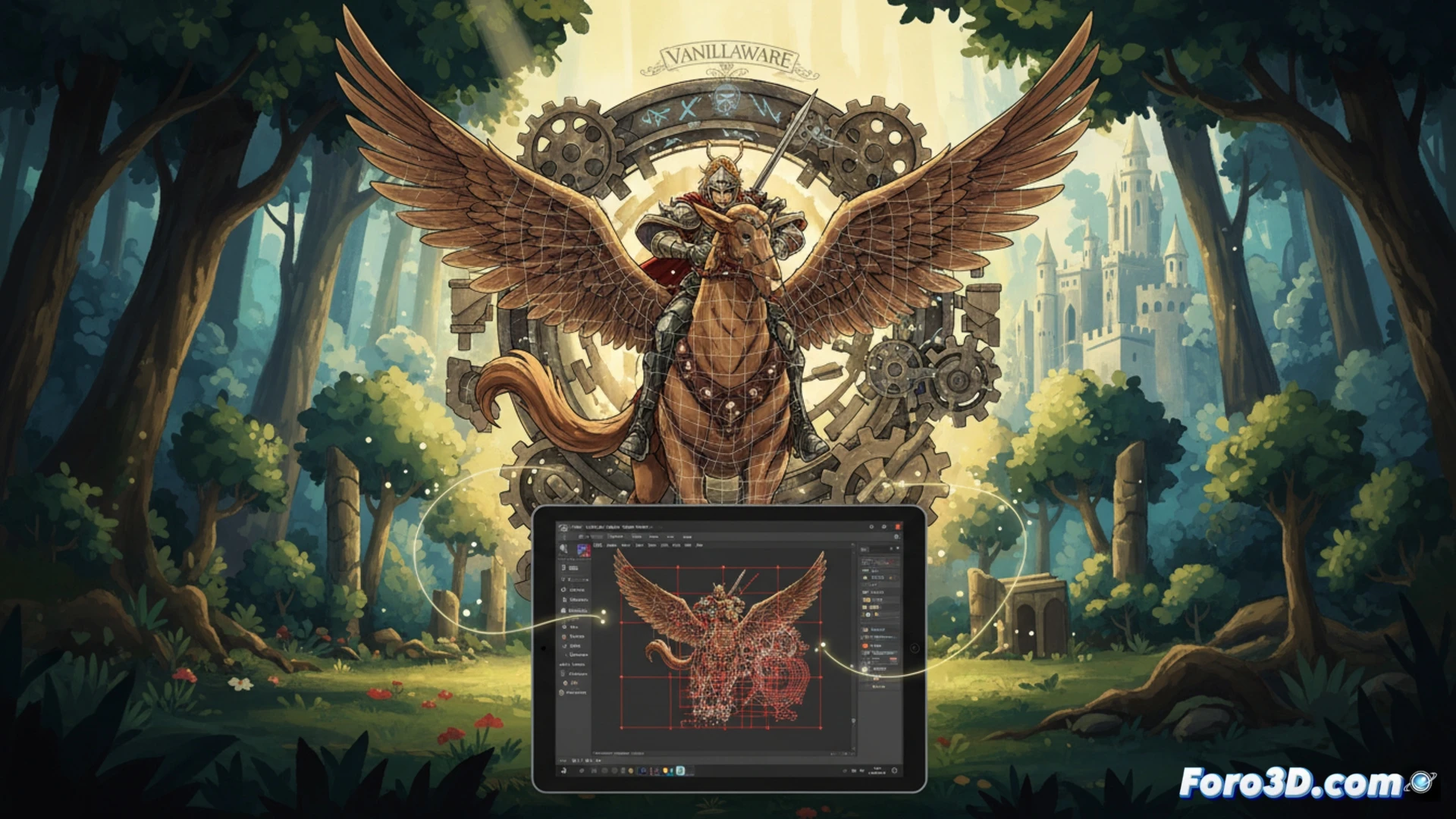
The creative process begins in Clip Studio Paint, where illustrators draw each character and scene with meticulous detail. Unlike pixel art or traditional spriting, Vanillaware does not generate hand-drawn frames one by one. Instead, they export the character's layers (torso, arms, head, legs) as independent textures. The studio's internal engine, written in C++, then applies 2D mesh deformation to these pieces. Each body part becomes a polygon with anchor points. By moving these points, the engine interpolates the texture, generating smooth transitions that mimic organic movement without needing to animate 60 separate frames. This cutout system, combined with virtual bone rigging, allows a single base illustration to generate hundreds of different animations for combat and exploration.
Lessons for Indie Development 💡
Vanillaware's approach demonstrates that you don't need a photorealistic 3D engine or a massive team to achieve visual impact. Their secret lies in vertical integration: by controlling both the drawing software and the animation engine, they eliminate bottlenecks in asset conversion. For a small studio, replicating this workflow is viable using tools like Spine or DragonBones, which emulate 2D mesh deformation. The key is to design illustrations with articulation points already in mind, not as static images, but as puzzles of animatable pieces. Unicorn Overlord reminds us that technical craftsmanship, when aligned with a clear artistic vision, remains the most powerful engine in the medium.
How does Vanillaware achieve the fluid, pictorial animation effect in Unicorn Overlord using its 2D cutout technique, and what specific technical challenges did they face in combining this artisanal style with massive game mechanics like real-time tactical battles?
(PS: a game developer is someone who spends 1000 hours making a game that people complete in 2)